
Rodents
What a rat nest or mouse nest looks like, and where to find it
A Norway rat nest is usually in a burrow, below or at ground level, and a house mouse nest is a wad of shredded stuff tucked somewhere sheltered. Here's how to tell them apart, how to tell a rat hole from a chipmunk hole, and what to do when you find one.
 By Nick Russler, ownerLicensed and insured in MichiganPublished
Summary
The short answer
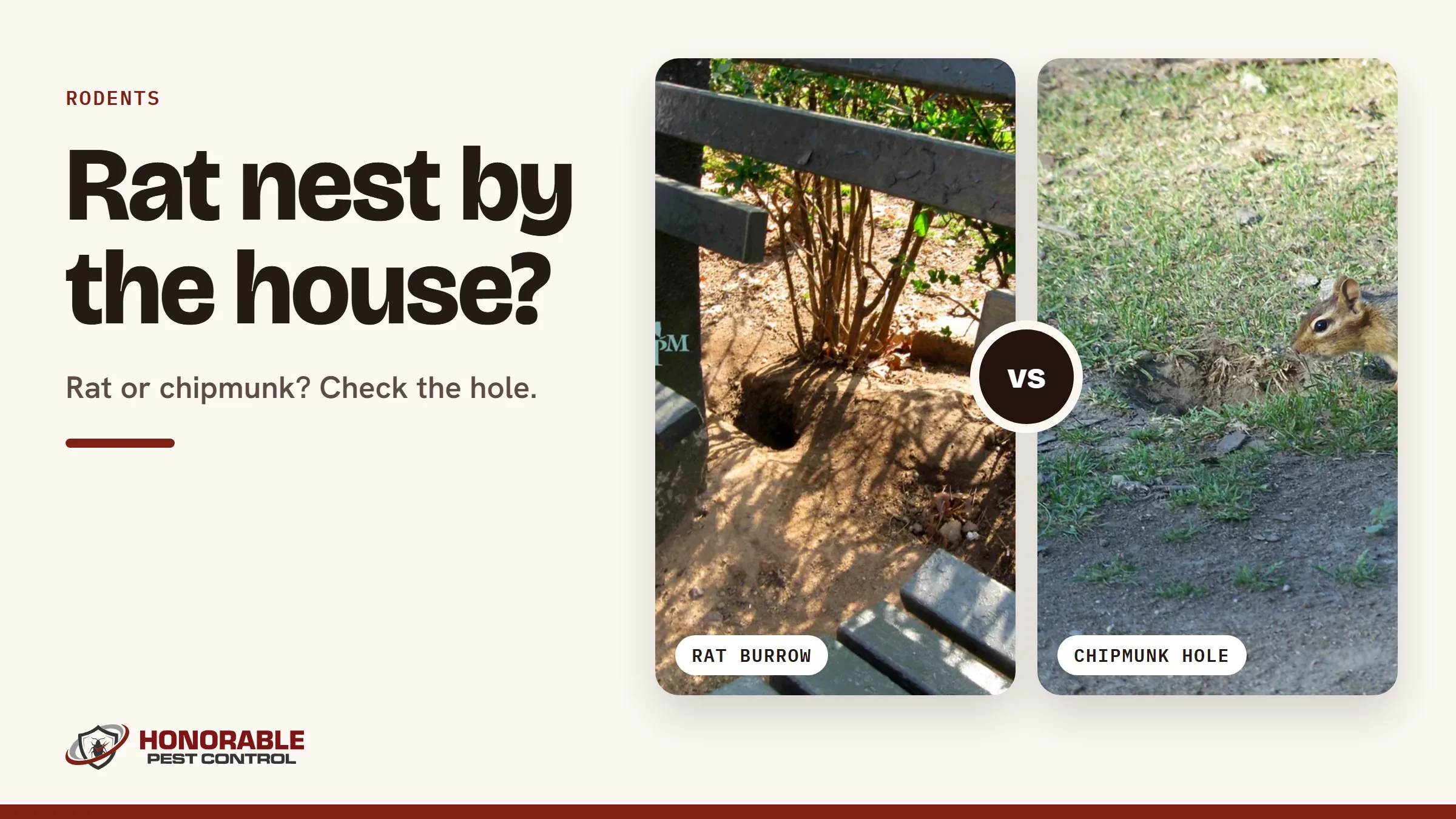
A Norway rat nest is usually in a burrow, below or at ground level. The hole tends to be 2 to 3 inches wide and smooth from use. A chipmunk hole is usually about 2 inches, with no mound of dirt. A house mouse nest is made of fine, shredded fibers, usually 4 to 6 inches across. Found one? The CDC says to soak it with disinfectant and never sweep or vacuum it.
Outside, look for a smooth hole by your foundation. Inside, look for shredded stuff near food or heat.
Prefer to listen? 56 seconds.
The short version, read aloud. Read by a synthetic voice, not one of our technicians.
You found a hole by your foundation, or shredded paper in the garage. Here's how to tell what made it.
What does a rat nest look like?
From outside, you'll usually see a hole in the ground. ICWDM, a university wildlife damage center, says Norway rats usually build nests in burrows, below or at ground level. Read up on Michigan's Norway rats.
An active hole is 2 to 3 inches wide and clean, ICWDM says. Washington's wildlife agency says 2 to 4 inches, with smooth, packed dirt around it. If it's fresh, you may see dirt pushed out in a fan.
The rest is underground. The agency says a burrow typically runs less than 18 inches deep and 3 feet long. There's a nest in the middle and extra "bolt holes" for escapes. UC IPM says the nest may be lined with leaves, shredded paper, cloth or other fibers.
Rat burrow or chipmunk hole?
Look-alikes
Four clues to compare
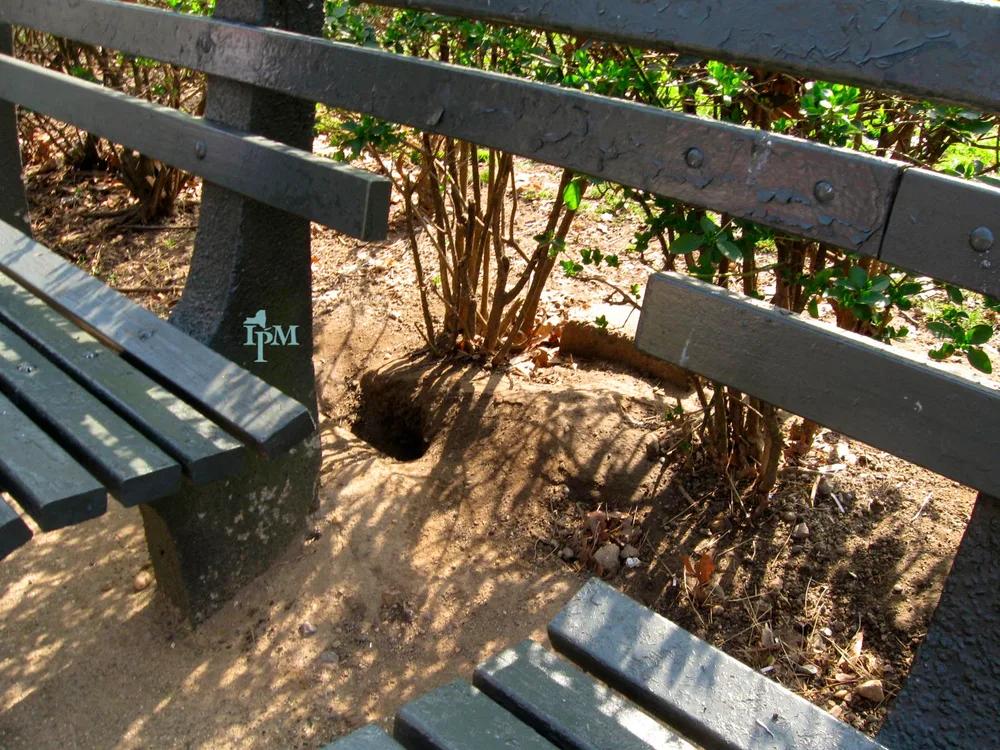
Norway rat burrowRattus norvegicus
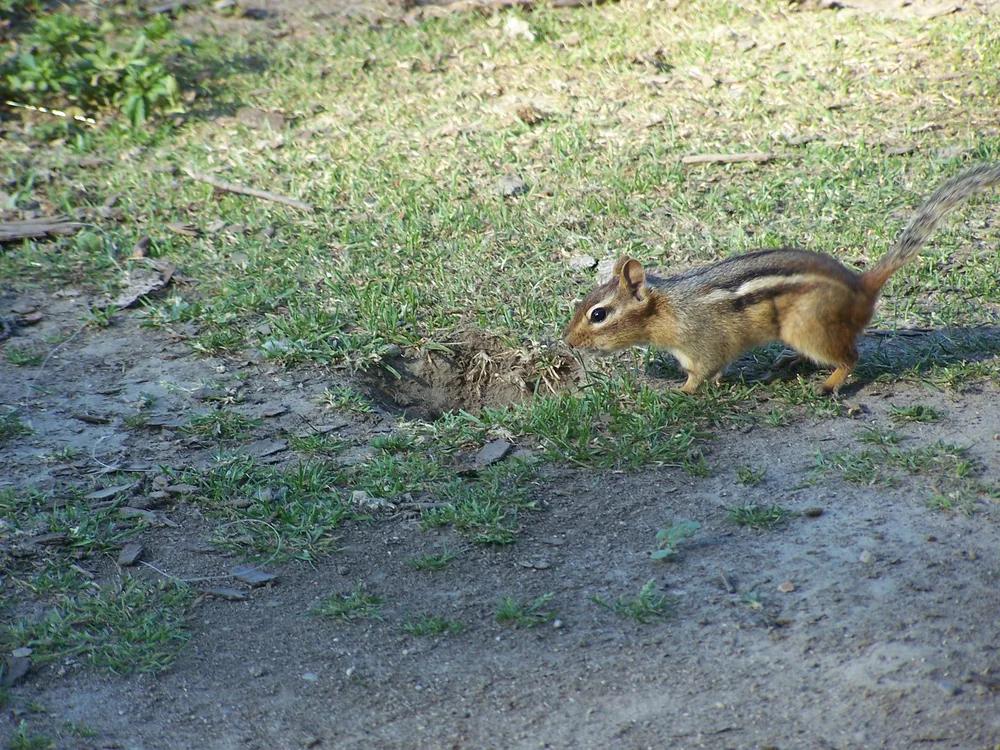
Chipmunk holeTamias striatus
| Look at | Norway rat burrow | Chipmunk hole |
|---|---|---|
| The hole | About 2 to 3 inches, smooth from use | About 2 inches, cleanly dug |
| Dirt at the door | A fresh burrow often has a fan of loose dirt | No dirt pile; they carry it off |
| When you see them | Rarely seen by day | Easily seen by day |
| Where it is | Along foundations, under decks, slabs and woodpiles | Often near stumps, wood or brush piles, basements and garages |
Start with the size, but rat and chipmunk holes overlap around 2 inches. Under a deck, ICWDM calls size the best clue: 2 to 3 inches for rats, 1 to 2 for chipmunks. Near 2 inches, check the dirt and what you see by day. And chipmunk burrows are often near basements and garages, ICWDM says, so a hole by your foundation isn't always a rat.
What does a mouse nest look like?
A house mouse nest is a wad of fine, shredded stuff. ICWDM says it's usually 4 to 6 inches across.
ICWDM says deer mouse nests look like a house mouse's, so the nest alone may not tell you which mouse it was. Curious which one you've got? See deer mice vs house mice.
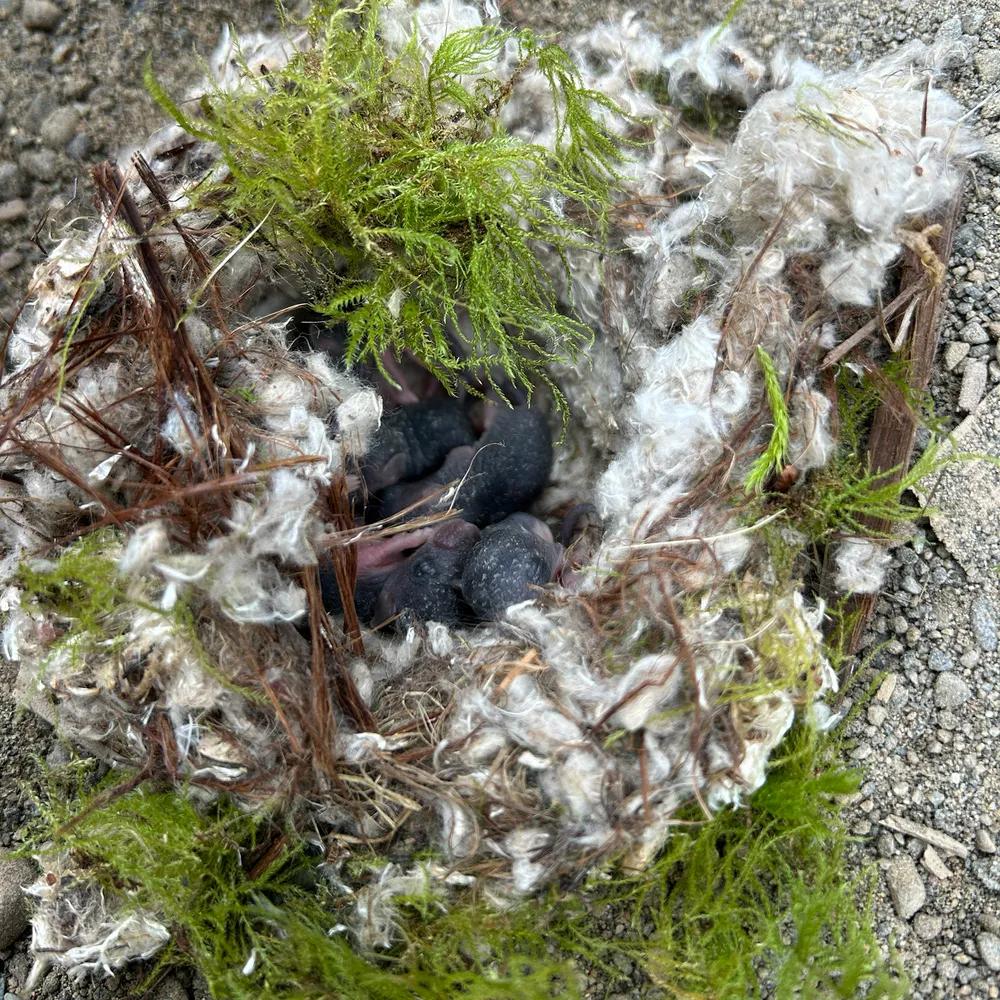
I once helped a customer pull a box of Christmas decorations down in their garage, and there was a mouse nest of shredded tissue paper built right around the star for the top of the tree. Kind of cute, but that whole box was done.
"Thought I had a mice infestation in my garage. Nick came out after I rescheduled him a few times and he was so professional and courteous. Came out and inspected the house really well."
Where do rats and mice nest around a Michigan house?
Rats usually stay low, and mice like it warm. You'll want to check these spots:
- Along the foundation. Washington's wildlife agency says rat burrows turn up along foundation walls, under slabs and beneath debris.
- Woodpiles, compost and the garage. UC IPM lists rat nests in firewood or behind garage boxes, and burrows under compost, as signs to watch for.
- Next to heat. ICWDM says mice prefer to nest by water heaters, pilot lights and compressors.
ICWDM also says a house mouse covers an area averaging 10 to 30 feet across each day. So its nest is usually close to the droppings you find.
Found a burrow by your foundation? Call us at (734) 519-6671 and we'll take a look.
Which one is it?
What did you find?
Up to two questions. Start with where it is.
See every answer
- Probably a Norway rat burrow Have it checked
- ICWDM says rat holes tend to be 2 to 3 inches wide and smooth from repeated use. Washington's wildlife agency says a fresh one has dirt pushed out in a fan. Call us, and we'll look for the rest of the signs. Mouse and rat control
- Probably a chipmunk hole Keep an eye on it
- ICWDM says a chipmunk hole is usually about 2 inches, with no dirt mound, because chipmunks carry the soil off in their cheek pouches. It also says chipmunks are easy to spot by day. Chipmunk or squirrel?
- Probably voles Know which vole first
- ICWDM says the easiest vole sign to spot is a network of surface runways, 1 to 2 inches wide, with several burrow openings. Michigan's DNR says prairie voles are protected and can't be killed on purpose, so know which vole you have first. Voles or moles?
- Not sure yet Try the plug test
- Washington's wildlife agency says to fill the hole with wadded-up newspaper, leaves or dry soil. If rats are using the burrow, they'll reopen and clear it in a couple of days in good weather. Then come back and pick again.
- A squirrel's leaf nest Not a rat nest
- ICWDM says a squirrel's leaf nest, or drey, is a frame of sticks filled with dry leaves. That's not a rat nest. Squirrel nests in trees
- Probably a mouse nest Clean it up, then call
- ICWDM says house mouse nests are usually 4 to 6 inches across, and mice prefer to nest next to heat, like a water heater. Clean it up the wet way below, then call us to find how they're getting in. Mouse and rat control
- A closed-up building Take extra care
- Michigan's health department says the greatest hantavirus risk comes with opening or cleaning closed-up buildings with rodent infestations without proper protection. For heavy infestations, it recommends a pest-control professional. We handle rodents, not cleanup. The CDC's wet steps are below, and the CDC says to take extra precautions when cleaning up a heavy infestation. Deer mouse or house mouse?
- Probably rats Have it checked
- UC IPM says when Norway rats get into buildings, they usually live in the basement and ground floor. Not sure about the droppings? Compare them in our guide. Mouse or rat droppings?
When do Detroiters report rodents? We counted the city's requests
In Detroit, rodent requests to the city peak from August to October. We counted all 22,492 "Rodent Extermination" requests in the city's Improve Detroit data from 2018 through 2025. September had the most, 14.2% of them.
When Detroiters ask the city about rodents
Average "Rodent Extermination" requests a year, by month, in the City of Detroit's Improve Detroit data, 2018 through 2025 (22,492 requests in all). Counted by Honorable on November 23, 2026. August through October, the peak, are marked. These are requests people filed, not rats, and only in Detroit. The request type doesn't say rat or mouse, or inside or outside, and requests follow when people notice and report. Separately, ICWDM says Norway rat breeding often peaks in spring and fall and often stops in winter, depending on habitat.
That can't tell you when rats nest. But MSU says mice look for warmth as it gets colder each fall.
Is the nest still being used?
Plug the hole and check back. Washington's wildlife agency says to fill it with wadded-up newspaper, leaves or dry soil. If rats are using the burrow, they'll reopen it in a couple of days in good weather.
Inside, droppings alone can be hard to read, the CDC says. One way to be sure: clean up the wet way (below). If you find new ones after that, they're still active.
Other signs of rats: ICWDM says you may see rub marks on walls and pipes, where oil and dirt rub off their fur. Found droppings too? Learn how to tell mouse droppings from rat droppings.
Read the video transcript
You kick dirt into a hole by your compost bin. Two days later, it's open again. So you fill it again. And again. You see, that's not a fix. It's a test. Each time it reopens, something down there is telling you it's home. You figure it's a chipmunk. But look at the edge. Worn smooth, with fresh dirt pushed out in a fan. A chipmunk carries its dirt off in its cheeks. And you've never seen this thing. Chipmunks are easy to spot by day. Rats rarely are. It's most likely a rat. Down there is a tunnel, a nest, and often a second hole. The back door. So a tech sets locked bait stations by both holes and along its trail, out of reach of kids and pets. He shows you the gap under your garage door, and you close it. Later, you kick dirt in one more time. Still shut after a few dry days? Nobody's home.
Found a nest? Clean it up wet, never dry
Wet it down first. These are the CDC's steps:
- Open the doors and windows, then stay out for 30 minutes before you clean.
- Put on rubber or plastic gloves. For a heavy infestation, the CDC says to take extra precautions.
- Don't sweep or vacuum. It can put droplets with viruses into the air.
- Spray the nest and the area around it with disinfectant, or 1.5 cups of bleach per gallon of water, mixed fresh. Let it soak 5 minutes, or as long as the label says.
- Bag it, knot the bag, and put it in a second bag.
Here's why. In 2021, Michigan's health department reported the state's first confirmed human case of Sin Nombre hantavirus, in Washtenaw County. A 2024 report on the case says the patient's spouse reported she'd recently been cleaning out a relative's home, empty for 2 years and infested with mice.
The health department says that virus is spread by deer mice and white-footed mice. ICWDM says their nests look like a house mouse's, so treat every nest you find this way.
Throwing out the nest won't end it. Here's what does
The rodents and their way in are still there.
Doing it yourself? The CDC recommends snap traps. It also says a mouse can fit through a 1/4-inch hole, so you'll want to stuff small holes with steel wool, held in with caulk. UC IPM says a young rat can squeeze under a door with a 1/2-inch gap.
Still seeing them? We find the signs and the way in, then set locked, tamper-resistant bait stations and traps where they run, out of reach of children and pets. We don't seal or repair, but we show you every gap so you or a contractor can close it. That's our mouse and rat control, and Honorable Shield covers it.
Got a burrow by your deck or a nest in the garage? Get a free quote below, or call us at (734) 519-6671.
Want a technician to find the way in?
We find the signs and the way in, set locked, tamper-resistant bait stations and traps where they run, and show you every gap so you or a contractor can close it. Mice and rats are covered by Honorable Shield and Rodent Shield. Quotes are free.
Rather not call? Get your free quote right here.
What are we dealing with?
Tap everything you have seen. Most homes have more than one.
Takes about 30 seconds. Or just call (734) 519-6671.
No obligation. We confirm availability and explain the recommended next step.
Common questions
How many rats live in one nest?
There's no set number. ICWDM says each female has her own nest chamber, but Norway rats may share a burrow and raise their young together. The University of Michigan's Animal Diversity Web says litters from several females may share one nest. And by ICWDM's general rule, rats seen during the day point to large numbers.
Should I remove a rats nest?
Yes, the wet way above. The CDC says it's important to clean up all droppings, urine, dead rodents and nesting material with care. But don't stop at the nest. Washington's wildlife agency says rats can have several nest sites, so deal with the rats and the way in, too.

About this page
Nick wrote this. The facts come from the sources below, checked on November 23, 2026. The Detroit numbers are our own count of the city's open data. Photos: Matt Frye, NY State IPM Program at Cornell University (CC BY 2.0) and ElC (CC BY-SA 3.0), via Wikimedia Commons, and Gunnar Bonk (CC BY-SA 4.0), via iNaturalist. See something wrong? Tell us and we'll fix it.
Sources
- University of California Statewide IPM Program, Pest Notes: Rats (2025)
- Internet Center for Wildlife Damage Management, Norway rats, house mice, deer mice, chipmunks and ground holes
- Washington Department of Fish and Wildlife, Living with wildlife: Rats
- US Centers for Disease Control and Prevention, Rodent control: clean up, seal up and trap up (2024)
- Michigan Department of Health and Human Services, First case of hantavirus reported in Michigan (2021)
- Michigan Department of Natural Resources, Small rodents (nuisance wildlife)
- Michigan State University Extension, Thinking like a mouse (Lisa Treiber, 2014)
- Goodfellow and others, Case of Human Orthohantavirus Infection, Michigan, USA, 2021, Emerging Infectious Diseases (2024)
- Animal Diversity Web, University of Michigan Museum of Zoology, species accounts for the eastern chipmunk, deer mouse, house mouse and Norway rat
- City of Detroit, Improve Detroit issues, Rodent Extermination requests 2018 to 2025 (our count, pulled November 23, 2026)

Ann Arbor, MI · Licensed and insured
Rats or mice by the house?
Tell us what you're seeing and where you live. We'll check that we cover your street and give you the price first.
500+ Customer Reviews·Michigan pesticide business license #820457