

Bee control · Southeast Michigan
Bee Control in Ann Arbor and Southeast Michigan
A clean round hole in bare wood, about the width of your finger, is a carpenter bee. That is the bee we treat, and an exterminator treats the tunnel before anyone seals the hole. Honey bees we never kill. We call in a specialist who can move them.
Quick answers
Bee control in Southeast Michigan: the quick facts
Carpenter bees drill a clean round hole into bare or weathered wood and tunnel along the grain. One season is cosmetic. Several seasons in the same timber, plus woodpeckers opening the galleries to get at the larvae, is what turns it into a repair bill. Treating the gallery has to come before sealing the hole. Honey bees are different: we never kill them, and we call in a specialist who can move them.
- Most common here
- Eastern carpenter bee
- Bores a clean round hole about the width of a finger into bare or weathered wood.
- Worst months
- Aug to Sep
- The months with the most sightings in Michigan, from public records anyone can check.
- How it gets in
- Bare fascia, decks, rails and eaves
- They go for unpainted or weathered softwood: deck rails, fascia and soffits, porch ceilings, pergolas, fence rails and siding trim. Painted, well-sealed wood is far less attractive.
- Included in
- A one-time job, quoted
- Not on the Honorable Shield list, so we price the visit. You get the number over the phone before anyone comes out.
Bees in Michigan.
The bee that damages houses is the carpenter bee. It drills a clean round hole into bare or weathered wood and tunnels along the grain. One season is cosmetic. Several seasons in the same board, plus woodpeckers opening it up, is a repair bill.
Carpenter bees are often mistaken for bumble bees because both are big, heavy bees. A carpenter bee has a shiny, mostly bare abdomen, and a bumble bee is fuzzy all over. The surest clue is not the bee but the wood: a round hole and sawdust below it.
- Smooth round entrance holes in exposed wood
- Fresh wood shavings or coarse sawdust below an active opening
- Large bees repeatedly hovering around the same wood surface
- Staining below a gallery entrance
- Old holes that become active again in spring
- Woodpecker damage around areas where bee larvae are present
Male carpenter bees often hover near nesting areas and can look aggressive, but males cannot sting. Females can sting, but they are far less defensive than social wasps unless handled or trapped.
What to do depends on whether the holes are active, whether old galleries are being reused, how much wood is affected, and whether it can be painted, stained or sealed after. For more identification help, see signs of a carpenter bee problem.

Carpenter bees: we treat them
Shiny, mostly bare abdomen, and a round hole in bare wood. They pick deck rails, fascia and soffits, porch ceilings, pergolas, fence rails, siding trim and old outdoor furniture. We treat the live tunnels, then tell you when the holes can be filled.
Honey bees: we call a specialist
We do not kill honey bees. A cluster on a branch may be a swarm passing through. Bees going into a wall may be a colony that needs a beekeeper or a bee removal specialist. We call one in, and live relocation happens when a qualified keeper is available.
Bumble bees: pollinators
Fuzzy, and they nest in the ground, not in wood. Honey bees and bumble bees are important pollinators and should be left alone when that is practical. Never spray flowering plants where bees are feeding.
Seasonal pattern
When are carpenter bees worst in Michigan?
This is when carpenter bees are actually recorded in Michigan, month by month, from public observation records rather than from a guess. They show up in April, peak in August and September, and are all but gone by October.
Warning signs
How bees announce themselves.
A clean round hole the width of a finger in bare wood
Coarse sawdust on a deck, a sill or the ground below a hole
A large bee hovering at the same spot on the fascia each day
Staining just below a hole in a rail or a board
Old holes that come back to life each spring
Woodpecker damage opening up an old gallery
A big bee with a shiny, mostly bare black abdomen
Bees going in and out of one gap in a wall, which may be honey bees
What to look for
What a bee problem looks like at home.
Most bee calls in Michigan are carpenter bees drilling into bare wood. These are six of the signs people notice, and what each one tells us.
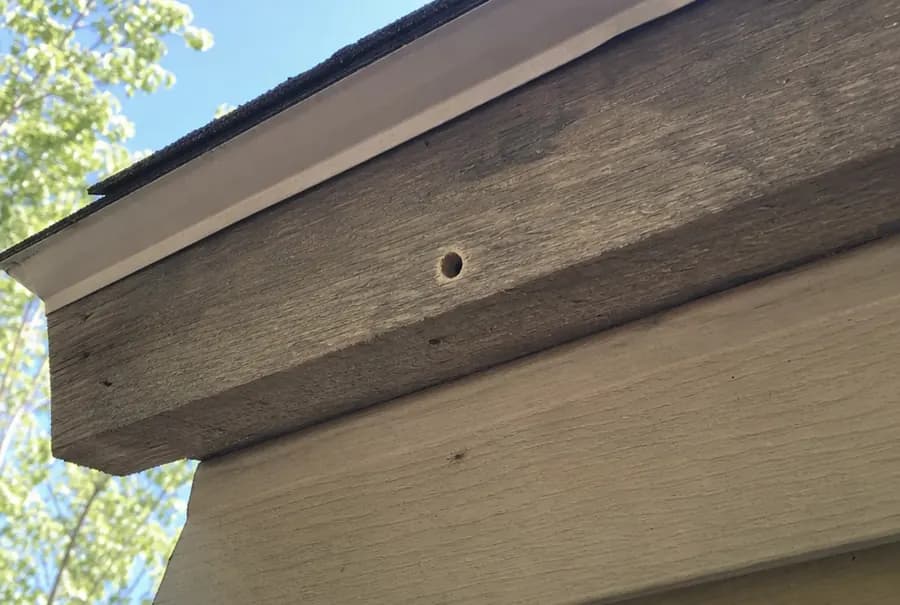
A clean round hole about the width of a finger, in bare or weathered wood. The tunnel turns and runs along the grain inside.
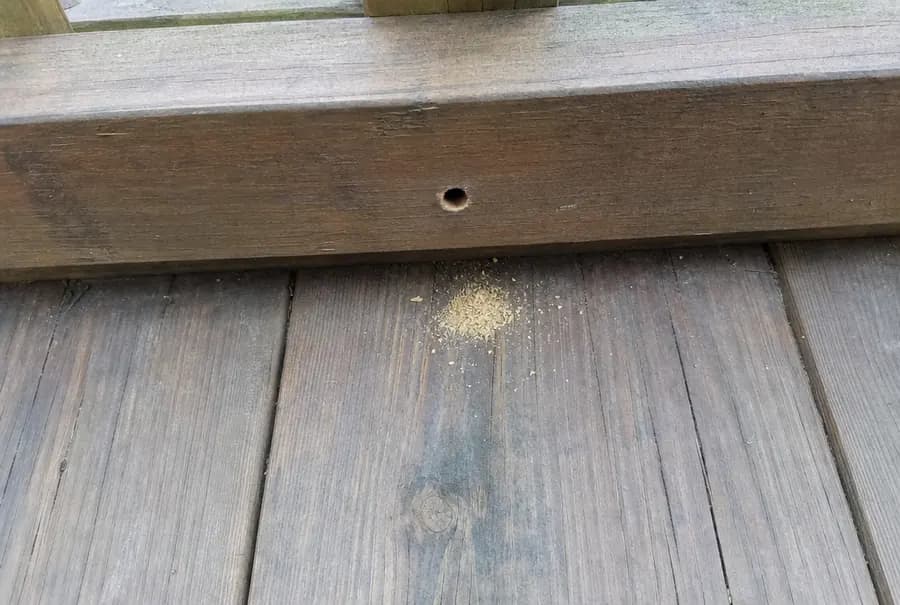
A small pile of coarse sawdust right below a hole means the bee is digging now. Look straight up to find it.
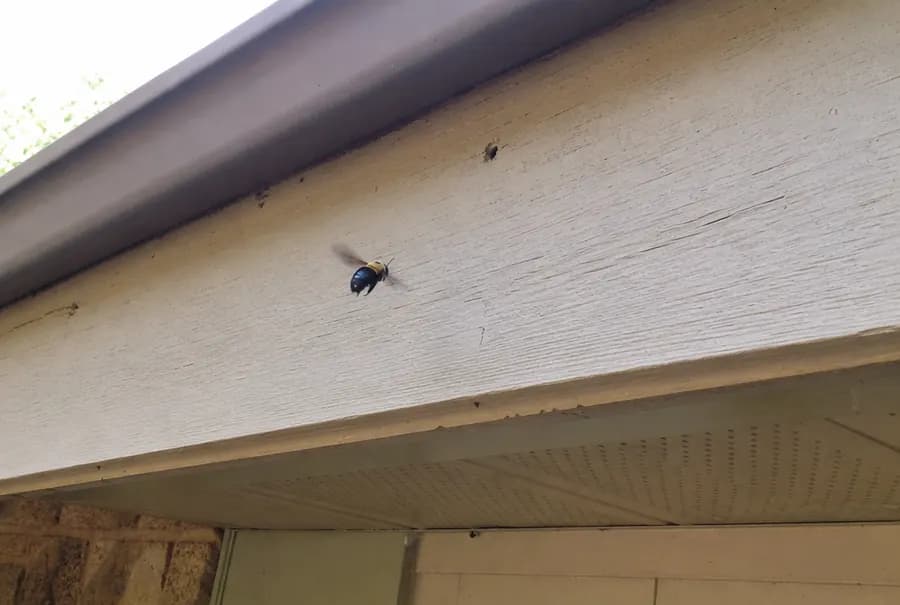
A big bee hovering at the same spot on the fascia every day. It is usually a male guarding the area, and males cannot sting.
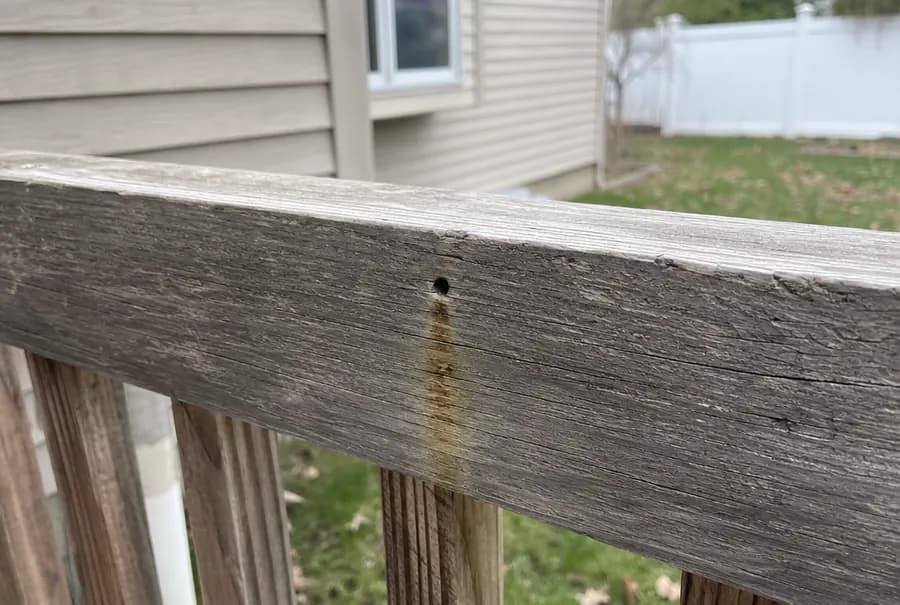
A yellowish brown streak running down the wood just below a hole. It usually marks a gallery the bees are still using.
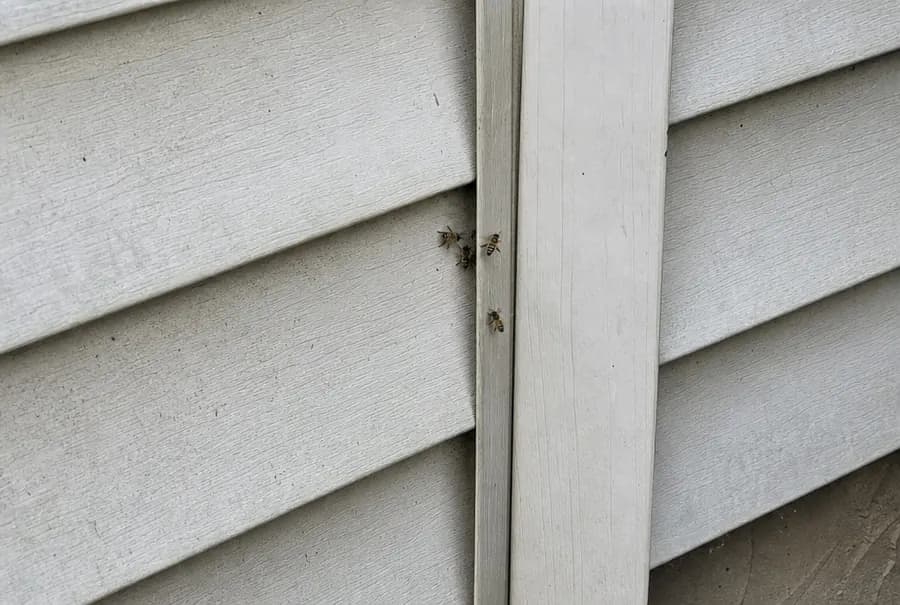
Bees going in and out of one gap in a wall may be honey bees. If it is honey bees, we call in a specialist instead.
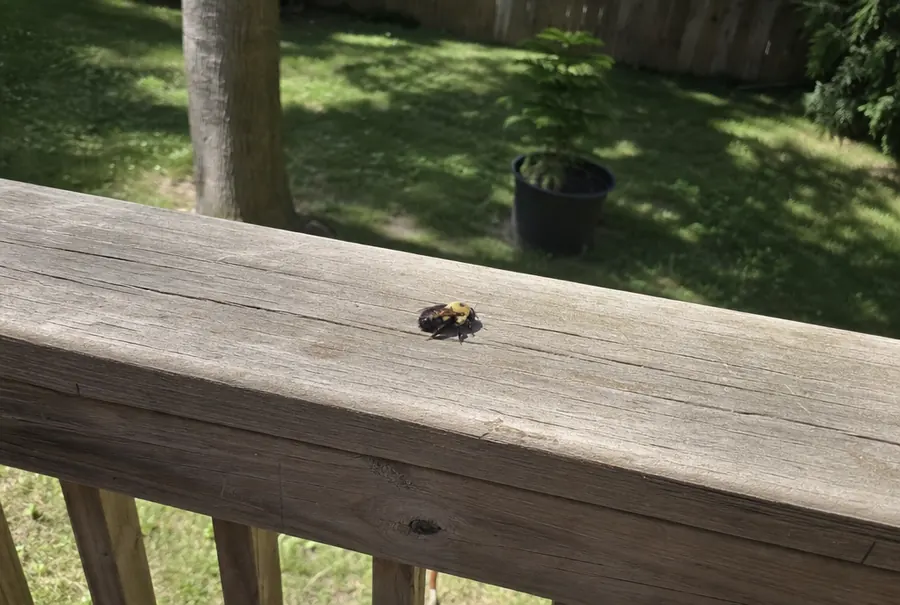
It looks like a bumble bee, but the abdomen is shiny and mostly bare black. Bumble bees are fuzzy all over.
How our exterminators get rid of carpenter bees.
Three steps. Treating the tunnel comes before filling the hole, never after.

Name the bee, then check the wood
The technician first confirms which bee it is. For carpenter bees, that means finding active holes, old galleries, the boards they keep coming back to, and bare or weathered wood they have not found yet. If it turns out to be honey bees, we call in a specialist instead.
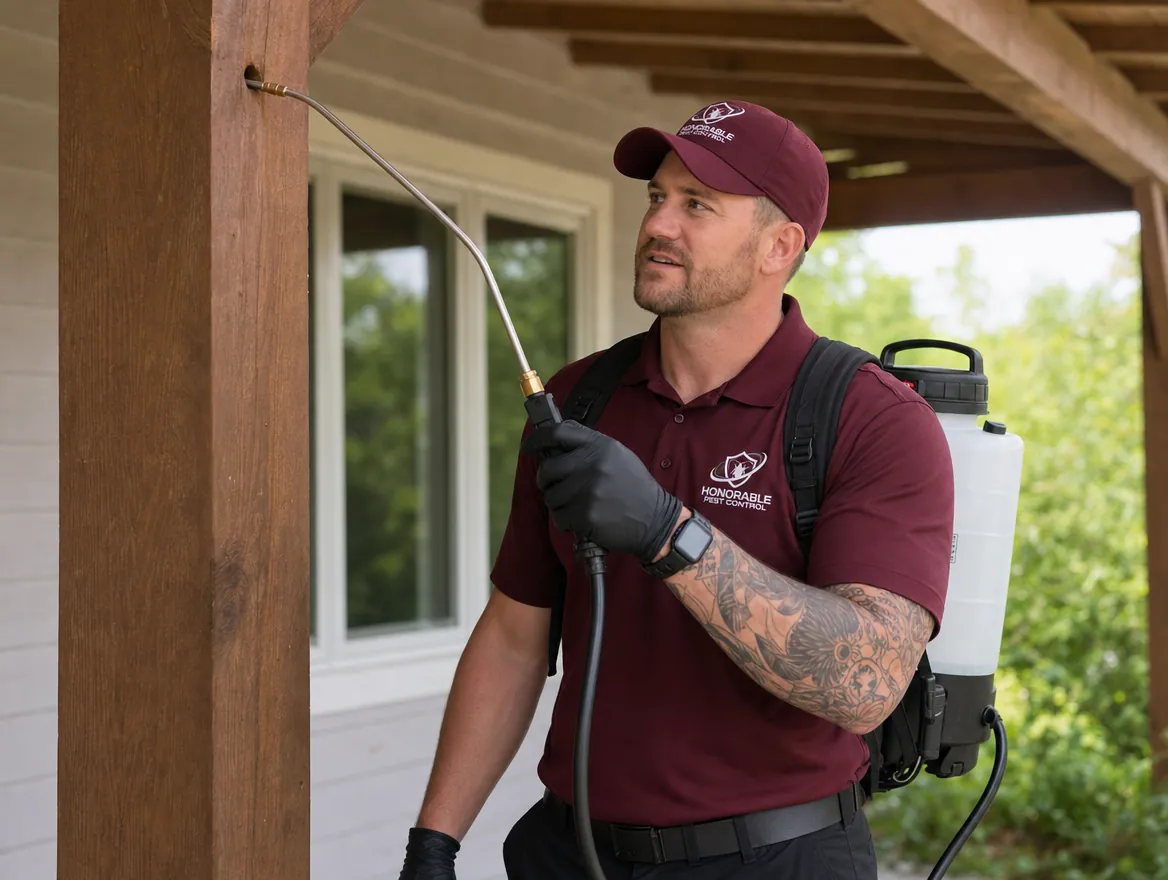
Treat the live tunnels, then wait
A product labeled for carpenter bees and that spot goes into the active galleries, following the treatment plan. The holes stay open while bees or brood may still need to come out, unless the plan allows for that timing. Sealing a live gallery traps them inside.

Fill the holes and watch next spring
Once a gallery is dead, you or a carpenter can fill the hole. Keep paint or stain on bare wood, replace boards that are too far gone, and cover end grain and weathered trim where you can. Check the old spots each spring, because carpenter bees come back to familiar wood and old galleries.
The exact product, timing, repair and follow-up depend on the property and the pesticide label. Treatment ends the activity you have, but nothing can promise another carpenter bee will never try the same wood in a later year.
Every bee control visit
The full Honorable TriShield™, every time.
Three layers. The house, the lawn, then the property line. Not a rushed spray along your baseboards. A cheap quote usually skips two of the three.

Foundation barrier
Three feet up the wall. Three feet out from it. All the way round the house, plus windows, doors, the garage and the roofline. That strip is the road bugs use to get in.
Measured with a tape, not eyeballed
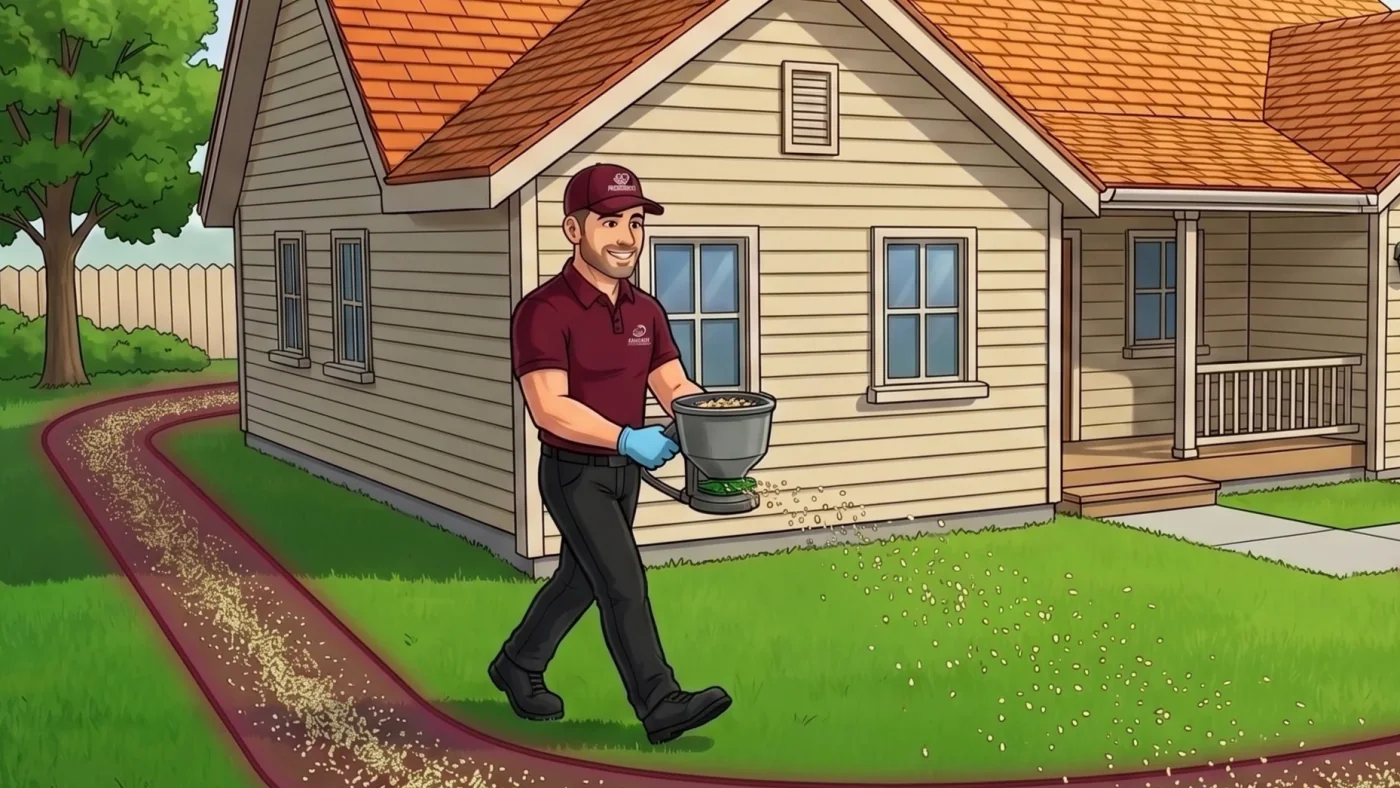
Granular yard moat
A ring of granules across the lawn. Rain wakes it back up. So does your sprinkler. In a Michigan summer that is most weeks.
Skipped by most companies. Granular costs money.
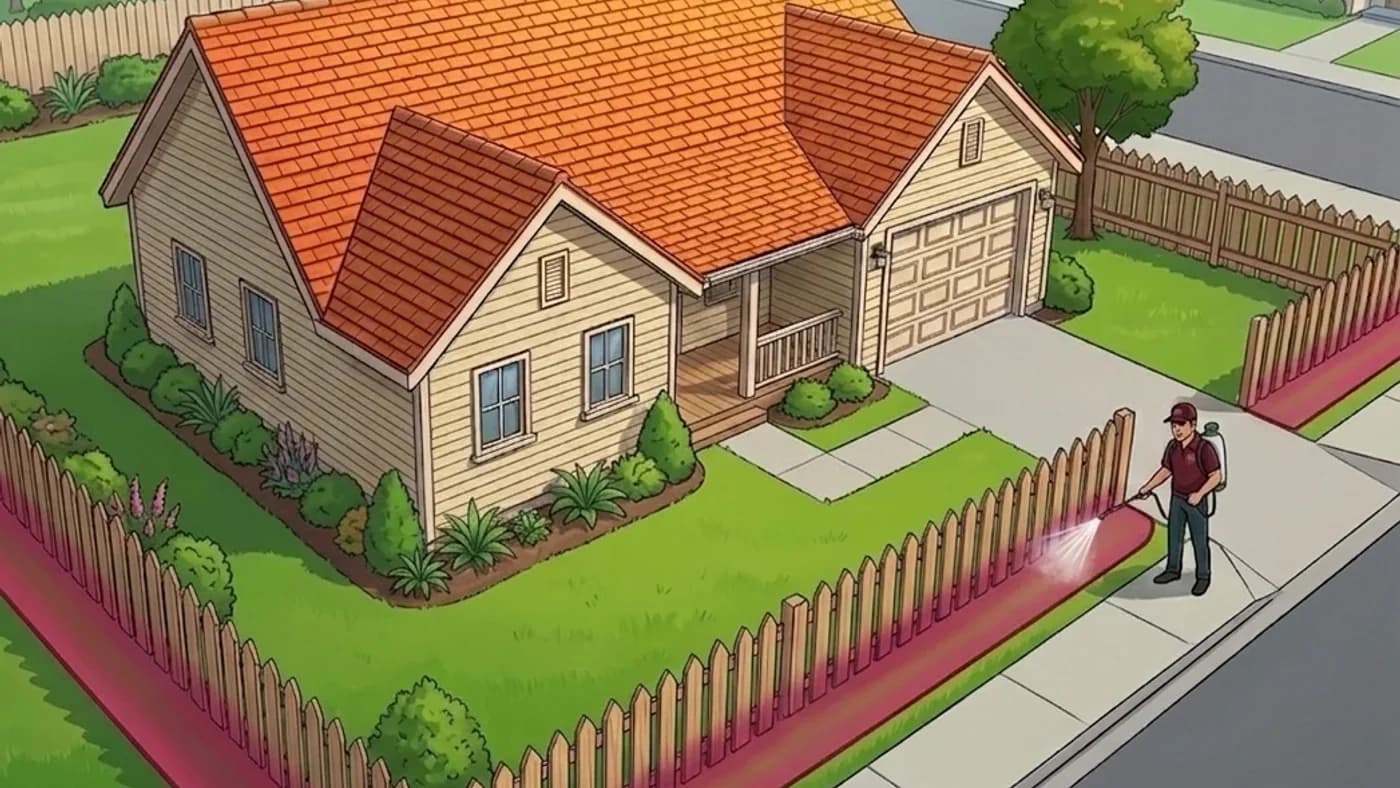
Property line
We spray the whole property line. Bugs get stopped at the edge of your yard, not at your back door.
The layer a cheaper quote quietly leaves out
How to tell a carpenter bee from the others.
These are the bees people call us about that have confirmed sightings in Washtenaw, Oakland, Wayne and Livingston counties. Each one is identified by independent naturalists, so the animal in the photo is the animal named. Honey bees are not treated; we call in a specialist.
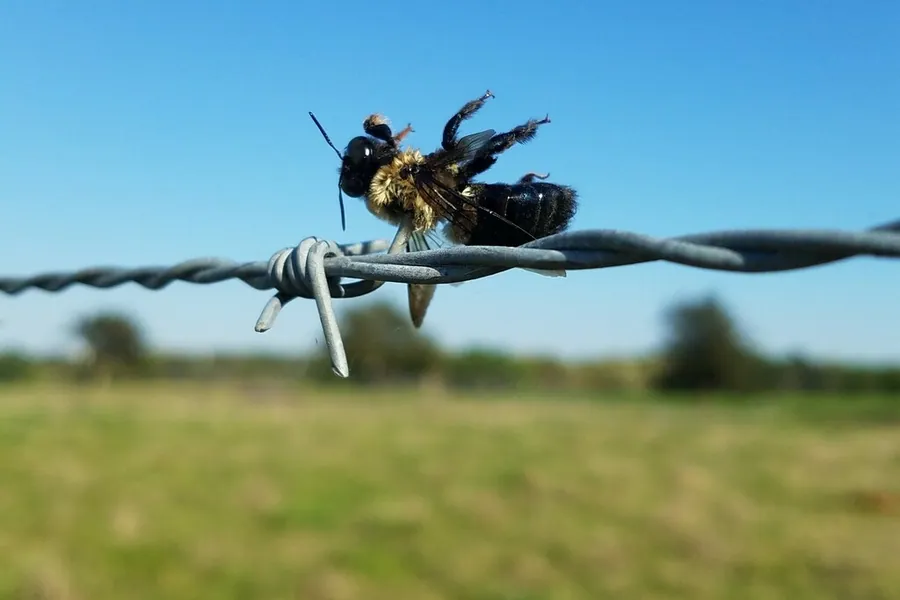
Drills round holes in bare wood. The bee most bee calls are about.
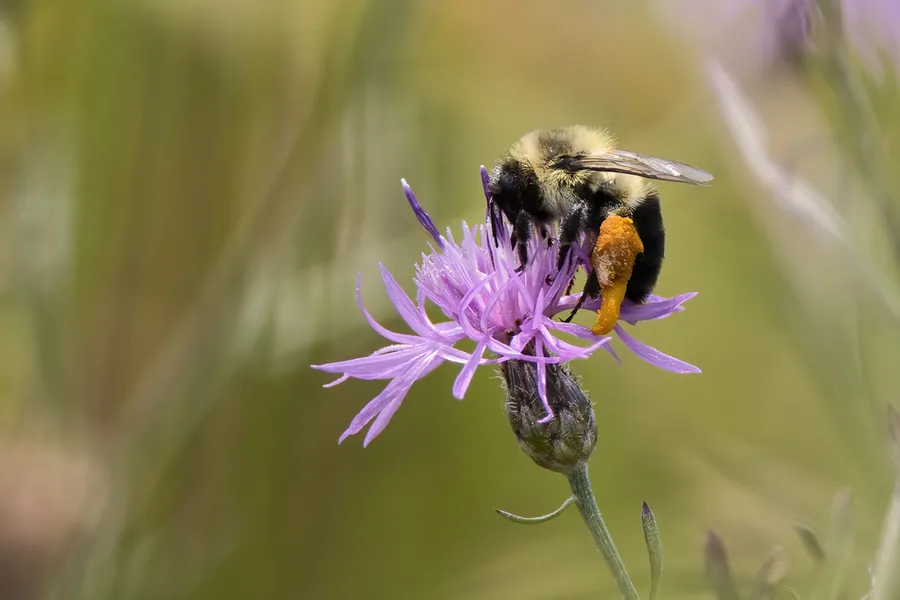
Fuzzy all over, where the carpenter bee has a shiny bare abdomen.
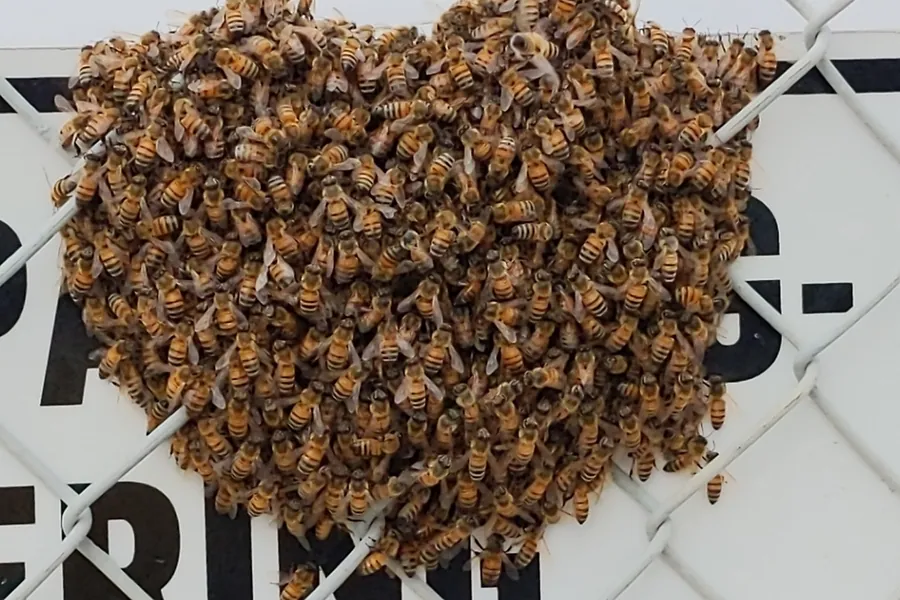
If it is honey bees, we call in a specialist instead of treating.
All of these have confirmed sightings in Washtenaw, Oakland, Wayne and Livingston counties. Records from iNaturalist research-grade observations, pulled 2026-09-25. Photos: Eastern carpenter bee by Leila Dasher (CC BY); Common eastern bumble bee by Lauren McLaurin (CC BY); Western honey bee by Vasily Reinkymov (CC0).
What it costs
Bee control is priced as its own job.
Carpenter bees are not on the Honorable Shield list, so we price the visit rather than roll it into the plan. We tell you the number over the phone before anyone comes out, and nobody here can discount it.
| One-time treatmentSingle visit | Follow-upIf it comes back | |
|---|---|---|
| You get | One visit, treated to the label | A second visit |
| Price | From $497 | $247, any house size |
Prices are the starting figures: a home up to 1,000 square feet, or half an acre for yard work. What is covered is set out in the plan terms.
Bee control, answered straight.
Which bees do you treat?
Carpenter bees, the ones that drill round holes in bare wood. Honey bees and bumble bees are pollinators, and we do not treat them the way we treat carpenter bees or wasps.
Do you remove honey bees?
We do not kill honey bees. We identify what you actually have, and if it is honey bees we call in a specialist who can relocate them. Live relocation only happens when a qualified keeper is available to do it.
What if bees are going in and out of a wall?
Call before you spray or seal anything. Bees entering a wall may be an established honey bee colony that needs a beekeeper or a bee removal specialist. We can tell you what it is and who should deal with it.
What should I do about a swarm of bees?
A cluster of honey bees on a branch or a fence may be a temporary swarm, resting before it moves on. Keep people and pets back and do not spray it. If it stays, or the bees start going into the house, call us and we will call in a specialist.
Do you treat bumble bees?
No. Bumble bees are pollinators, and they nest in the ground, not in wood. Where a nest can be left alone, leave it. If it is somewhere you cannot avoid, call us and we will tell you what it is and what makes sense for that spot.
How can I tell a carpenter bee from a bumble bee?
Look at the abdomen. A carpenter bee's is shiny and mostly bare. A bumble bee's is fuzzy. The other giveaway is the round hole: carpenter bees drill wood, bumble bees nest in the ground.
Do carpenter bees cause serious structural damage?
Rarely, but it adds up. The same board worked year after year, then opened out by woodpeckers going after the larvae, gets expensive. A handful of galleries is not a structural problem. Have the actual wood looked at rather than guessing.
Should I plug carpenter bee holes right away?
Not while the gallery is live, unless the treatment plan says so. Seal an active hole and you shut bees or brood inside. Wait for the technician to tell you when to fill it.
Will painting or staining stop carpenter bees?
It helps. Bare weathered wood is what they want, so a good finish makes your house less attractive. It is prevention, not a guarantee.
Can carpenter bees sting?
Males cannot sting at all, which is awkward for them, because they are the ones that hover in your face. Females can, but rarely do unless handled or trapped. Most people call about the wood, not the sting.
Will carpenter bees return next year?
They can. Old galleries get reused and the same wood gets picked again. Treating what is active, filling the dead holes, keeping the finish up and checking those boards each spring is what breaks the cycle.
Is bee control included in Honorable Shield?
No. Carpenter bees are not on the Honorable Shield list, so we price the visit as its own job. We tell you the number over the phone before anyone comes out.
Not sure it is a bee? Wasps, yellow jackets and hornets are on wasp control. Sawdust but no round hole may be carpenter ants.
Pest-Free Guarantee
They come back? So do we, free.
On Honorable Shield, see a covered pest between visits? We come back within 48 hours and treat it again. You pay nothing.
Bee control where you live.
Old streets with big trees get different bugs than new build on cleared ground. Pick your town to see what we actually find there.
That is not all of them. See all 38 towns, or ask us if we reach your street.
Other pests we treat
One plan covers every one of these. No extra charge when something different shows up.
Every visit includes all three barrier layers. See what we treat, or ask an exterminator.

Bee control · Licensed and insured
Round holes in your deck or fascia?
Call (734) 519-6671 or send a request. Tell us where the holes are and what the bees look like. You get the price over the phone before anyone comes out. If it turns out to be honey bees, we call in a specialist.
500+ Customer Reviews·Michigan pesticide business license #820457