

Moles, voles and chipmunks
Voles or moles? How to read the damage in your lawn
Raised, winding ridges and volcano-shaped mounds are a mole. Flat runways worn into the grass, most obvious when the snow melts, are voles. A neat round hole with no dirt around it, by the steps or a wall, is a chipmunk. Here is how to read the damage, what each animal is after, and what actually works on each one.
 By Nick Russler, ownerLicensed and insured in MichiganPublished
The short answer
- Raised ridges, soil mounds
- Mole
- Flat runways, 1 to 2 in wide
- Vole
- 2 in hole, no dirt pile
- Chipmunk
- Mole eats
- Earthworms, insects
- Vole eats
- Grass, roots, bark
- Best seen
- Spring, after snow melt
Look at the shape of the damage. Moles tunnel just under the surface and push up long winding ridges, and deeper tunnels throw up "molehills." Voles stay on top, wearing flat runways 1 to 2 inches wide through the grass, and MSU says those runways are most visible in spring after the snow melts. A chipmunk leaves a clean hole about 2 inches across with no loose dirt, because it carries the soil away in its cheeks. Only the vole eats your plants; the mole is after worms.
Prefer to listen? One minute 3.
The short version, read aloud. Read by a synthetic voice, not one of our technicians.
The snow goes and the lawn looks like someone drew on it: trails through the grass, soft ridges, a few mounds of soil. Or there is a neat little hole by the front steps that was not there in the fall.
Three different animals do this in Southeast Michigan yards, and they want different things. Read the damage first. It tells you which one you have before you ever see the animal.
Reading the damage
| What you see | Who made it | What it is after |
|---|---|---|
| Raised, winding ridges | Mole (shallow feeding tunnels) | Earthworms and insects |
| Mounds of loose soil | Mole (deeper tunnels) | Earthworms and insects |
| Flat runways 1 to 2 in wide, grass clipped short | Vole | Grass, roots, bulbs |
| Bark chewed off young trees and shrubs at ground level | Vole | Bark, mostly in fall and winter |
| Clean round hole about 2 in, no dirt around it | Chipmunk | A burrow to store food in |
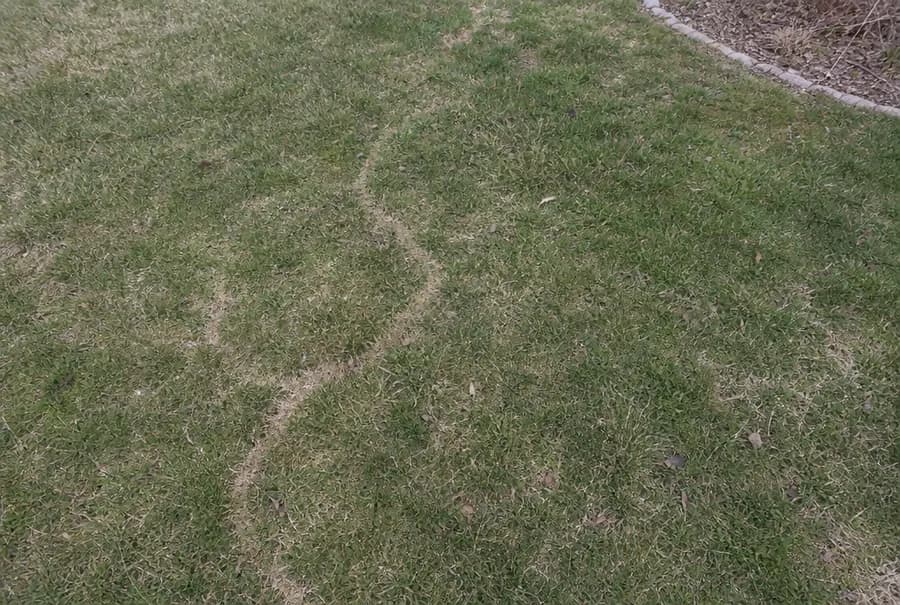
Voles: flat runways at snow melt
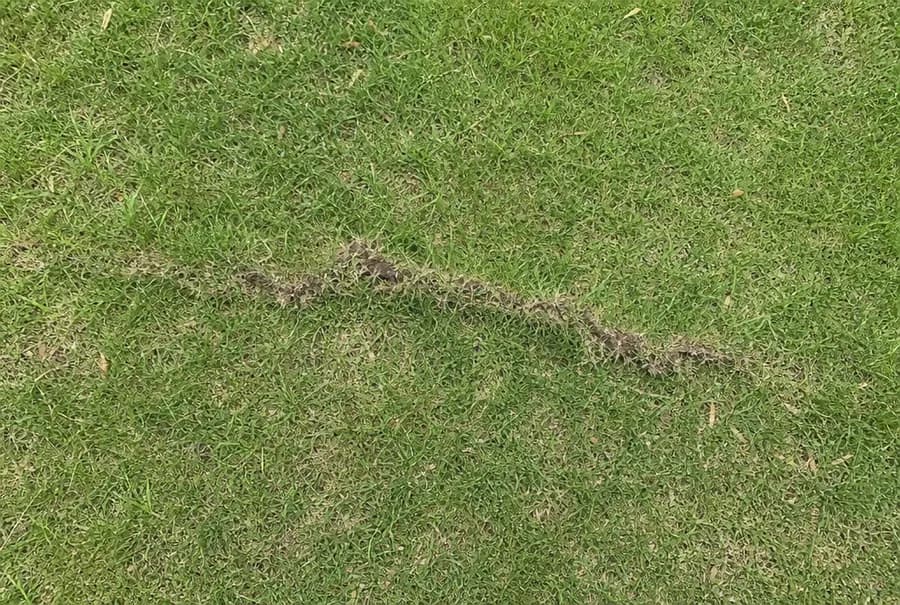
Mole: a raised, winding ridge
Moles: after worms, not your grass
Southern Michigan has two moles. The eastern mole is by far the most common in suburban yards, and the star-nosed mole lives mostly in damp soil near ponds and wetlands, per MSU Extension. In warm, damp weather eastern moles feed just under the surface and push up the winding ridges. In dry weather and in winter they tunnel deeper, sometimes over 2 feet down, and the extra soil comes up as molehills.
They eat mostly earthworms and insects, and MSU calls them beneficial animals: they eat pests and aerate the soil. The damage is the ridges. It usually looks like an army, but MSU says the maze in most yards is the work of only a few moles, possibly just one. Under good conditions a mole can tunnel 15 feet an hour.
Voles: the ones that eat the plants
Voles are small, stocky rodents with short legs and short tails. They stay active all winter, running under the snow, which is why the damage appears all at once in spring. They eat grasses and other plants, store seeds, bulbs and roots in late summer and fall, and chew bark, mostly in fall and winter.
The bark is the real cost. A vole chews around the base of a young tree or shrub, and that girdling can badly damage it. MSU describes vole gnaw marks as irregular patches at odd angles, about 1/8 inch wide, which sets them apart from a rabbit's neat, clean cuts. Voles also breed fast: MSU says a female could produce over 70 young in a year, and populations rise and fall on a roughly four-year cycle.
Chipmunks: the hole by the steps
A chipmunk's burrow entrance is about 2 inches across and has no pile of dirt around it, because the chipmunk carries the soil away in its cheek pouches, per Penn State. Below it, the main tunnel usually runs 20 to 30 feet. Burrows are often tucked by something solid: steps, a stump, a wood pile, a foundation.
One chipmunk is mostly a nuisance that digs up bulbs. Penn State notes that in large numbers they can cause structural damage by burrowing under patios, stairs, retaining walls and foundations.
Stamp the ridges down and watch. MSU suggests flattening a few mole tunnels and noting which ones are pushed back up the next day. Those are the active runs, and they are the only ones worth trapping.
What works on each one
- Moles: trapping the active runs. MSU says trapping can be effective when it targets the tunnels that are pushed back up. A grub treatment may discourage them, but their main food is earthworms, so fewer grubs is not a sure fix. The folk remedies, like gum, hair, mothballs or flooding the tunnels, MSU calls usually ineffective and often unsafe.
- Voles: guard the trees and thin the cover. MSU recommends hardware cloth cylinders with mesh a quarter inch or smaller, buried 6 inches, around young trees, plus mowing and reducing the heavy ground cover voles hide in. Snap traps set across the runway handle a small population.
- Chipmunks: take away the cover by the house. Penn State says burrows are often hidden by stumps, wood and brush piles, basements and garages. Moving wood and brush piles away from the foundation takes away the cover.
On the rules: MSU says voles are nongame mammals that can be controlled without a permit when they are causing damage, and to check with the Michigan Department of Natural Resources for details. We use methods the state allows for each animal.
Not sure which one you have?
We read the damage and confirm the animal. For moles we find the runs that are still live and trap there; for voles we guard young trees and use a method the rules allow. Voles and chipmunks are covered by Rodent Shield; moles are a separate add-on. Quotes are free.
Each has its own page: vole control, mole control, and squirrel and chipmunk control.
Common questions
How can I tell mole damage from vole damage?
Moles make raised ridges and mounds of soil from tunnels underground. Voles make flat runways on the surface, 1 to 2 inches wide, with the grass clipped short, and they chew bark at the base of young trees.
Do moles eat grass roots?
Rarely. MSU says moles eat mostly earthworms and insects. The damage comes from tunneling, not feeding. Voles are the ones that eat plants.
Will killing grubs get rid of moles?
Not on its own. MSU says fewer grubs may discourage moles, but their main food is earthworms, so a grub treatment is not a sure fix. Trapping the active runs is.
Why did the vole damage appear all at once in spring?
Voles stay active under the snow all winter. The runways and chewed bark were there the whole time; the snow melting is what reveals them.
How many moles are in my yard?
Probably fewer than it looks. MSU says the tunnels across most lawns are the work of only a few moles, and possibly only one.
Can chipmunks damage my foundation?
In large numbers, yes. Penn State says chipmunks can cause structural damage by burrowing under patios, stairs, retaining walls and foundations.
Do I need a permit to trap voles in Michigan?
MSU says voles are nongame mammals and can be controlled without a permit when they are causing damage. Check with the Michigan DNR for the current rules.

About this page
Written by Nick Russler, owner of Honorable Pest Control in Ann Arbor, Michigan. The facts here come from Michigan State University Extension and Penn State Extension, read on September 26, 2026. If something here is out of date or wrong, tell us and we will fix it.

Ann Arbor, MI · Licensed and insured
Trails in the lawn after the snow melted?
Tell us what you are seeing and where you live. We check we cover your street and give you the price first.
500+ Customer Reviews·Michigan pesticide business license #820457