
Mice
Deer mouse or house mouse? And what Michigan says about hantavirus
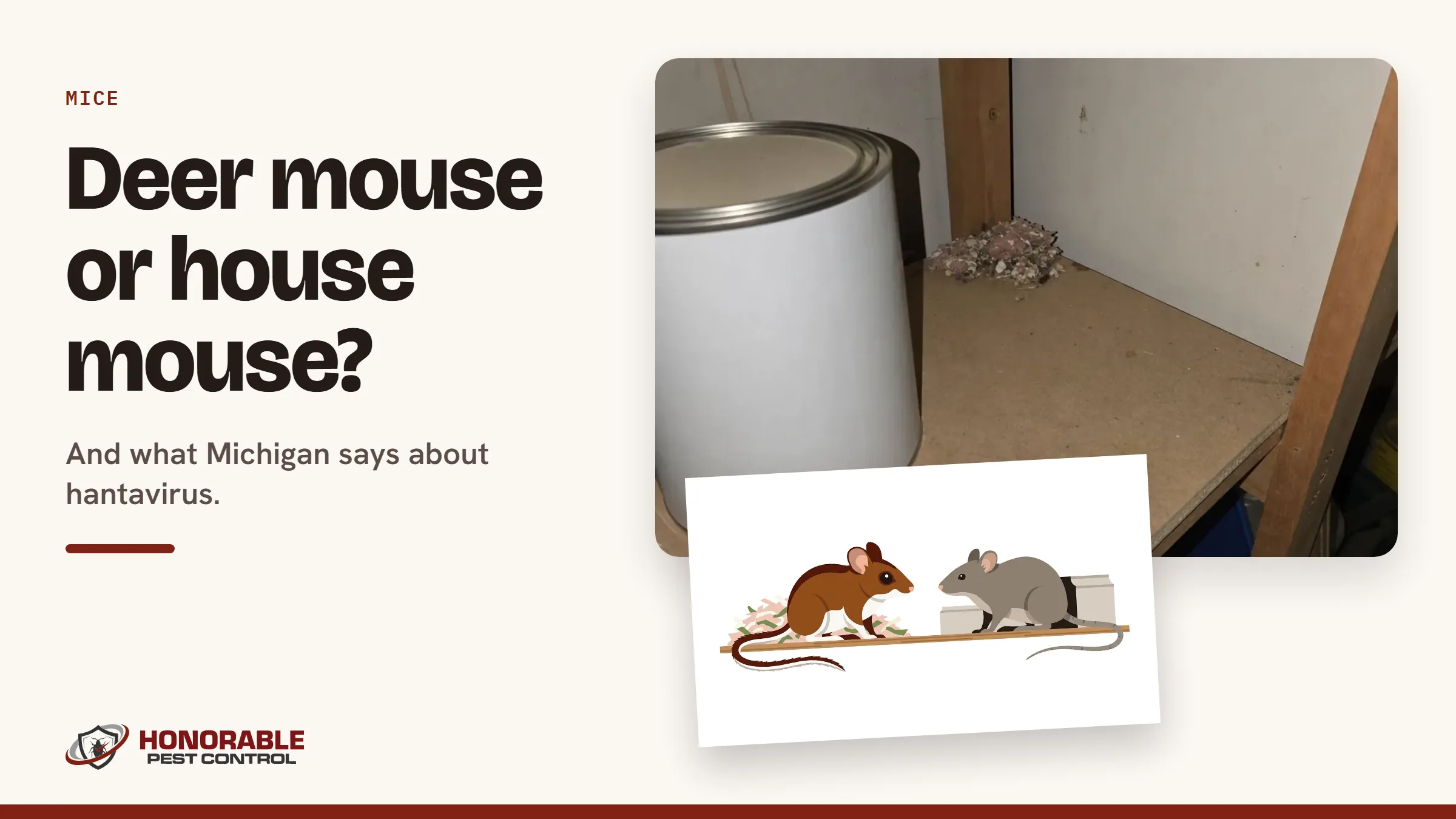
Look at the belly and the tail. A deer mouse is brown on top and bright white underneath, with a sharp line between, and its tail is dark above and white below. A house mouse is one dull gray-brown all over, with a nearly bare tail. The difference matters in Michigan, because the deer mouse is the one that carries hantavirus.
 By Nick Russler, ownerLicensed and insured in MichiganPublished
The short answer
- Deer mouse belly
- Bright white, sharp line
- House mouse belly
- Gray-brown, like its back
- Deer mouse tail
- Dark above, white below
- House mouse tail
- Nearly bare, one color
- Carries hantavirus
- Deer and white-footed mice
- First Michigan case
- 2021, Washtenaw County
A deer mouse has white fur on its belly and feet and a two-toned tail, and a house mouse is an even gray-brown with an almost furless tail, per University of California IPM. The tail is the easiest tell. It matters because the deer mouse and its near twin, the white-footed mouse, spread Sin Nombre hantavirus, per the Michigan health department. Michigan's first confirmed case, in 2021, was a Washtenaw County woman who most likely breathed it in while cleaning an empty building full of mice.
Prefer to listen? One minute 13.
The short version, read aloud. Read by a synthetic voice, not one of our technicians.
Two kinds of mice get into Southeast Michigan homes in winter. One can live indoors its whole life. The other lives outside and comes in from the woods and fields when it gets cold.
They look alike at a glance, and they leave the same droppings. But a deer mouse in the cabin or the garage calls for more care when you clean up after it.
Deer mouse vs house mouse: how to tell them apart
| Deer mouse | House mouse | |
|---|---|---|
| Coat | Brown or gray-brown on top, bright white belly and feet | Even gray-brown, back and belly about the same |
| Where the colors meet | A sharp, clean line | No line |
| Tail | Two-toned, dark above and white below, some fur | Almost bare and scaly, one color |
| Eyes and ears | Large | Smaller |
| Lives | Outdoors; comes in from fall to spring | Can live its whole life indoors |
| Stores food | Often caches seeds and nuts | Less often |
From UC IPM and Cornell University. The white-footed mouse, which MDHHS names alongside the deer mouse, looks almost identical to it. For the purposes of your house, treat them as the same animal.
Where each one lives, and why they come inside
House mice can live outdoors, but Cornell says they can also spend their whole lives indoors. They nest inside walls, equipment and other protected places, close to food.
Deer mice and white-footed mice spend most of their time outdoors and come into buildings from fall through spring. Cornell says finding one indoors means there is an opening they use to get in. UC IPM adds that they often move into empty homes, cabins and sheds, and that they do not hibernate.
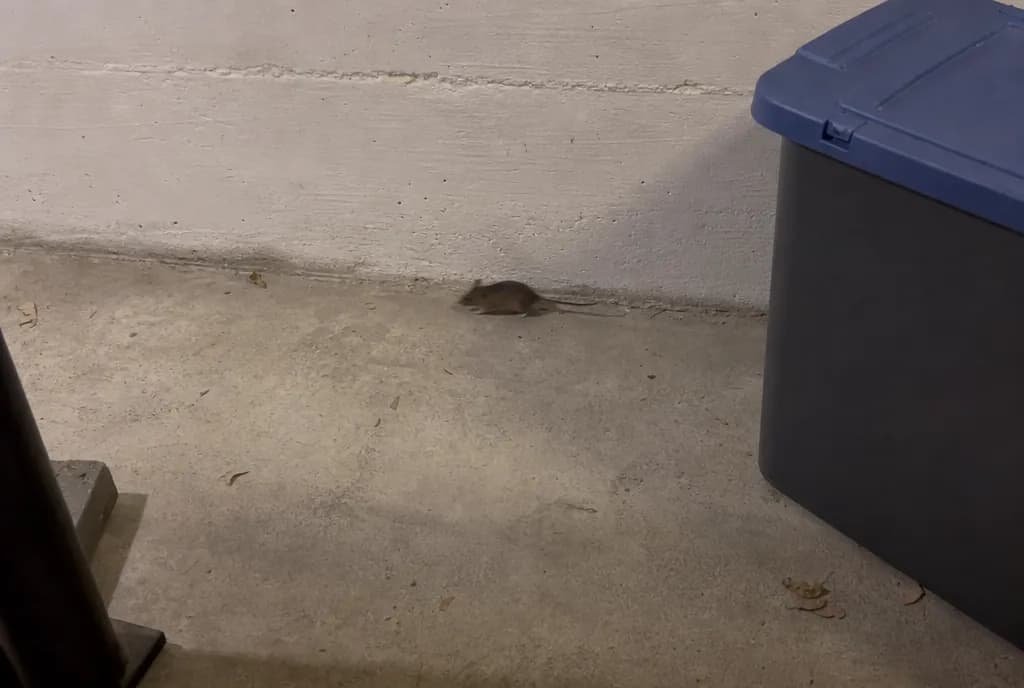
House mouse: one even color
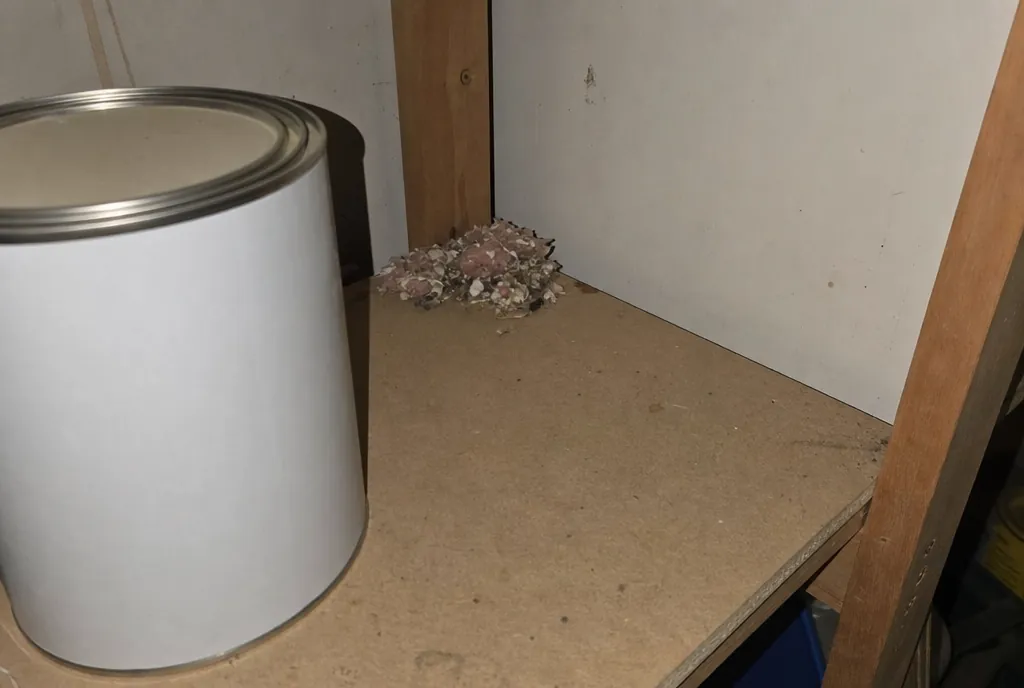
A nest of shredded paper in a garage
Hantavirus in Michigan
Hantavirus is rare, but it is serious. The CDC says the most common hantavirus that causes illness in the United States is spread by the deer mouse. In Michigan, MDHHS says the Sin Nombre virus is spread by the deer mouse and the white-footed mouse.
- How people get it: MDHHS says people are infected when freshly dried urine or droppings are stirred up and breathed in, or get into a cut. A bite can also pass it on. It does not spread from person to person in the U.S.
- The highest risk: opening or cleaning a closed-up building with mice in it, such as a cabin, a shed or a garage.
- When symptoms start: one to five weeks after exposure, per MDHHS, or one to eight weeks, per the CDC. Early signs are fever, chills, body aches and headache, and they can look like the flu.
Michigan's first confirmed case was reported in June 2021: an adult woman in Washtenaw County, hospitalized with a serious lung illness. MDHHS says she was most likely exposed while cleaning an unoccupied home with an active mouse problem.
If you get a fever and body aches in the weeks after cleaning up after mice, see a doctor and tell them about the mice. The CDC says early symptoms are easily mistaken for the flu.
Cleaning up after deer mice
Do not sweep or vacuum mouse droppings
Penn State warns that sweeping and vacuuming stir up the dust. The MDHHS release quotes Washtenaw County's medical director: wear rubber, latex, vinyl or nitrile gloves, open the space up and air it out for at least 30 minutes, and soak the droppings and nest with a disinfectant or a bleach solution before you wipe them up. For a heavy infestation, MDHHS recommends calling a pest control professional.
The full step-by-step, with the CDC's bleach mix, is in our guide to mouse and rat droppings.
What to do about deer mice and house mice
- Find the way in. A house mouse can squeeze under a gap 1/4 inch tall, per UC IPM. Check where pipes and wires come in, the foundation, and under doors.
- Take away food. Store food, pet food and bird seed in hard, sealed containers. Deer mice especially like to stash seeds.
- Trap along the walls. Penn State recommends snap traps set against the wall, where mice run, out of reach of children and pets.
Mice in the garage, the cabin or the walls?
Our exterminators find how they get in, set locked, tamper-resistant bait stations where they run, and show you every gap. Mice are covered by Honorable Shield and Rodent Shield. Quotes are free.
A single mouse in October is common. Droppings in a closed-up cabin or shed, or mice coming back every winter, are when our mouse and rat control earns its keep.
Common questions
How can I tell a deer mouse from a house mouse?
Look at the belly and tail. A deer mouse has a bright white belly with a sharp line and a two-toned tail. A house mouse is an even gray-brown with a nearly bare tail, per UC IPM.
Do deer mice carry hantavirus?
They can. MDHHS says the Sin Nombre hantavirus in Michigan is spread by the deer mouse and the white-footed mouse. It names those two, not the house mouse.
Has anyone in Michigan had hantavirus?
Yes. MDHHS reported the first confirmed Michigan case in June 2021, a Washtenaw County woman likely exposed while cleaning an empty home with mice.
How do you get hantavirus?
By breathing in dust from fresh, dried mouse urine or droppings, or getting it in a cut, per MDHHS. A bite can pass it on too. It does not spread person to person in the U.S.
Do deer mice come inside in winter?
Yes. Cornell says deer mice and white-footed mice live mostly outdoors but come into buildings from fall through spring, and finding one inside means there is an opening.
Can I vacuum mouse droppings?
No. Sweeping or vacuuming stirs the dust into the air. Wear gloves, air the room out, and soak the droppings with disinfectant or bleach solution before wiping them up.
What are the symptoms of hantavirus?
Fever, chills, body aches and headache at first, per MDHHS, starting one to five weeks after exposure. See a doctor and mention the mice.

About this page
Written by Nick Russler, owner of Honorable Pest Control in Ann Arbor, Michigan. The facts here come from the Michigan Department of Health and Human Services, the CDC, Cornell University, the University of California and Penn State, all read on September 26, 2026. We do not diagnose or treat illness; see a doctor about any symptoms. If something here is out of date or wrong, tell us and we will fix it.
Sources
- Michigan Department of Health and Human Services, First case of hantavirus reported in Michigan (June 2021)
- Centers for Disease Control and Prevention, About Hantavirus
- Cornell University IPM, Mouse and Rat Biology and Behavior
- University of California IPM, Deer Mouse
- Penn State Extension, Is There a Mouse in the House? Eliminate Mice with IPM

Ann Arbor, MI · Licensed and insured
Mice moving in for winter?
Tell us where you see them and where you live. We check we cover your street and give you the price first.
500+ Customer Reviews·Michigan pesticide business license #820457