
Ant control · Southeast Michigan
Ant Control in Ann Arbor and Southeast Michigan
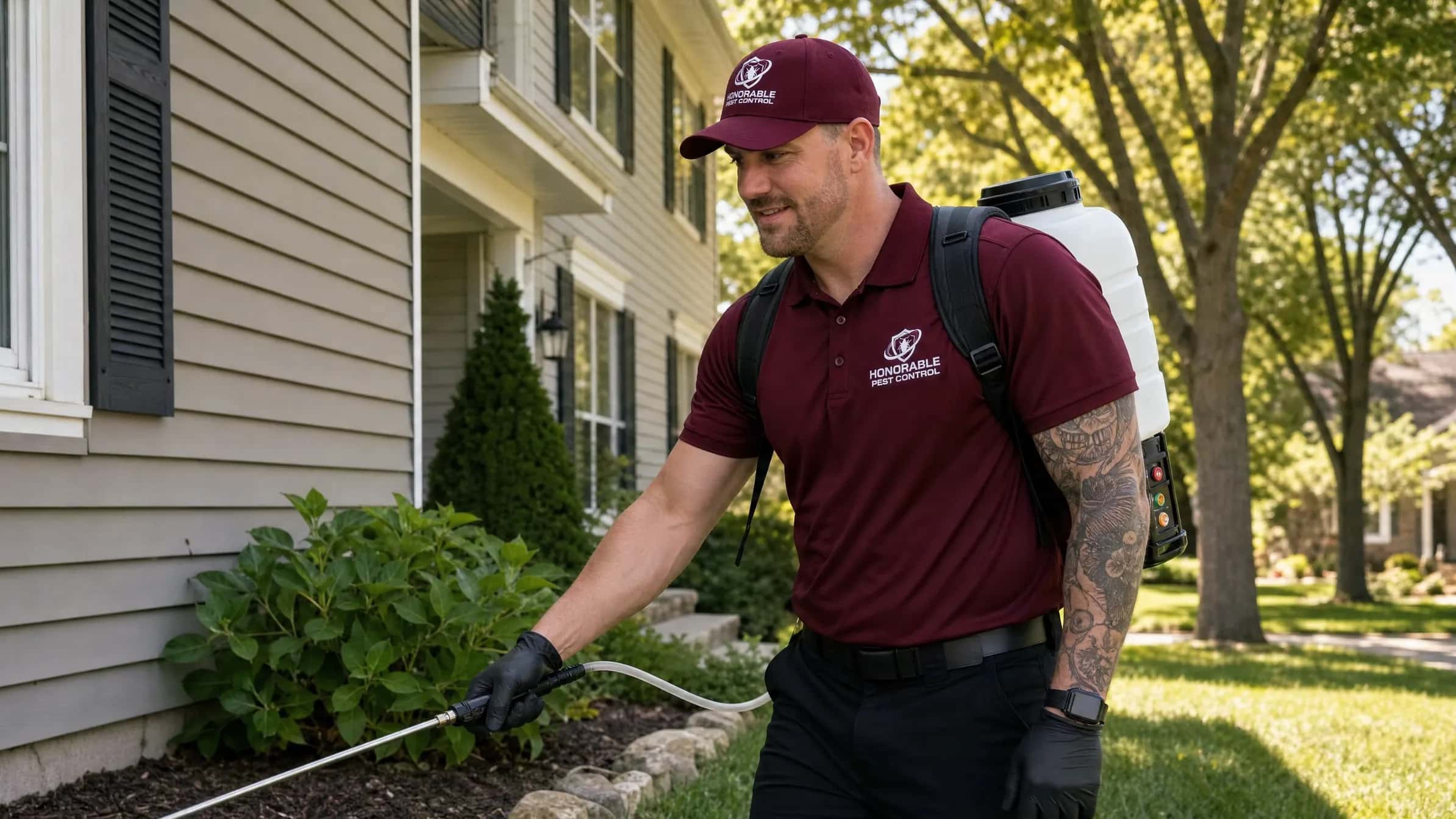
One ant on the counter is a scout. The trail behind it is the problem. Our exterminators go after the nest, because spraying the line only moves it. Big black ants and sawdust mean carpenter ants and damp wood. Sand piles between paving slabs mean pavement ants.
Quick answers
Ant control in Southeast Michigan: the quick facts
Most ant calls here are one of two jobs. A trail on the counter is usually workers walking in from a nest outside, often pavement ants from under a slab. Big black ants and coarse sawdust are carpenter ants, and they mean wood that has stayed wet. Spray on the trail only moves the colony, so the nest is the target either way.
- Most common here
- Eastern black carpenter ant
- Nests in wood that has stayed wet: a leaking sill, a porch post, the wall behind a shower. The parent colony is often in a tree outside.
- Worst months
- May to Jul, Sep
- The months with the most sightings in Michigan, from public records anyone can check.
- How it gets in
- Slab joints, pipes and damp wood
- Pavement ants come up through the gap between a slab and the wall, so you cannot see the way in from inside. Carpenter ants follow pipes, cables and branches touching the roof to reach wet wood.
- Included in
- The Honorable Shield plan
- Covered by the plan, with free re-treatment between visits. Or book one visit.
Ants in Michigan.
Ants indoors mean one of three things: workers walking in from a nest outside, a food or water source they found, or a colony living in the house.
Spraying the trail kills a few workers and the colony moves. Our exterminators name the ant, find the nest and treat that, which is what actually ends it.

Seasonal pattern
When are ants worst in Michigan?
This is when ants are actually recorded in Michigan, month by month, from public observation records rather than from a guess. Carpenter ants run earlier than the rest: their sightings climb hard in April and May and fall away after July.
Warning signs
How ants announce themselves.
A trail that comes back within hours of wiping it
Coarse sawdust like pencil shavings under a sill, trim or door frame
Big black ants indoors in winter or early spring
Winged ants at an inside window, with bent antennae and a pinched waist
What to look for
What an ant problem looks like at home.
Six common ways ants show up in a Michigan house, and what each one usually tells us. Which ant it is decides the treatment, so a clear phone photo of what you are seeing helps.
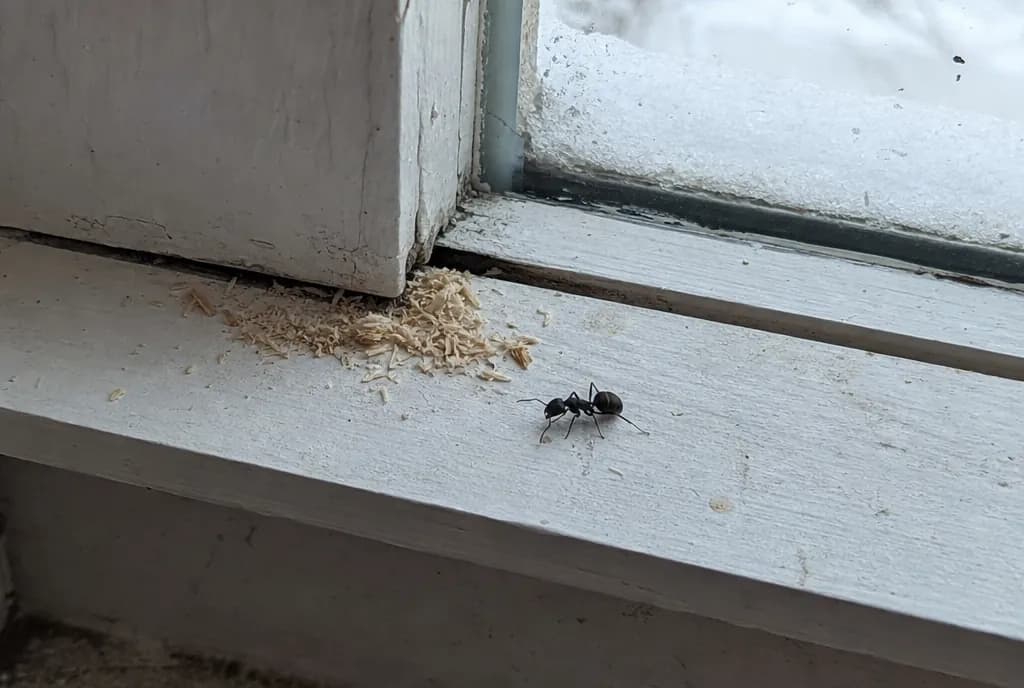
One big black ant and a pile of coarse sawdust. The sawdust is the tell: carpenter ants dig out damp wood to nest in it, and that wood is close by.
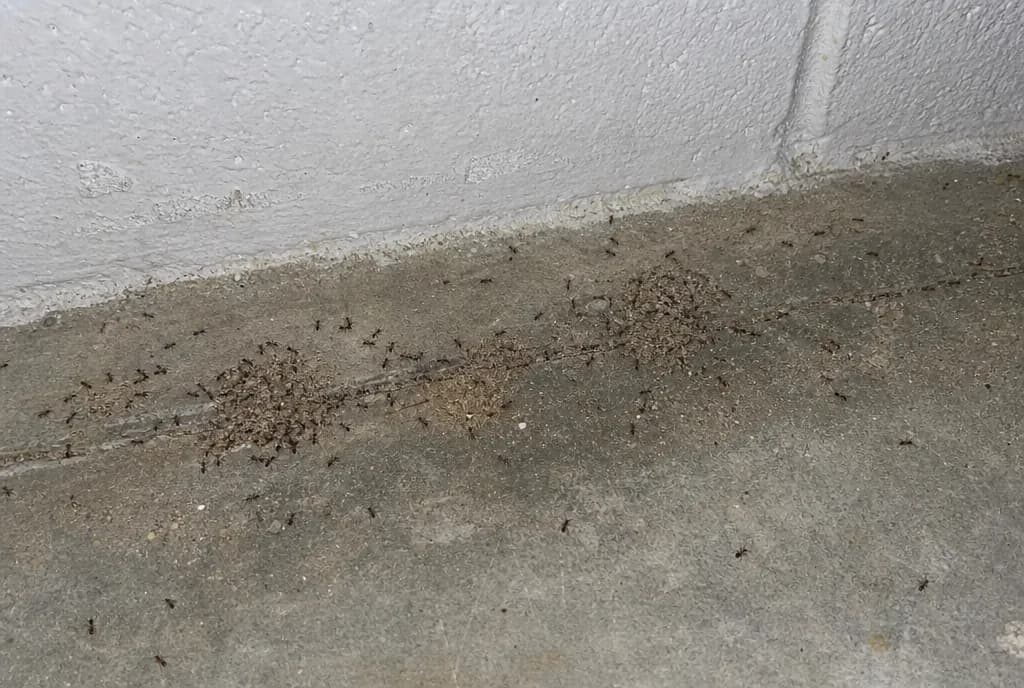
Little piles of sand along a crack in the slab. Pavement ants nest under concrete and push the soil up as they dig.
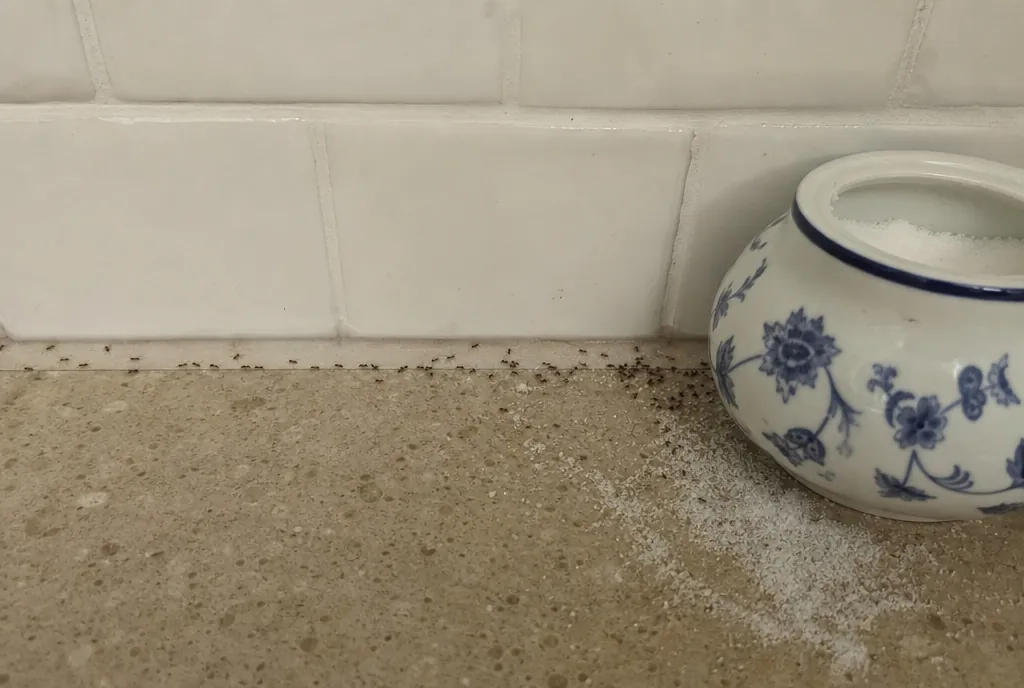
A long single-file line to anything sweet. Crush one and it smells like rotten coconut, which is how they got the name.
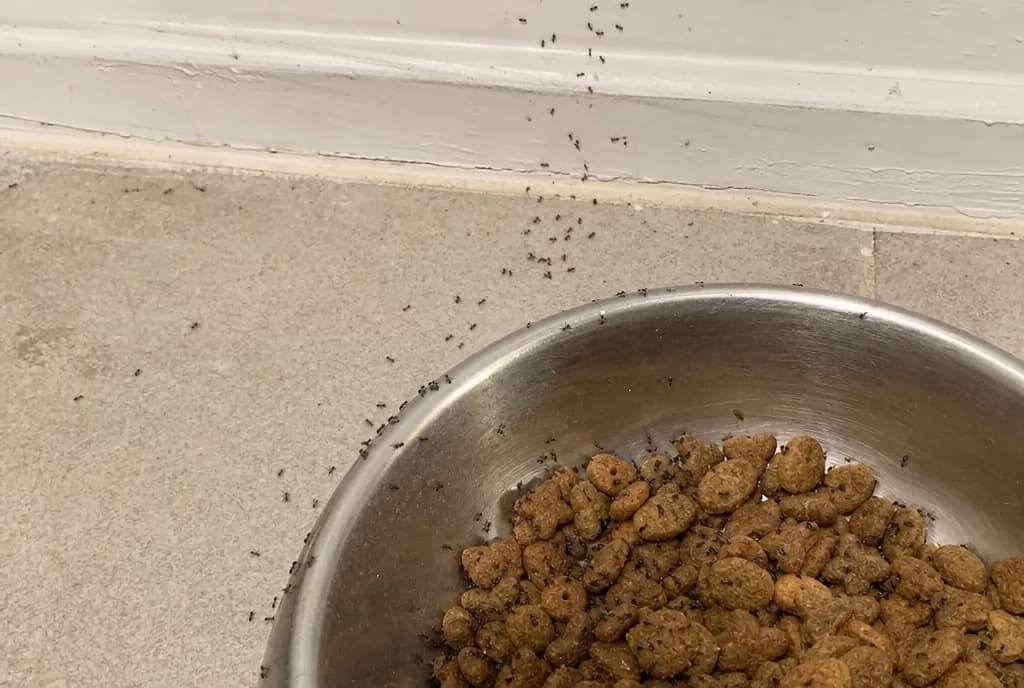
Tiny, shiny and black, and quick to find pet food. They are so small that the way they get in is hard to trace.
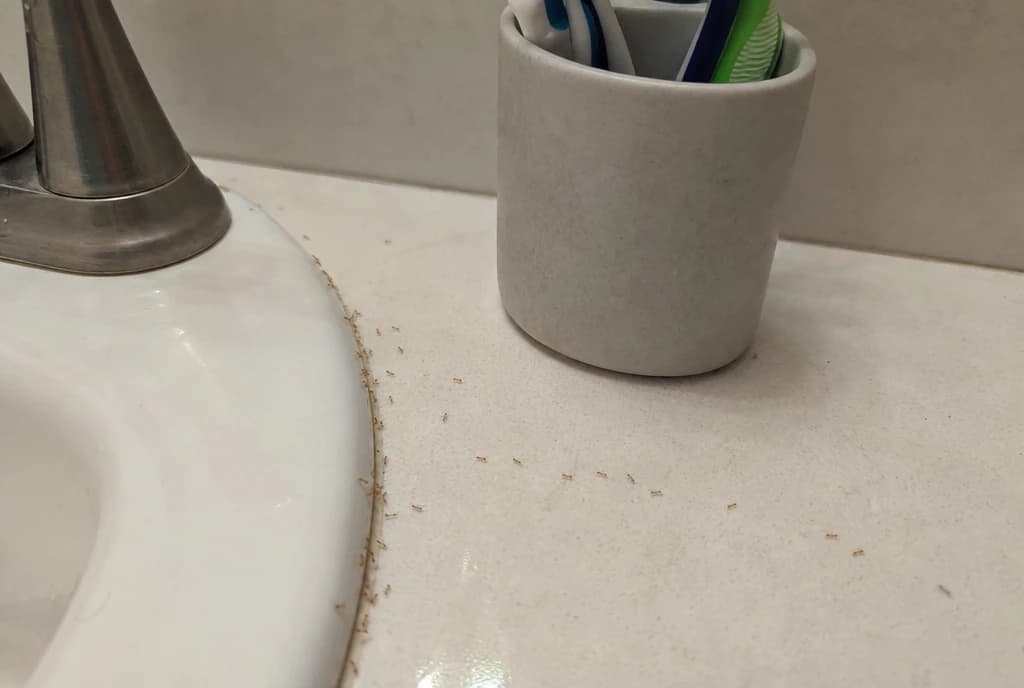
Tiny and pale yellow, living in warm wall voids. The wrong spray can split the colony into several, so these need a positive ID first.
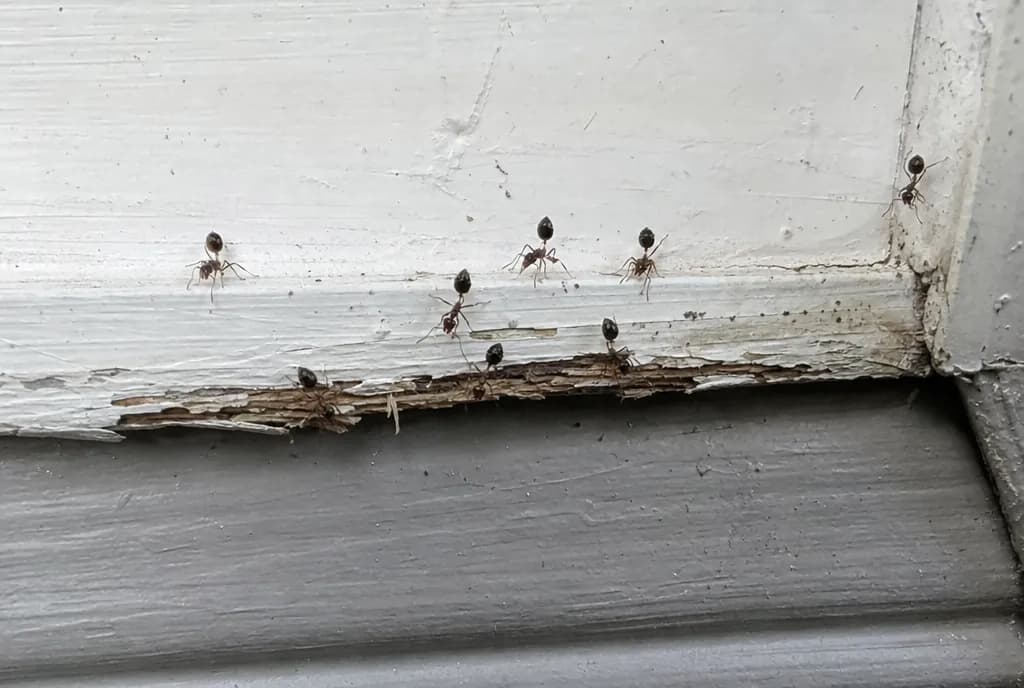
Small ants that lift their abdomen when disturbed. They nest in moist wood, so they are easy to mistake for carpenter ants.
How our exterminators get rid of ants.
Three steps, in this order. We name the ant and find the nest, treat it with what suits that ant and the label, then show you what to change. The order matters more than the product.
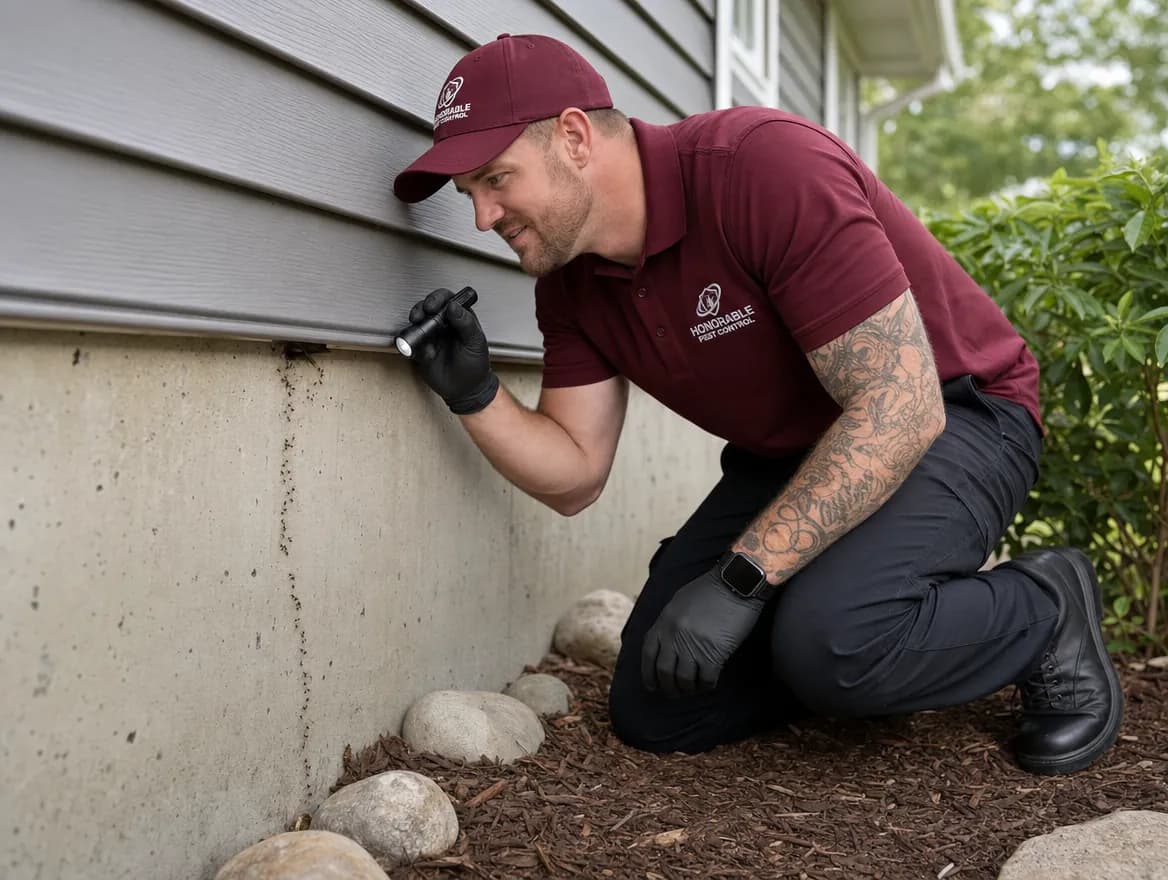
Find the nest and name the ant
We follow the trail at the time of day the ants use it, indoors and out. For carpenter ants that means finding the water: gutters, sills, the wall behind a shower, a porch post in soil. It also shows whether you have a satellite nest in the house or a parent colony in a tree. For pavement ants it means slab edges, soil piles, plumbing lines and heated floors.
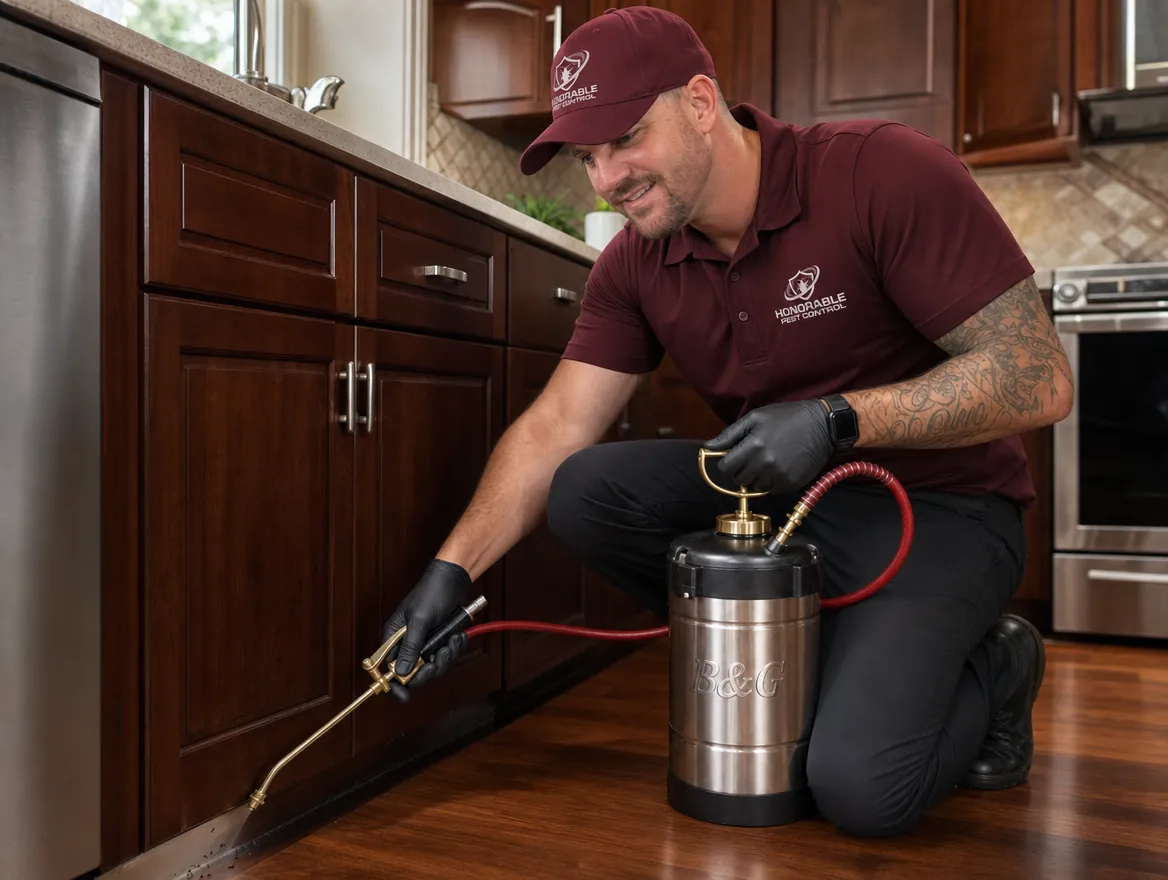
Treat the nest, not the trail
Bait, a crack and crevice treatment, a treatment put straight into a nest we have found, or an exterior treatment, depending on the ant and what the label allows. Pavement ants under a heated slab usually get bait, because nobody can reach that nest. Carpenter ants get the colony treated, never the trail. We tell you what we are treating, and its limits, first.
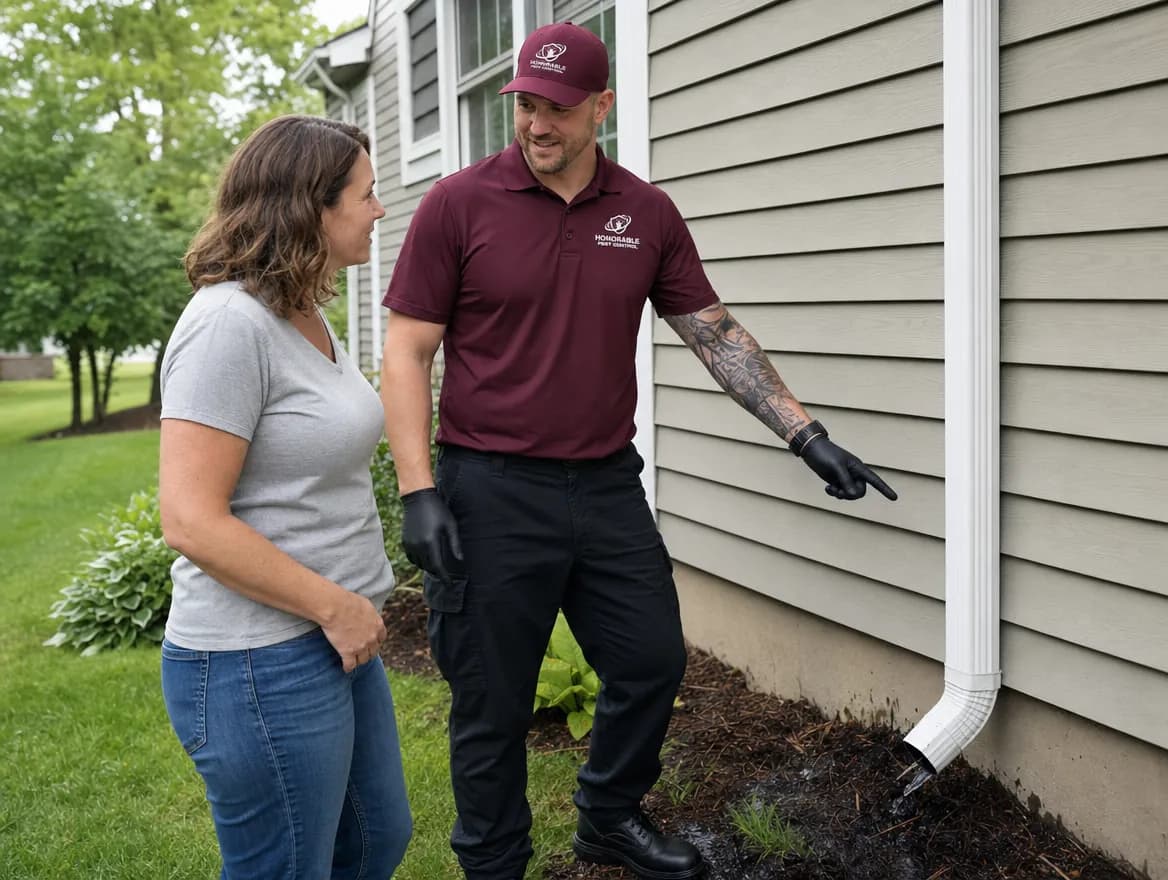
Tell you what to fix
For carpenter ants: the leak, the branch on the roof, the firewood against the wall, the soft trim. For pavement ants and kitchen trails: crumbs, grease, pet food, recycling, a dripping pipe and the gaps they use. We tell you what to expect after treatment, what not to disturb, and when a trail or a new swarm means you should call us back.
Before treatment begins, we explain which areas will be treated, whether people or pets need to leave, what preparation is required, when treated areas may be used again, and what signs should prompt a follow-up call. See EPA pesticide label guidance.
Every ant control visit
The full Honorable TriShield™, every time.
Three layers. The house, the lawn, then the property line. Not a rushed spray along your baseboards. A cheap quote usually skips two of the three.
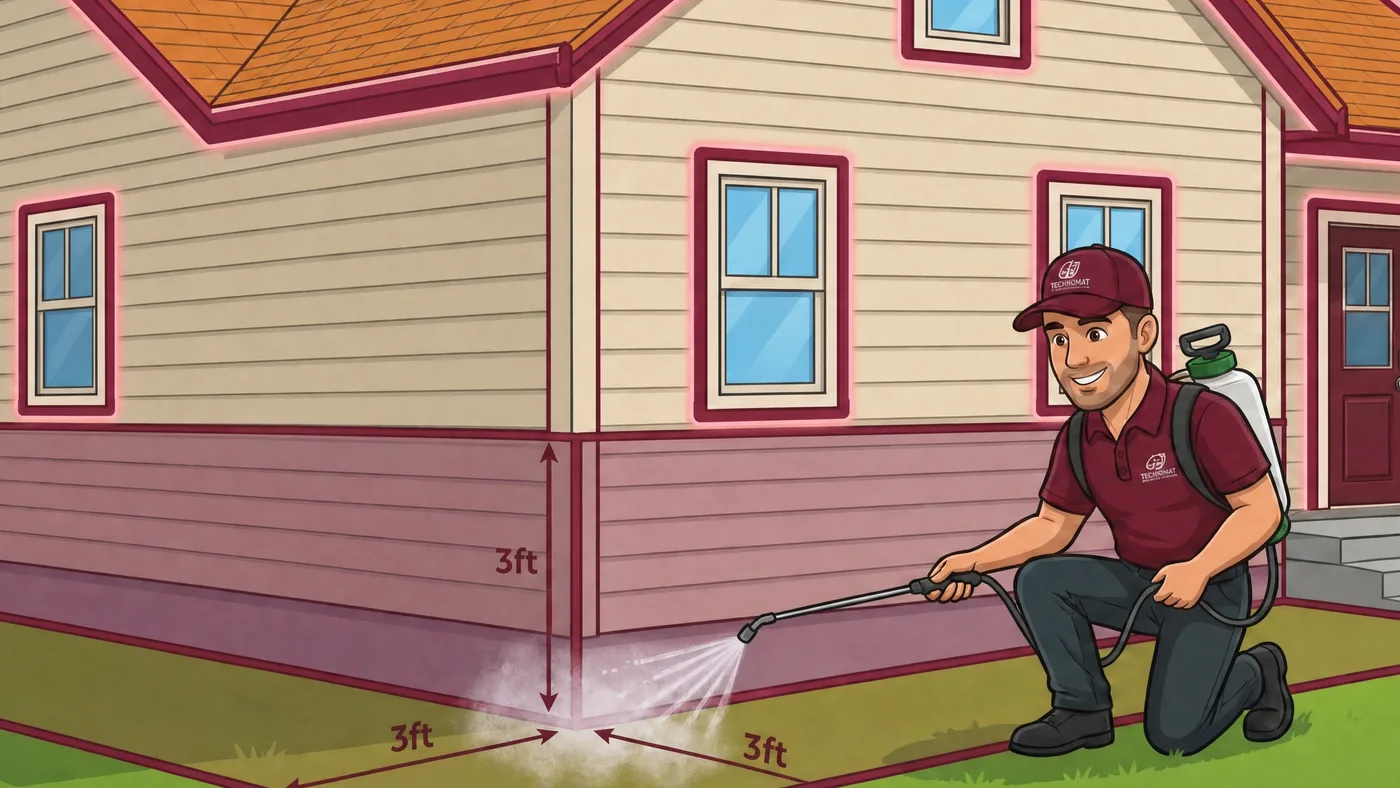
Foundation barrier
Three feet up the wall. Three feet out from it. All the way round the house, plus windows, doors, the garage and the roofline. That strip is the road bugs use to get in.
Measured with a tape, not eyeballed
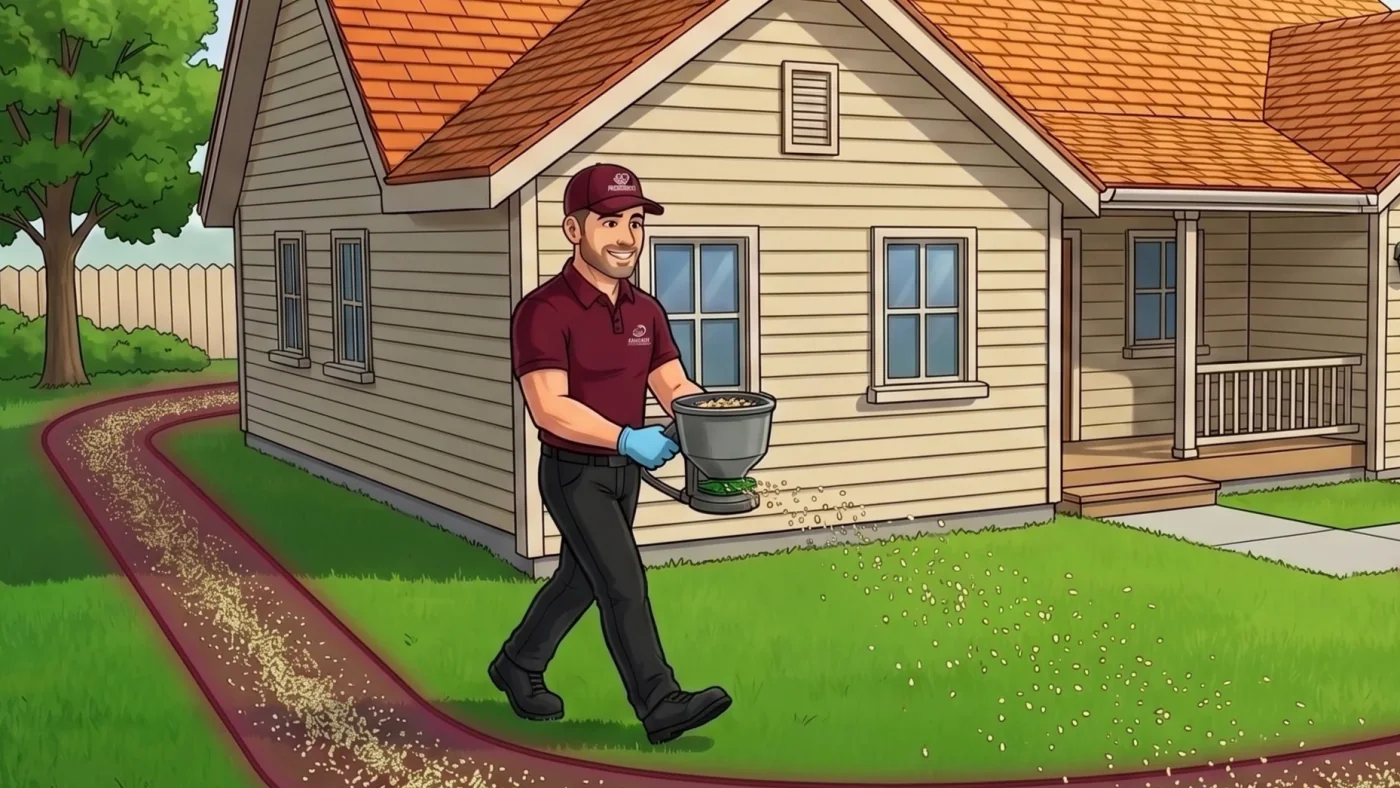
Granular yard moat
A ring of granules across the lawn. Rain wakes it back up. So does your sprinkler. In a Michigan summer that is most weeks.
Skipped by most companies. Granular costs money.
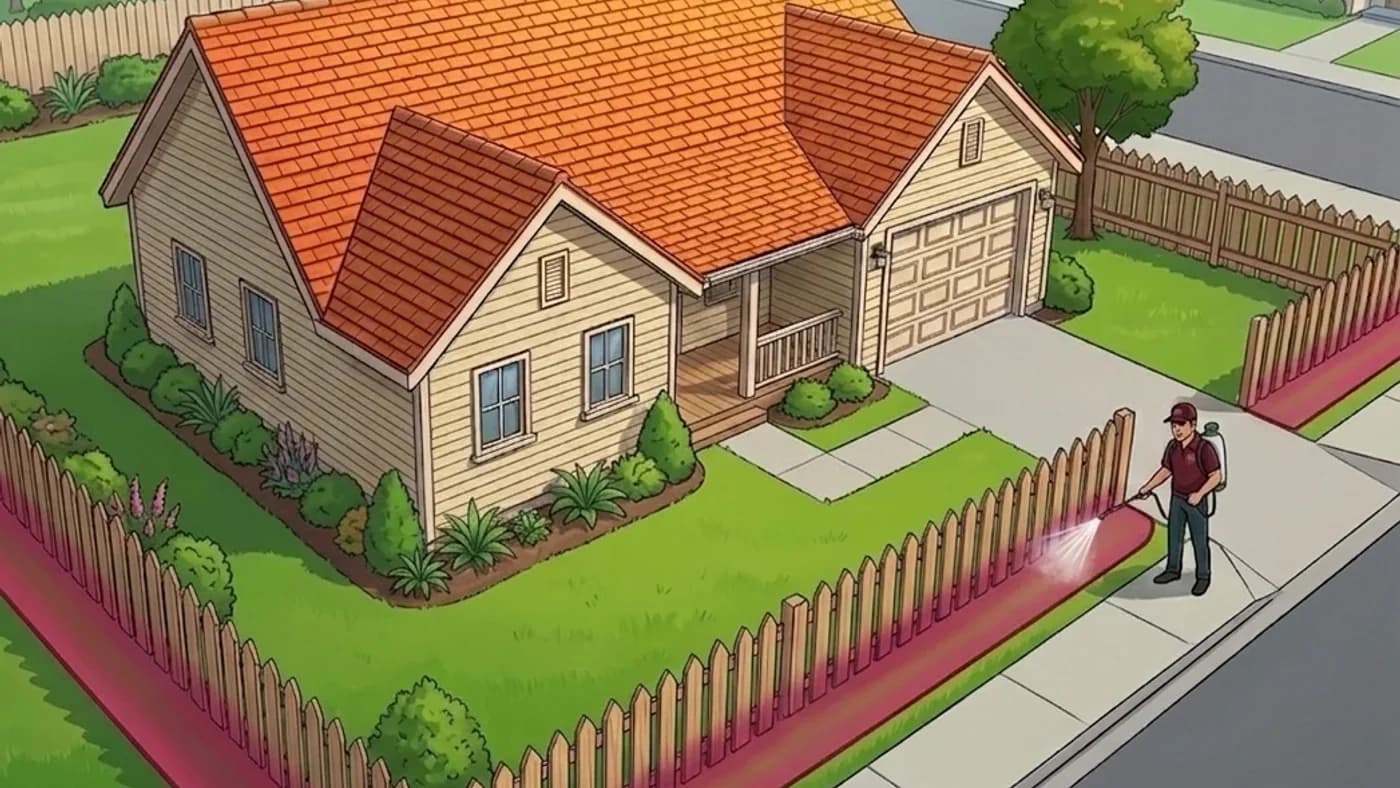
Property line
We spray the whole property line. Bugs get stopped at the edge of your yard, not at your back door.
The layer a cheaper quote quietly leaves out
How to identify the ants in your house.
These are the ants we treat that have confirmed sightings in Washtenaw, Oakland, Wayne and Livingston counties, most-recorded first. Each one is identified by independent naturalists, so the animal in the photo is the animal named.
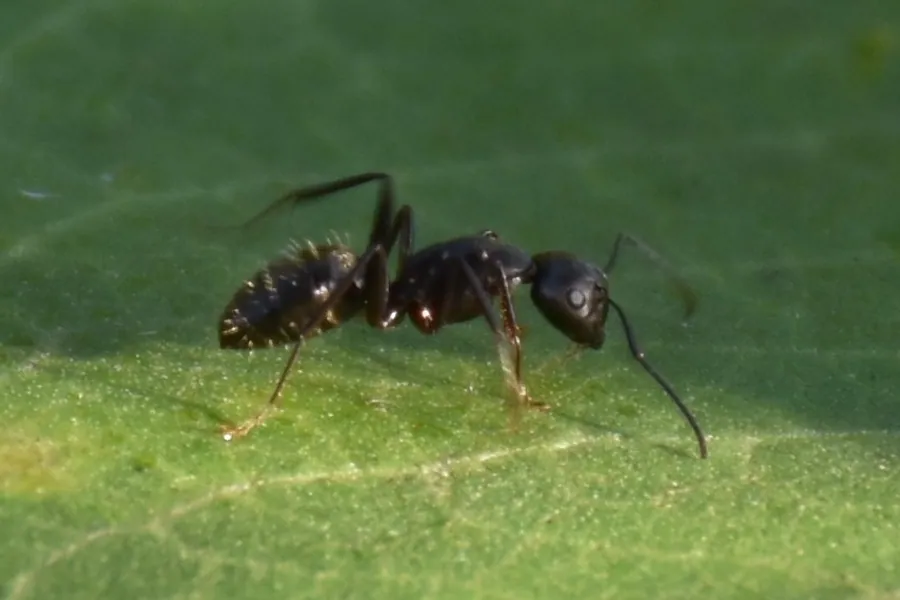
Nests in damp structural wood. The one that matters, because the ant is a symptom of a moisture problem.
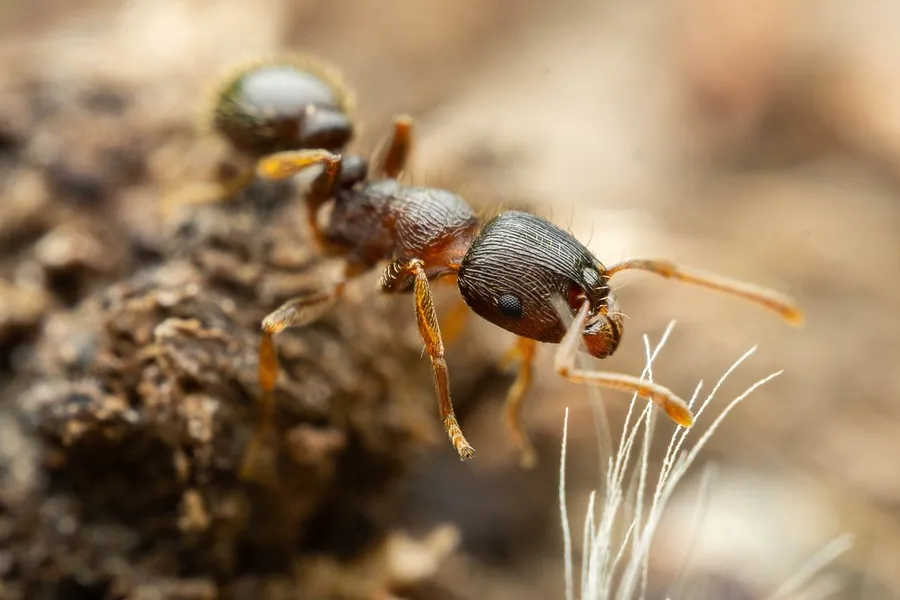
Nests under slabs, drives and patios, then trails indoors along the edges of rooms.
The kitchen trail ant. Crush one and it smells faintly of rotten coconut, which is how it is named.
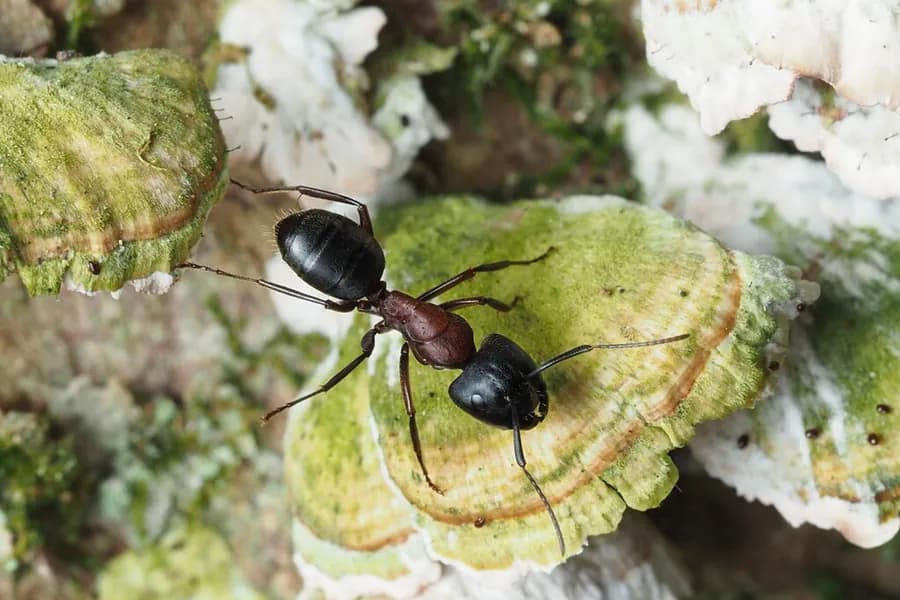
The other local carpenter ant. Same damp-wood problem, redder thorax.
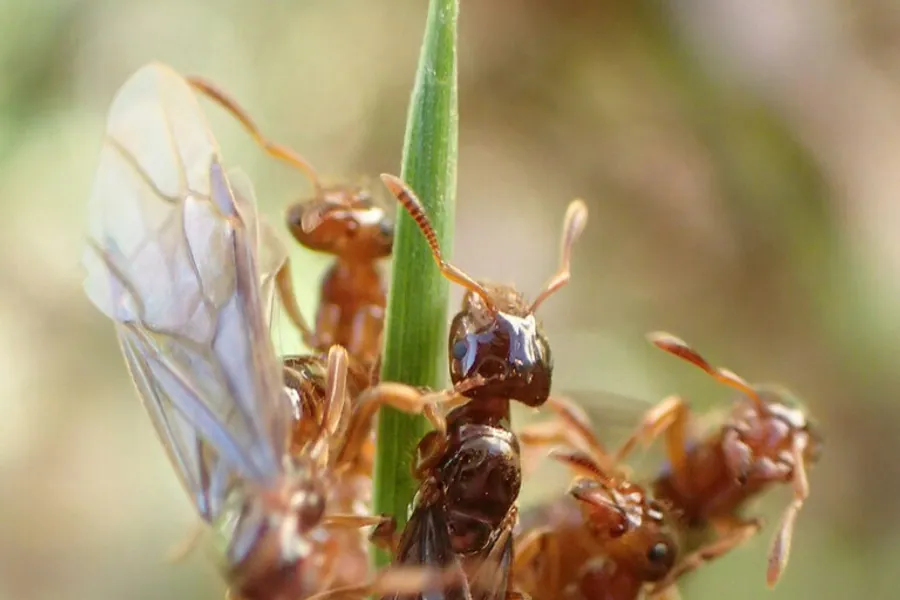
Swarms indoors in autumn from nests under slabs. Smells of lemon when disturbed.
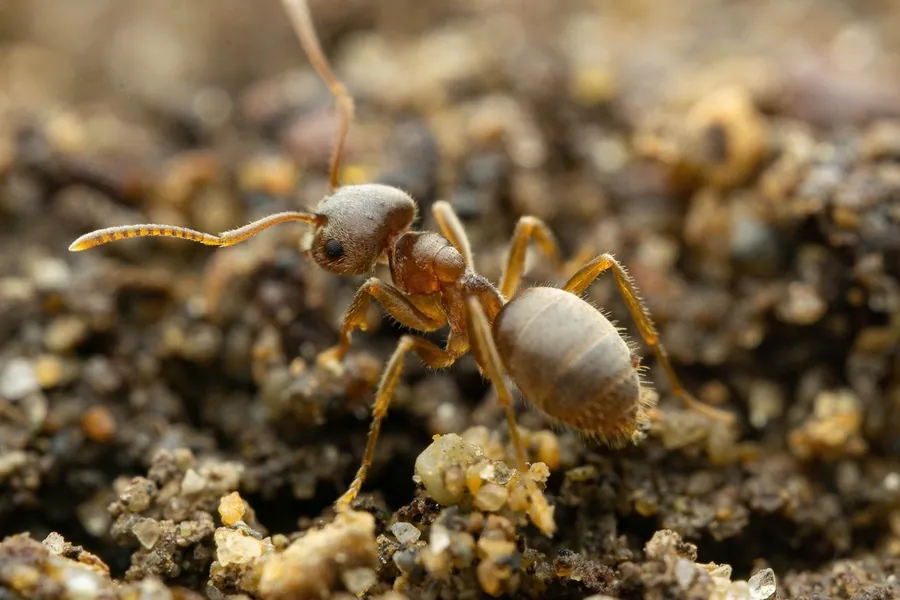
Builds the small soil craters across lawns and between paving joints.
All of these have confirmed sightings in Washtenaw, Oakland, Wayne and Livingston counties. Records from iNaturalist research-grade observations, pulled 2026-09-25. Photos: Eastern black carpenter ant by Zac Peterson (CC BY); Pavement ant by Jake Nitta (CC BY); Odorous house ant by Jake Nitta (CC BY); New York carpenter ant by Brighton Lee (CC0); Citronella ant by Evan M. Raskin (CC BY); Turfgrass ant by Jake Nitta (CC BY).
What it costs
Ant control is included in the Honorable Shield plan.
There is no special tier to buy. Ants are covered by the normal plan. If they come back between visits, so do we, free, within 48 hours. Your price depends on the size of your house, not on which bug you have.
| Honorable ShieldRecurring | One-time treatmentSingle visit | |
|---|---|---|
| Best for | Keeping them out all year | Killing off one problem now |
| You get | All three barrier layers, every visit, on a schedule | All three barrier layers, one time |
| If they come back | We treat again, free | A follow-up is $247 |
| Other pests | Over 20 pests, rodents included | This one only |
| Price | From $61 a month | From $497 |
Prices are the starting figures: a home up to 1,000 square feet, or half an acre for yard work. What is covered is set out in the plan terms.
Ant control, answered straight.
What ants are commonly found in Michigan homes?
Carpenter ants, pavement ants, odorous house ants, little black ants, pharaoh ants and acrobat ants, mostly. Which one you have matters, because they nest in different places and answer to different baits. That is why we name the ant before we treat it.
How do I tell a carpenter ant from other ants?
Size and shape. Carpenter ants are big, often a quarter inch or more, usually black, and they have one smooth hump between the waist and the abdomen. Most other house ants are much smaller. Coarse shavings under wood, rustling in a wall at night, or big black ants indoors in March all point to a nest inside.
How much damage can carpenter ants do?
Less than termites, and slower. A colony works through soft wet wood, so the damage follows the leak rather than spreading everywhere. One season is usually nothing. Several years in the same window frame or porch post can mean you need a carpenter as well as an exterminator.
Will carpenter ants come back after treatment?
They will if the wood is still wet. Treatment ends the colony you have. Fixing the leak, cutting the branch off the roof and moving the firewood off the porch is what stops the next one moving in.
Why do I see ants in winter?
Because the nest is inside, or right against the house. Outdoor colonies go dormant in a Michigan winter. Big black ants crossing the kitchen in January mean carpenter ants nesting in your walls, which is the strongest single sign there is. Small brown ants in winter, or winged ones swarming indoors, usually mean pavement ants under a heated slab or in the foundation. That is a nest to treat, not damage to the building.
Are ant treatments safe for children and pets?
We use EPA-registered products and follow the label. Whether anyone needs to leave the room, and for how long, depends on the product and where it goes. We tell you before we start. Ask for the product name and you will get it.
Are ants covered by Honorable Shield?
Yes. Ants and carpenter ants are both on the covered list, and pavement ants are ants. If they come back between the four scheduled visits, we come back and treat again, free, within 48 hours. Check the written plan terms before you sign.
How much does ant control cost?
The price is set by the size of your house, not by the ant. Honorable Shield starts at $182 a quarter or $61 a month after the first visit, or $828 paid in full for the year. A one-time treatment starts at $497, and a follow-up visit after it is $247. We give you the price over the phone. If you want us to look before you buy, that visit is $97, and it comes off the price if you go ahead.
Pest-Free Guarantee
They come back? So do we, free.
On Honorable Shield, see a covered pest between visits? We come back within 48 hours and treat it again. You pay nothing.
Ant control where you live.
Old streets with big trees get different bugs than new build on cleared ground. Pick your town to see what we actually find there.
That is not all of them. See all 38 towns, or ask us if we reach your street.
Other pests we treat
One plan covers every one of these. No extra charge when something different shows up.
Every visit includes all three barrier layers. See what we treat, or ask an exterminator.
Ant control · Licensed and insured
Ants on the counter, or sawdust under the sill?
Call (734) 519-6671 or send a request. Tell us what the ants look like and where you see them. You get the price over the phone, and we explain the treatment, the preparation and the follow-up before anyone comes out.
500+ Customer Reviews·Michigan pesticide business license #820457