
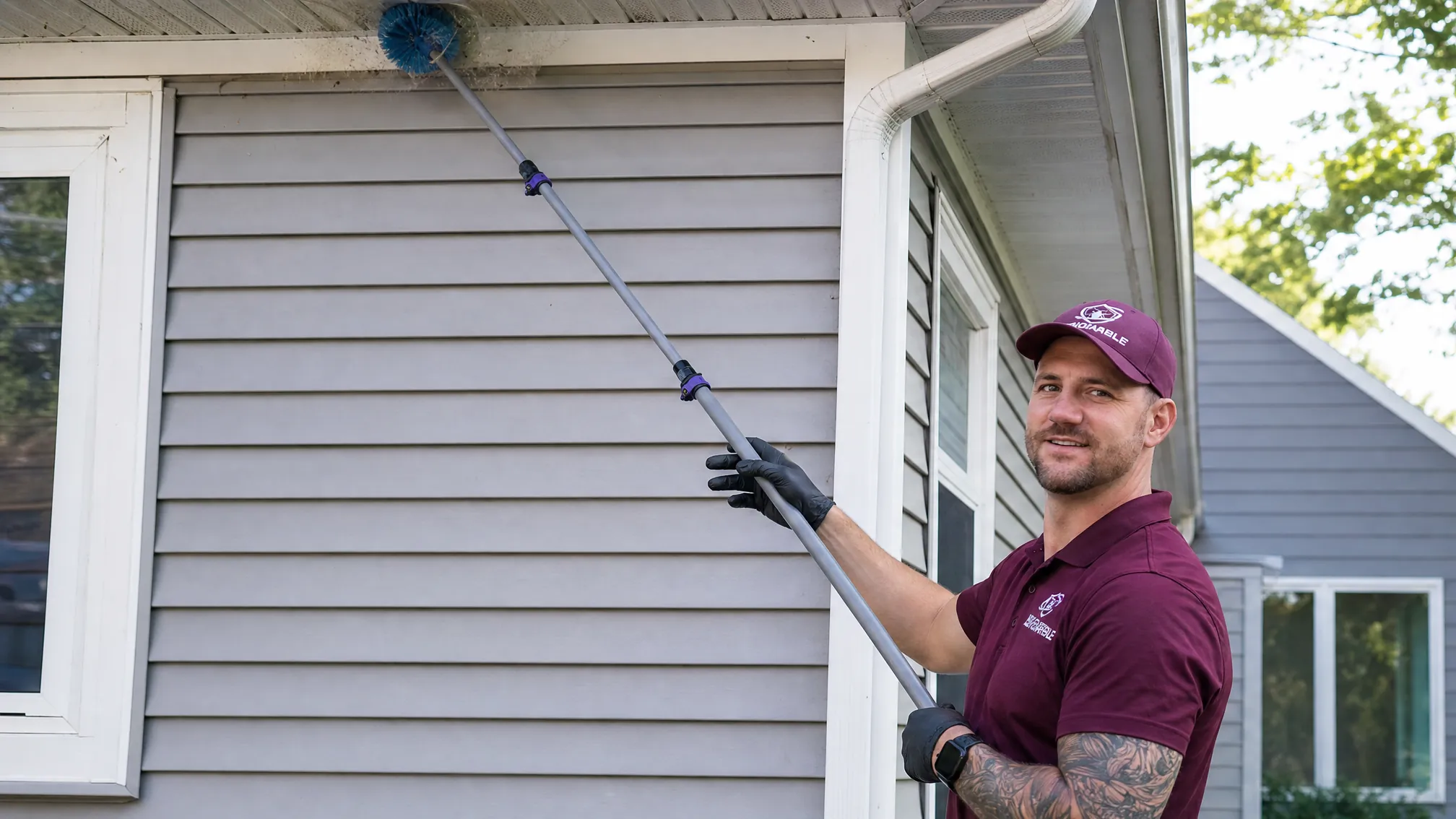
Spider control · Southeast Michigan
Spider Control in Ann Arbor and Southeast Michigan
Spiders stay where there is food. So a spider problem is usually a bug problem first. Our exterminators treat both. Michigan has no dangerous spider that lives here in numbers, which is why we identify before we treat.
Quick answers
Spider control in Southeast Michigan: the quick facts
Spiders are a symptom before they are a pest. They stay where there is something to eat, so a spider problem is usually an insect problem in a basement, garage or window well. Michigan has no medically significant spider that is established statewide, which is why identification comes before treatment rather than after.
- Most common here
- Triangulate cobweb spider
- The tangled webs in basement corners and window wells are usually this one.
- Worst months
- Jun to Sep
- The months with the most sightings in Michigan, from public records anyone can check.
- How it gets in
- Window wells, sill gaps and garages
- Most come in at ground level where siding, frames and door sweeps do not quite meet.
- Included in
- The Honorable Shield plan
- Covered by the plan, with free re-treatment between visits. Or book one visit.
Spiders in Michigan.
Nearly every spider in a Michigan house is harmless and is eating other insects for you. The webs, the egg sacs and the sheer number of them are what wear on people.
We clear webs from the eaves and windows, treat where spiders hide and hunt, and cut down the insects that feed them.

Seasonal pattern
When are spiders worst in Michigan?
This is when spiders are actually recorded in Michigan, month by month, from public observation records rather than from a guess.
Warning signs
How spiders announce themselves.
Tangled webs in basement corners and window wells
Egg sacs on joists, in a garage or behind stored boxes
A spider on the wall in daylight, hunting rather than waiting
A rise in the small flying insects they are living on
What to look for
What a spider problem looks like at home.
Six common ways spiders show up in a Michigan house, and what each one usually tells us. Most are harmless, so a clear phone photo helps us tell you whether it matters.
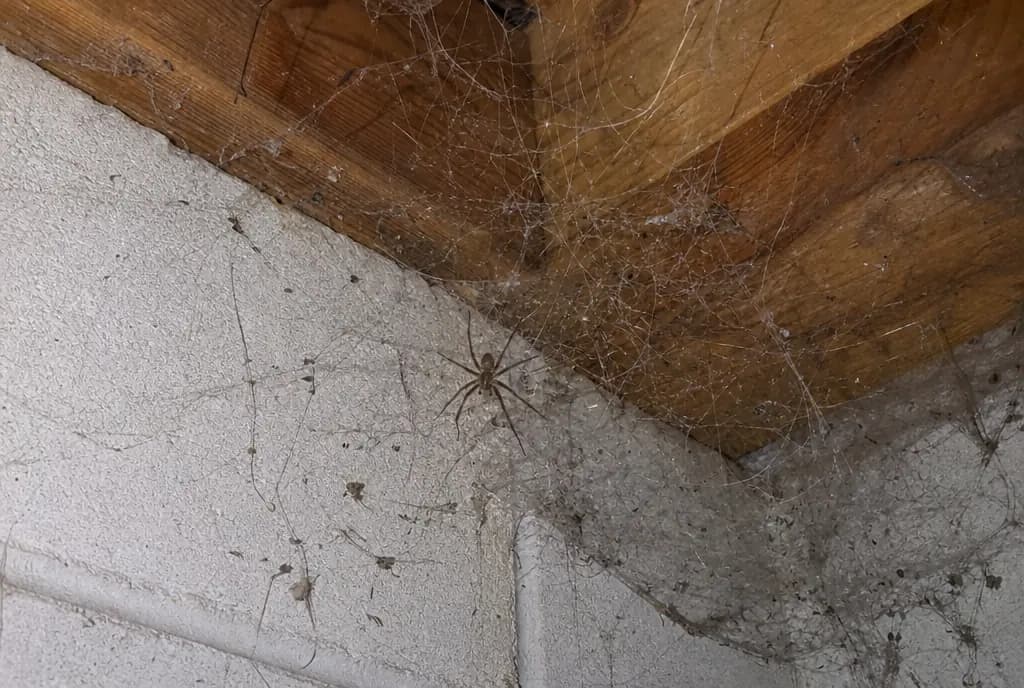
Messy webs where the wall meets the joists. The spider is harmless, but a busy corner means it is finding plenty of insects to eat there.
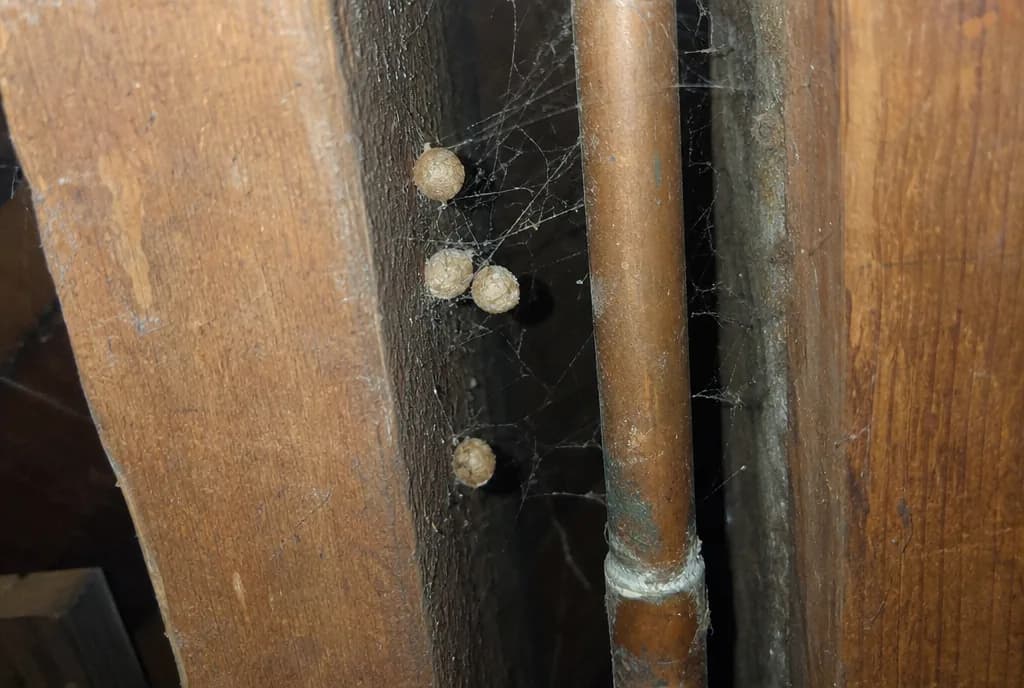
Small, round and papery, tucked into old webs. Each one can hold dozens of spiderlings, so clearing the sacs matters as much as clearing the webs.
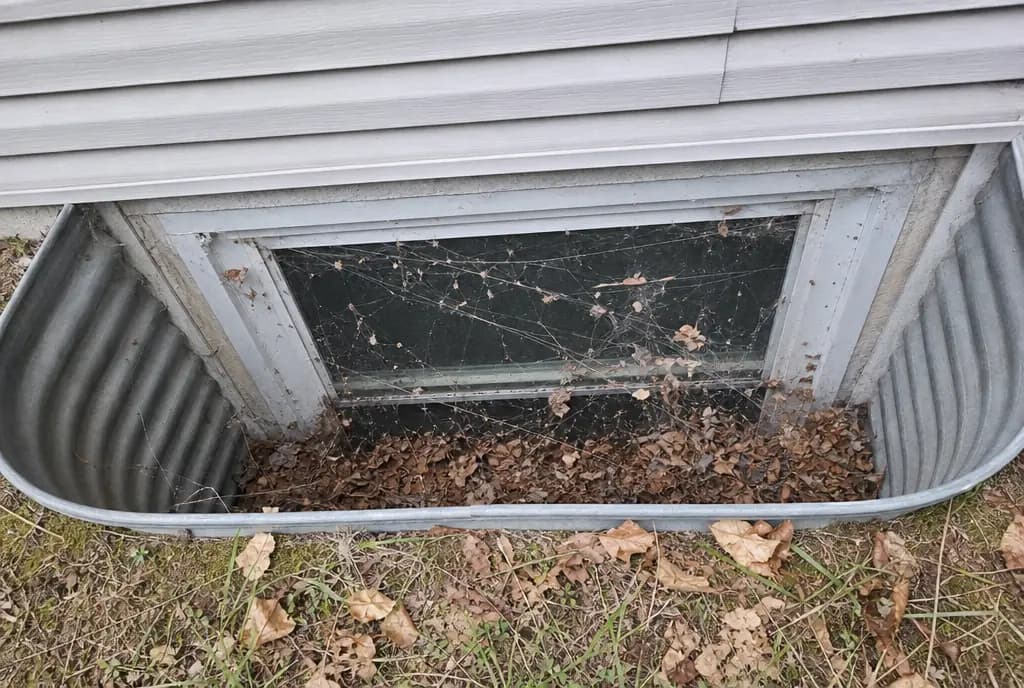
Window wells collect leaves and insects, so spiders move in. Clearing the well and sealing the window frame cuts down what gets inside.
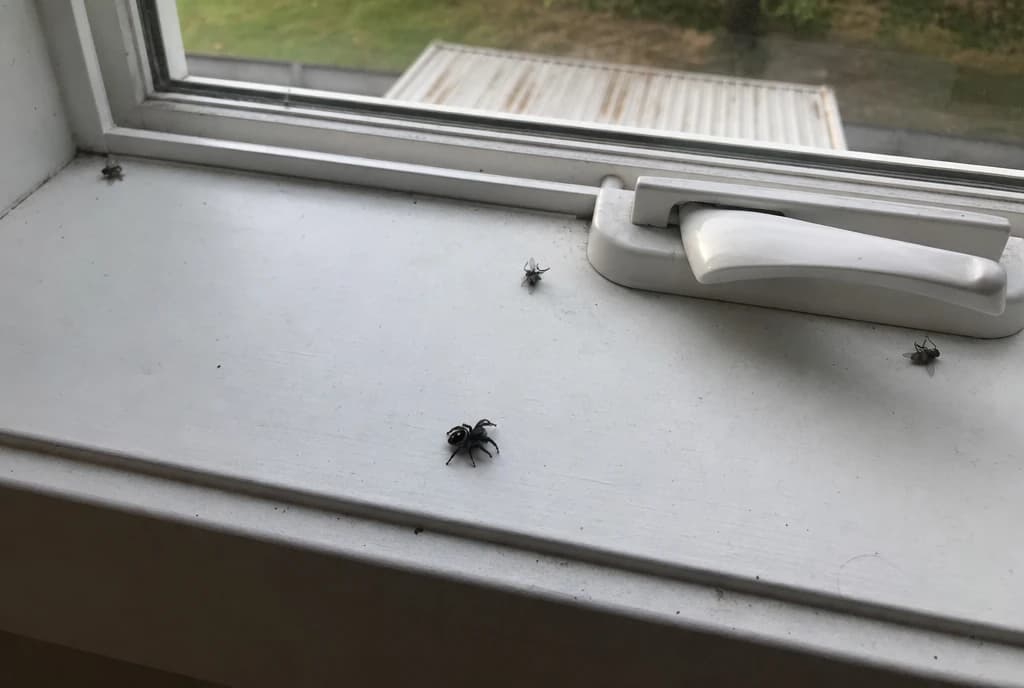
About half an inch long, black with white spots, and out in daylight. It hunts rather than spins a web, and it is harmless.
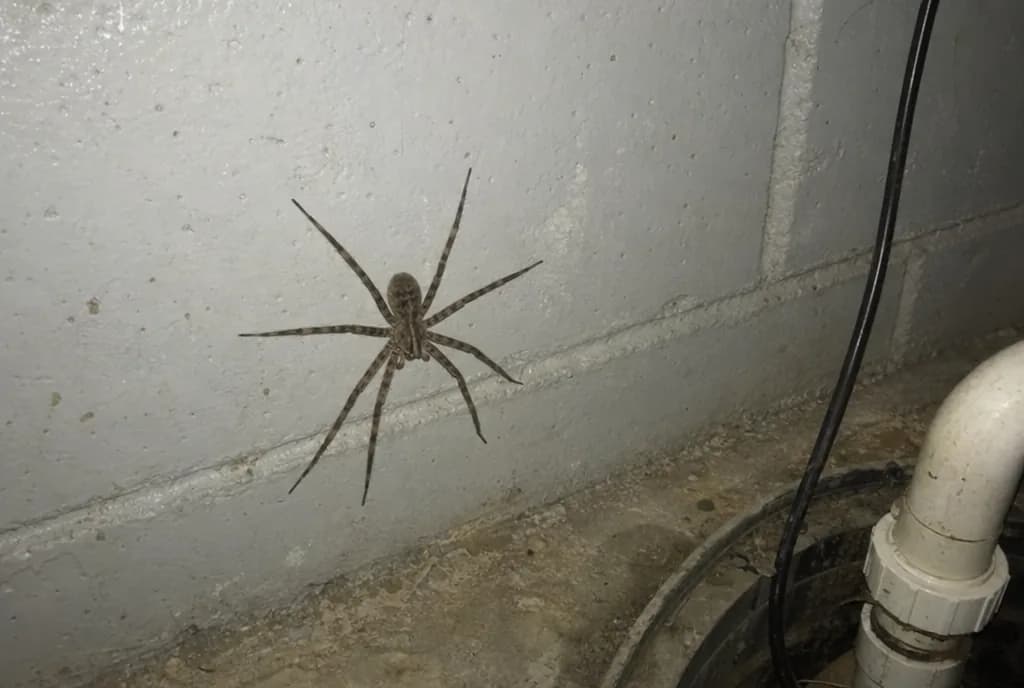
Big and startling, but not dangerous. It likes damp places, so a sump pit or a wet basement is where it usually turns up.
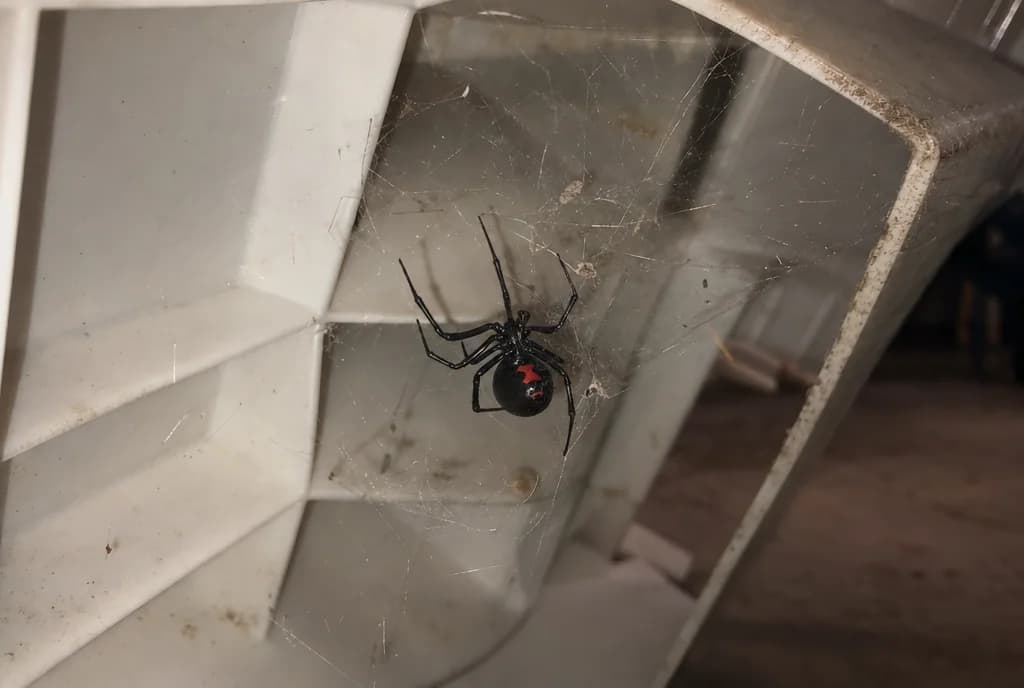
Glossy black with red on the underside, in a messy web somewhere dark and quiet. This is the one Michigan spider to leave alone and call about.
How our exterminators get rid of spiders.
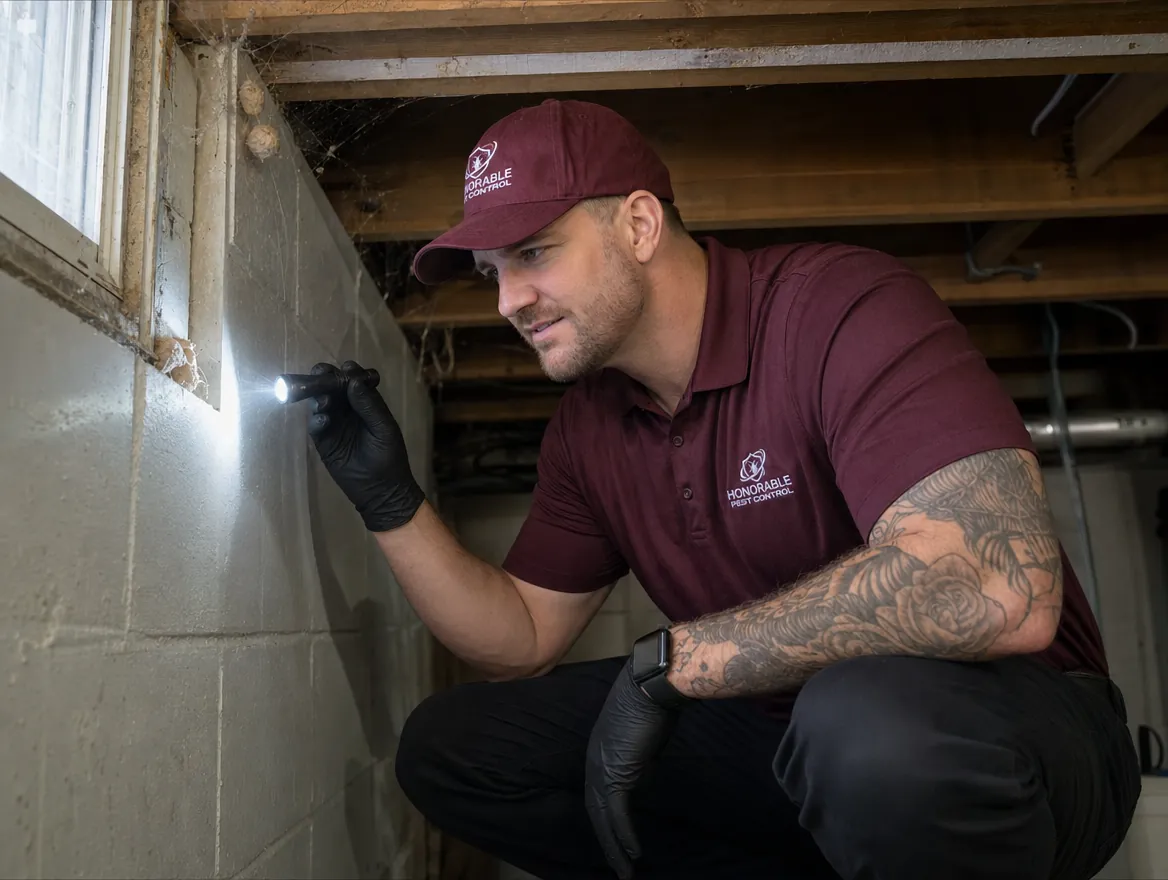
Find where they live and name what we can
The technician checks areas where spiders or webs have been noticed and looks for likely harborages, access points, and contributing insect activity. A clear photograph or specimen can help when species matters, but treatment should not depend on guessing from color or size alone.
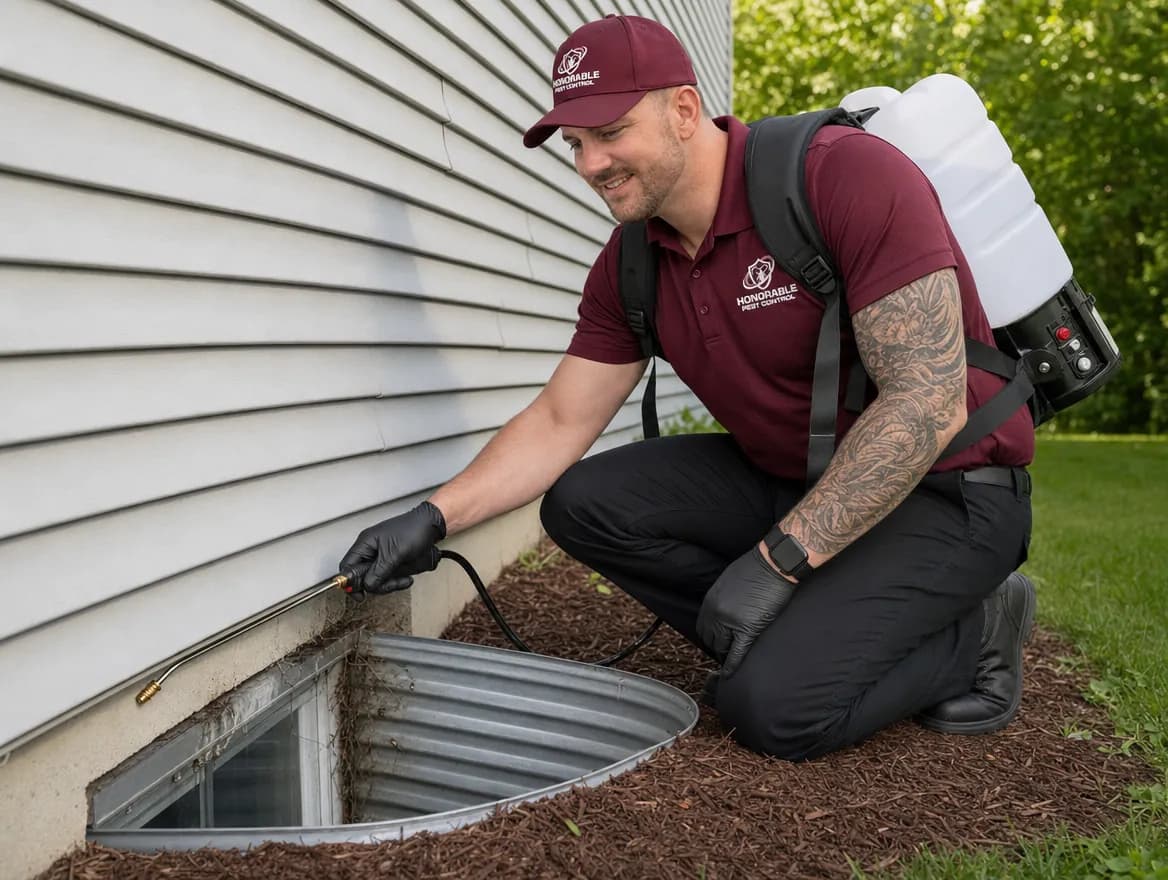
Clear the webs and treat the harborage
When included in the approved service, removing webs and egg sacs can reduce visible activity and clear material that treatment alone does not remove. Products labeled for the site and target pest may be used in selected cracks, crevices, exterior harborages, entry areas, or other approved locations.
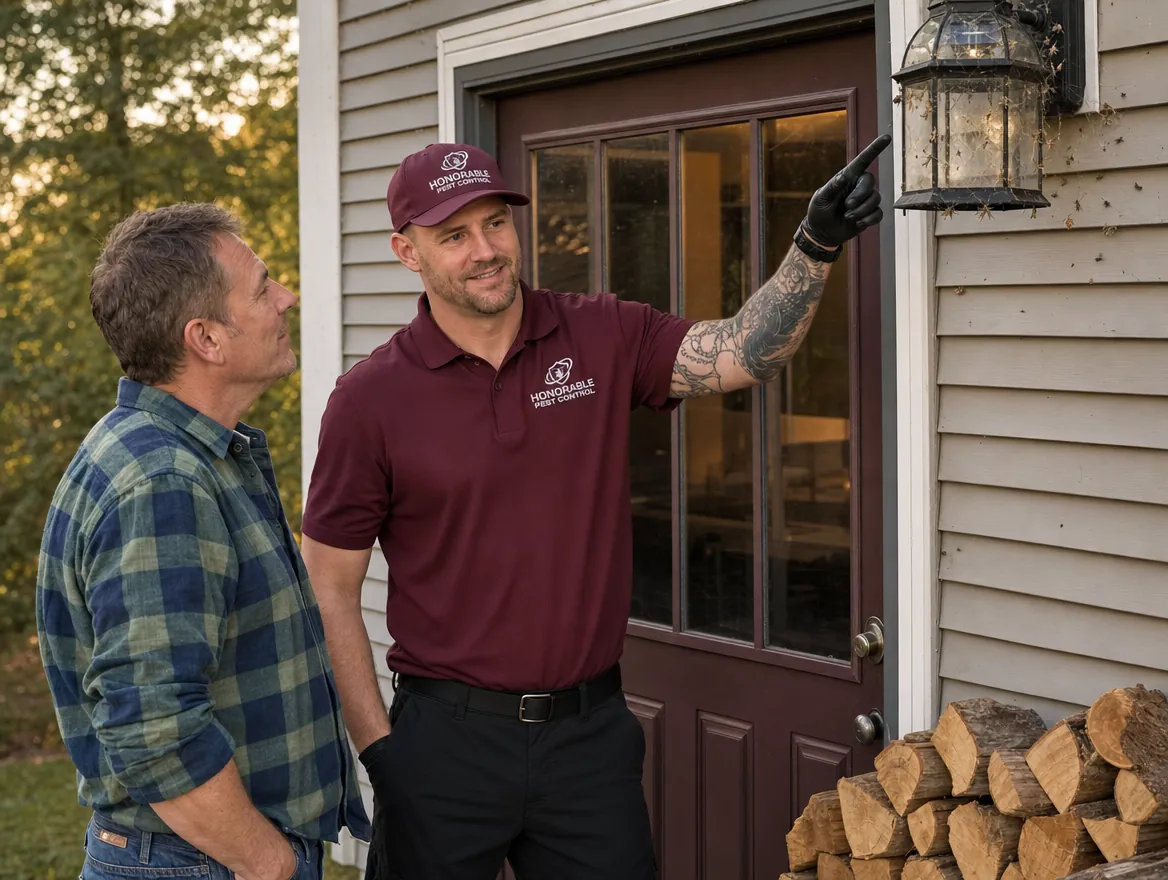
Tell you what to change
The technician reviews practical steps that can reduce future activity and explains whether one time service or recurring coverage is the better fit for the property.
This approach follows the basic logic of integrated pest management: identify the pest, correct contributing conditions where practical, use targeted control when needed, and avoid unnecessary pesticide use. See EPA integrated pest management principles.
Every spider control visit
The full Honorable TriShield™, every time.
Three layers. The house, the lawn, then the property line. Not a rushed spray along your baseboards. A cheap quote usually skips two of the three.
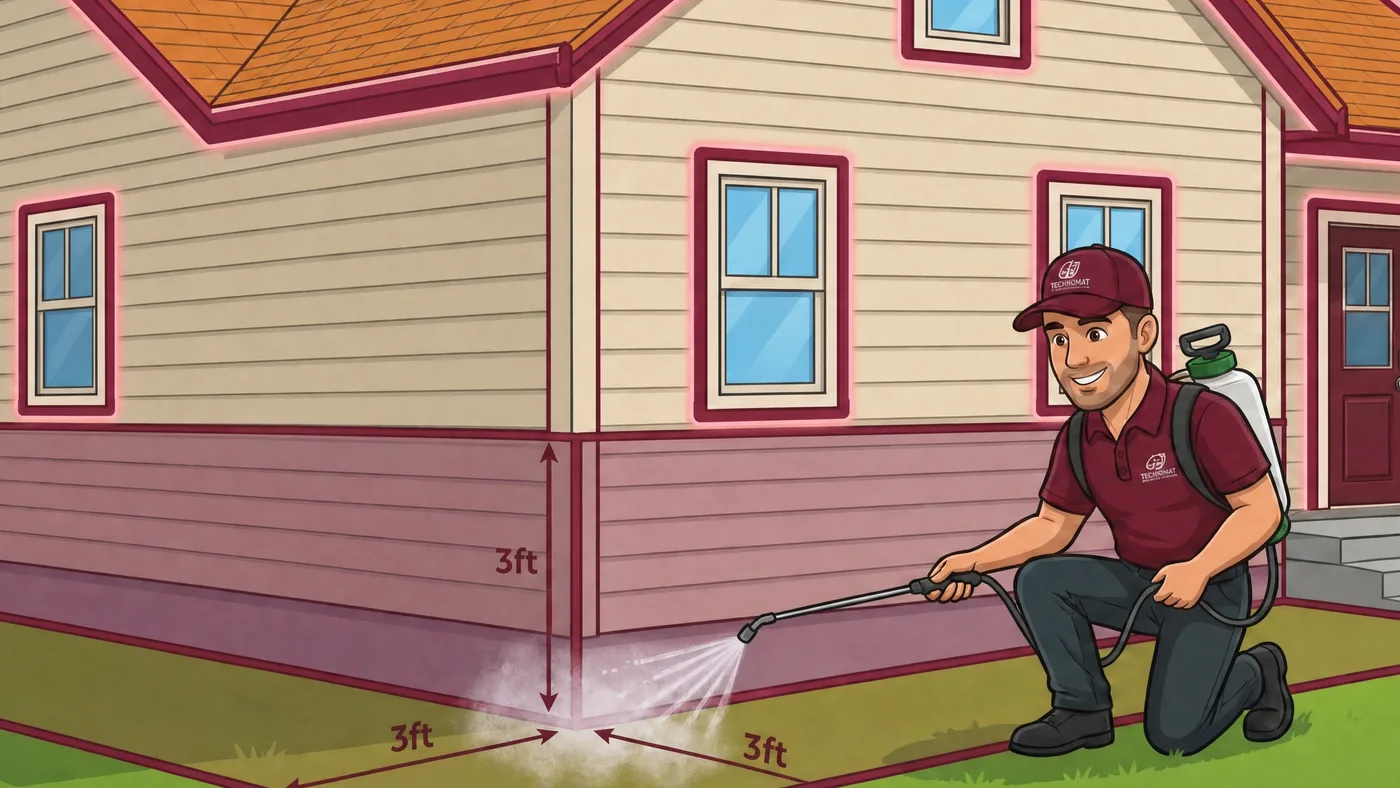
Foundation barrier
Three feet up the wall. Three feet out from it. All the way round the house, plus windows, doors, the garage and the roofline. That strip is the road bugs use to get in.
Measured with a tape, not eyeballed
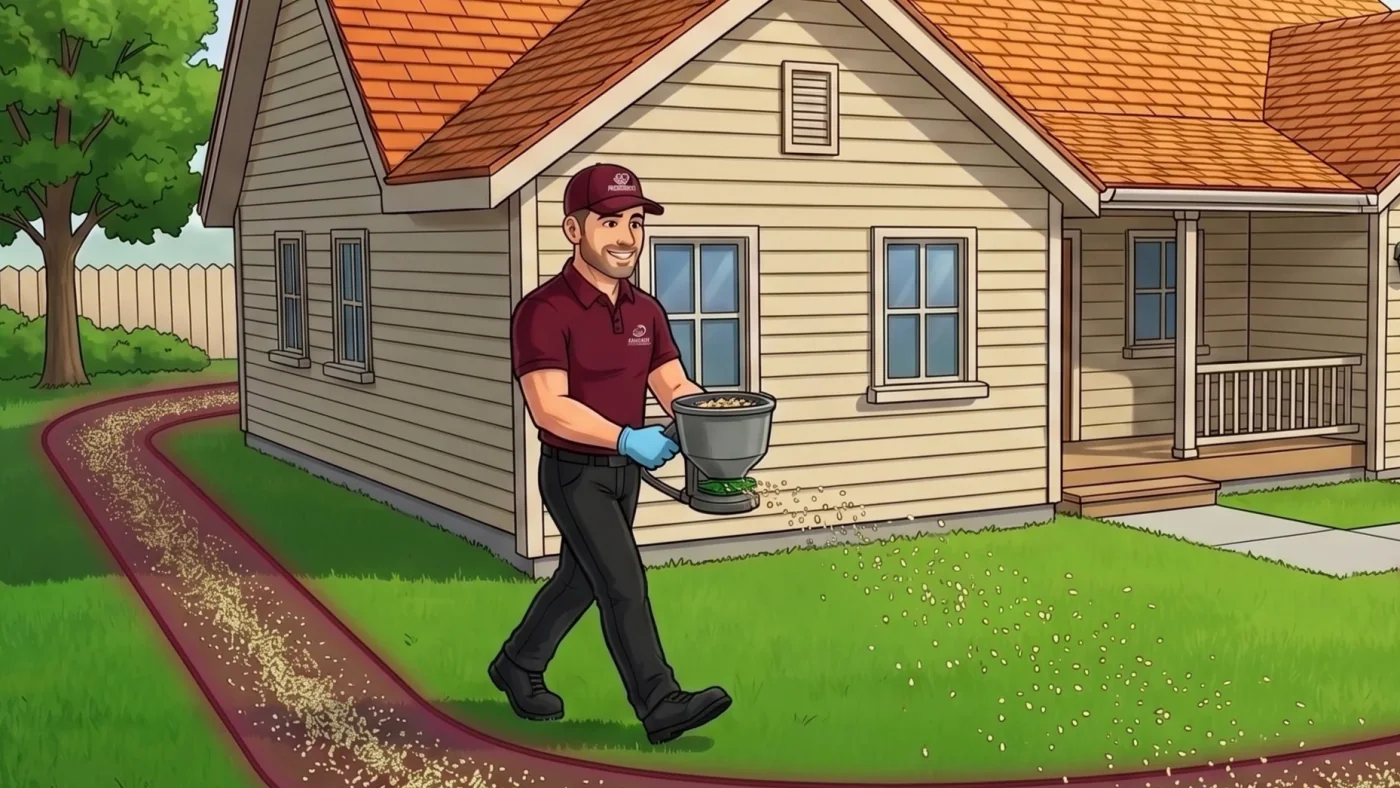
Granular yard moat
A ring of granules across the lawn. Rain wakes it back up. So does your sprinkler. In a Michigan summer that is most weeks.
Skipped by most companies. Granular costs money.
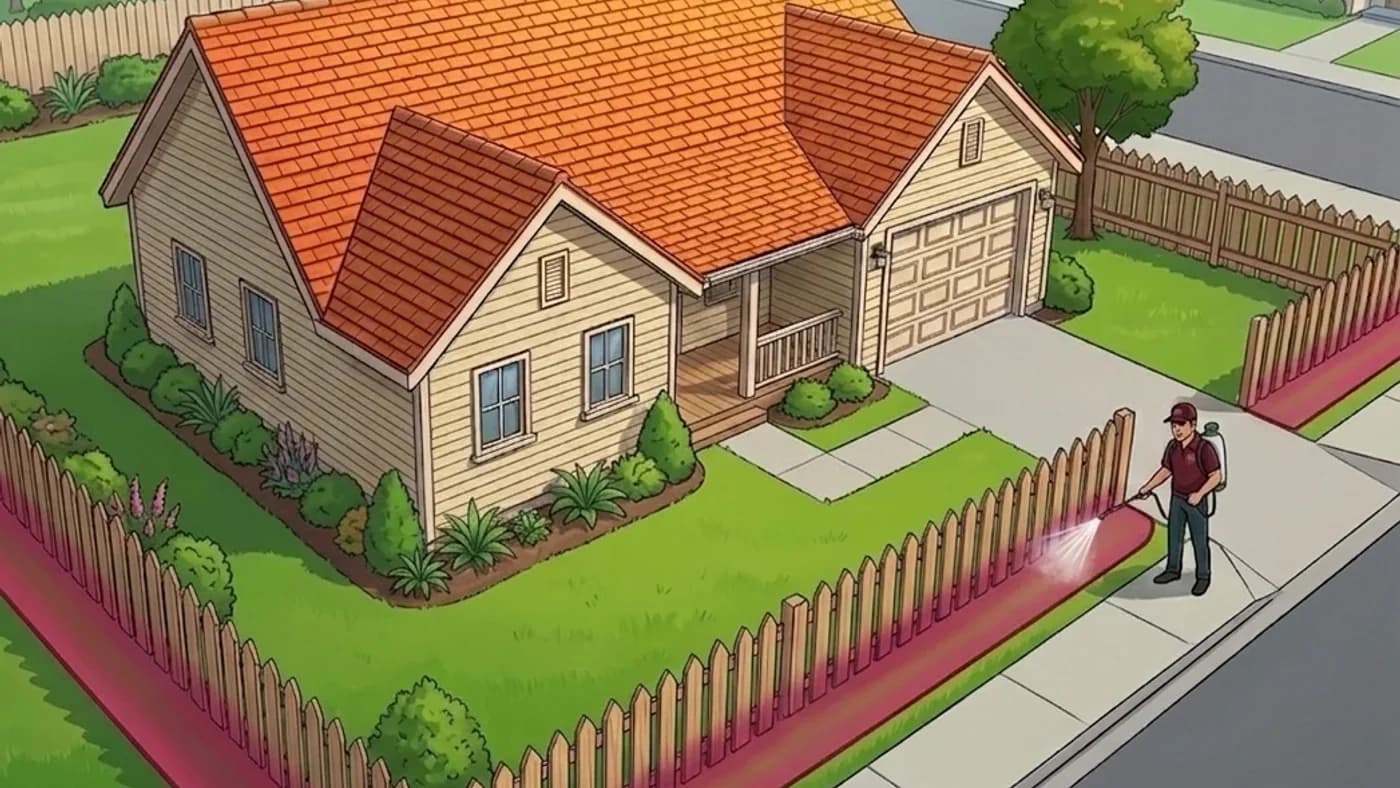
Property line
We spray the whole property line. Bugs get stopped at the edge of your yard, not at your back door.
The layer a cheaper quote quietly leaves out
How to identify the spiders in your house.
These are the spiders we treat that have confirmed sightings in Washtenaw, Oakland, Wayne and Livingston counties, most-recorded first. Each one is identified by independent naturalists, so the animal in the photo is the animal named.
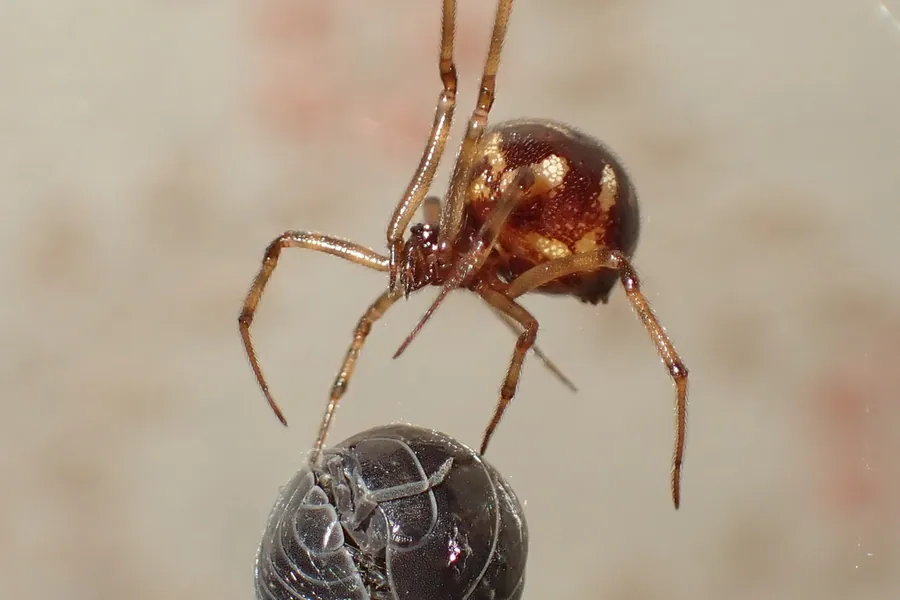
The tangled webs in basement corners and window wells are usually this.
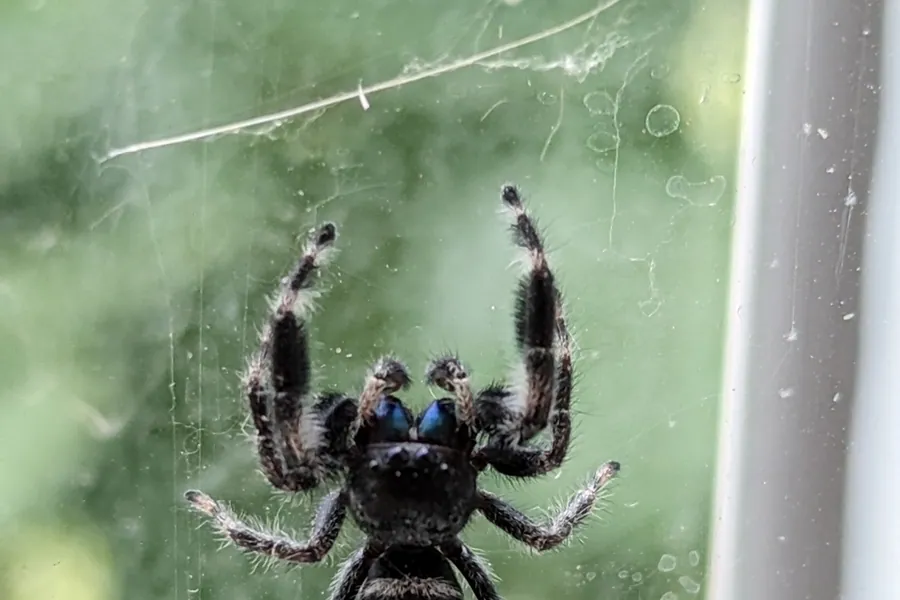
Hunts on walls and sills in daylight rather than building a web.

Flattened, so it lives in siding gaps and window frames and comes indoors from them.
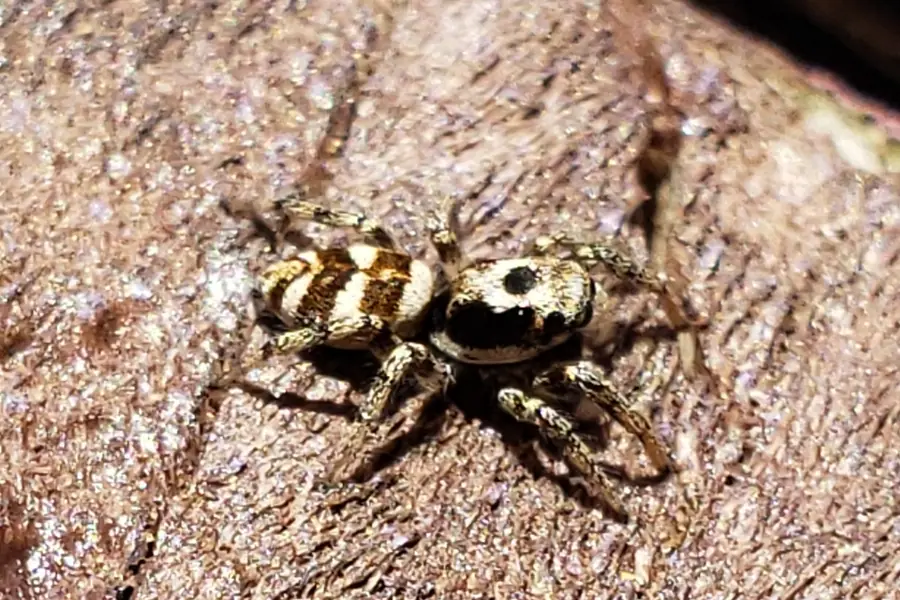
Small, striped, and almost always found on a sunny wall or window.
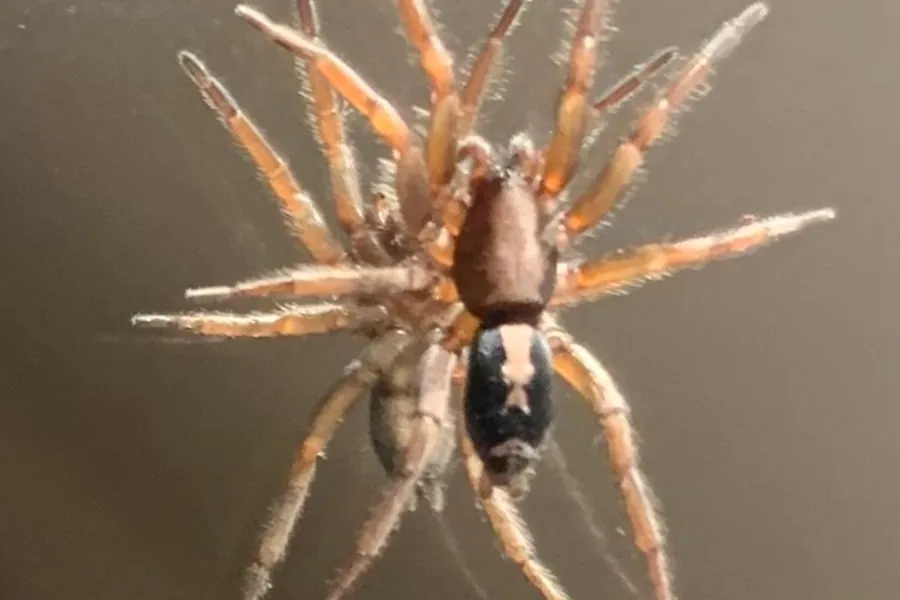
Fast, ground-running and nocturnal, which is why it turns up in basements.

The very large one that alarms people in basements and garages.
All of these have confirmed sightings in Washtenaw, Oakland, Wayne and Livingston counties. Records from iNaturalist research-grade observations, pulled 2026-09-25. Photos: Triangulate cobweb spider by dhasdf (CC BY); Bold jumping spider by Rebecca Ray (CC BY); Tan jumping spider by Timothy Lindsey (CC BY); Zebra jumping spider by Gavin Slater (CC BY); Eastern parson spider by jabauhs (CC BY); Dark fishing spider by Zachary Dankowicz (CC BY).
What it costs
Spider control is included in the Honorable Shield plan.
There is no special tier to buy. Spiders are covered by the normal plan. If they come back between visits, so do we, free, within 48 hours. Your price depends on the size of your house, not on which bug you have.
| Honorable ShieldRecurring | One-time treatmentSingle visit | |
|---|---|---|
| Best for | Keeping them out all year | Killing off one problem now |
| You get | All three barrier layers, every visit, on a schedule | All three barrier layers, one time |
| If they come back | We treat again, free | A follow-up is $247 |
| Other pests | Over 20 pests, rodents included | This one only |
| Price | From $61 a month | From $497 |
Prices are the starting figures: a home up to 1,000 square feet, or half an acre for yard work. What is covered is set out in the plan terms.
Spider control, answered straight.
Are most spiders in Michigan dangerous?
No. Nearly every spider in a Michigan house is harmless and is eating other insects for you. Northern black widows do live here. Brown recluses are rare: Michigan is outside their native range, but MSU has confirmed small, isolated populations in 11 Michigan counties, carried in from farther south.
Why do I keep finding spiders in my basement?
Because a basement gives them everything: quiet, damp, gaps to get in and insects to eat. If they keep coming back, look at the prey insects, the clutter, the screens and the gaps around the building.
Do store bought spider sprays work?
Partly. A labeled spray kills a spider it hits and can treat a harborage. It does not clear the webs and egg sacs, and it does nothing about the insects they are eating, the gaps they come through, the clutter or the damp.
Are spider treatments safe for children and pets?
It depends on the product, where it goes and the plan. Follow the pesticide label and the preparation, drying, access and re-entry instructions we give you for that treatment.
Can I remove spiders myself?
Usually yes. A vacuum or a glass and a card handles most of them, then clear the webs and close the obvious gaps. Call us when it keeps happening, you cannot identify what it is, or they are somewhere awkward or unsafe to reach.
Does Honorable Shield cover spiders?
Yes, spiders are on the covered list. Confirm the current terms and the pricing for your property before enrolling.
Pest-Free Guarantee
They come back? So do we, free.
On Honorable Shield, see a covered pest between visits? We come back within 48 hours and treat it again. You pay nothing.
Spider control where you live.
Old streets with big trees get different bugs than new build on cleared ground. Pick your town to see what we actually find there.
That is not all of them. See all 38 towns, or ask us if we reach your street.
Other pests we treat
One plan covers every one of these. No extra charge when something different shows up.
From our blog
Every visit includes all three barrier layers. See what we treat, or ask an exterminator.
Spider control · Licensed and insured
Request a Spider Inspection and Quote
Honorable Pest Control provides residential spider control in pest control in Ann Arbor, Novi, and communities listed in the current residential service area directory. Availability depends on the property location and service requested.
500+ Customer Reviews·Michigan pesticide business license #820457