
Rodent control · Southeast Michigan
Mouse and Rat Control in Ann Arbor and Southeast Michigan
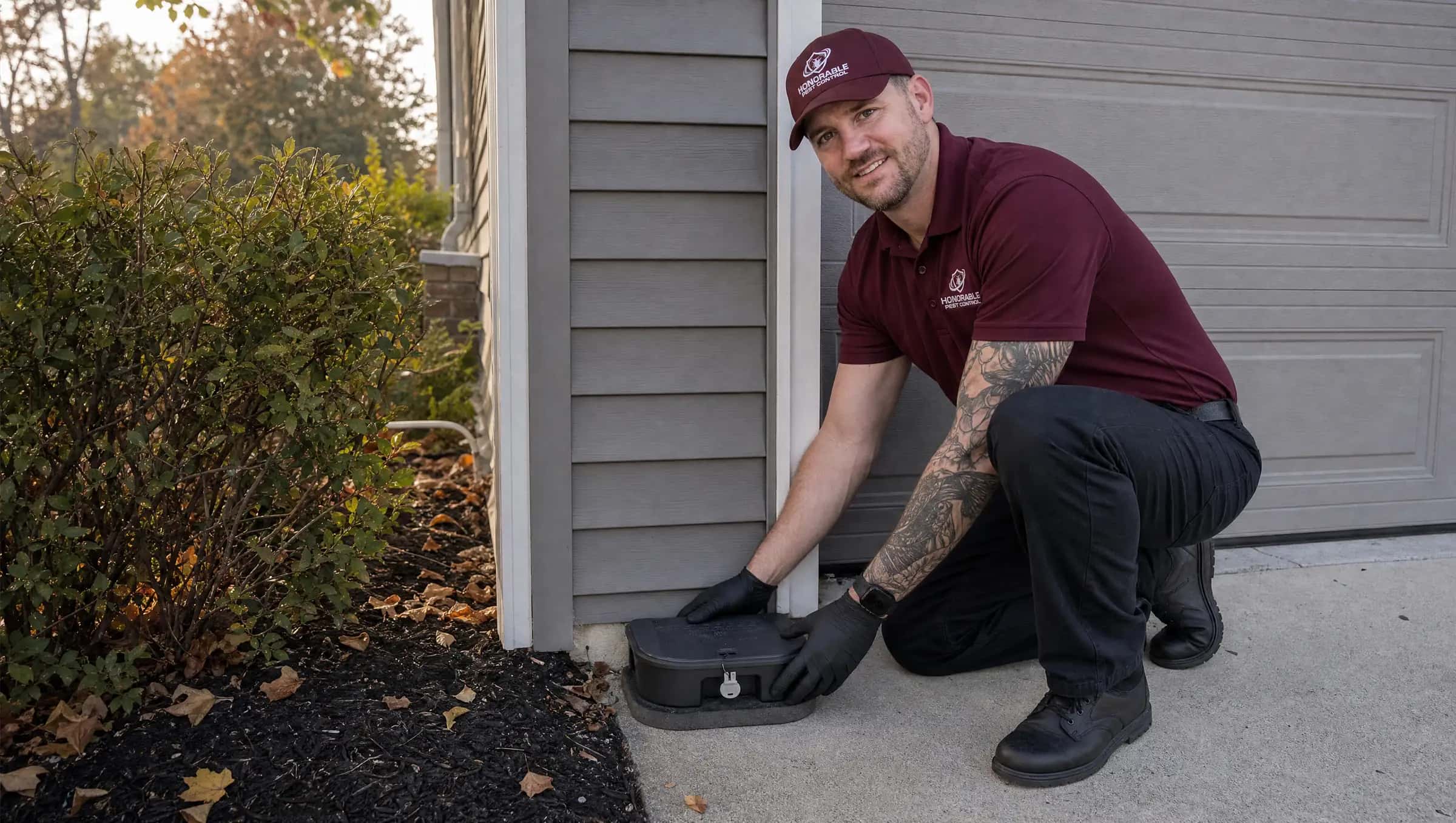
You usually find droppings before you see a mouse. House mice live in the walls all year, deer mice move in for winter, and rats dig in from outside. Our exterminators bait where they run and find the gaps they use. Mice and rats come with Honorable Shield.
Quick answers
Rodent control in Southeast Michigan: the quick facts
The house mouse lives indoors all year once it is in. Deer mice and white-footed mice move in when it turns cold, and the Norway rat burrows outside and comes in low. You usually find the droppings before the animal. All three breed faster than traps alone can keep up with, so the bait has to go where they run and the gaps they use have to be found.
- Most common here
- House mouse
- Lives indoors all year once it is in, nests in walls and under appliances close to food, and breeds fast.
- Worst months
- Oct to Dec
- A pattern from published guidance, not a count of sightings.
- How it gets in
- Pencil-width gaps, and burrows outside
- A mouse needs a gap about a quarter inch wide, a young rat half an inch. Pipes, vents, door sweeps and garage door corners are the usual ones. Rats also dig in along the foundation, under decks and beside sheds.
- Included in
- The Honorable Shield plan
- Covered by the plan, with free re-treatment between visits. Or book one visit.
Mice and rats in Michigan.
Mice live indoors once they are in. Norway rats burrow outside and come in low. Either way, you usually find the droppings before you see the animal.
Our technicians find the signs and the way in, set locked bait stations and traps where they run, and show you every gap. Mice and rats are covered by Honorable Shield.

Seasonal pattern
When are mice and rats worst in Michigan?
Too few mice and rats are photographed in Michigan to count, so this is the pattern a named source describes, not a count. Rats run on a different clock: they breed most in spring and fall, and move toward heat when it turns cold.
Warning signs
How mice and rats announce themselves.
Droppings like dark grains of rice in a drawer or under the sink
Scratching in a wall or ceiling after dark
Chewed food packaging, or gnaw marks on wood, plastic or wire
Burrow holes along the foundation, under a deck or beside a shed
What to look for
What a mouse or rat problem looks like at home.
You usually find the signs before you see the animal. These are six of the first things people notice, and what each one tells us.
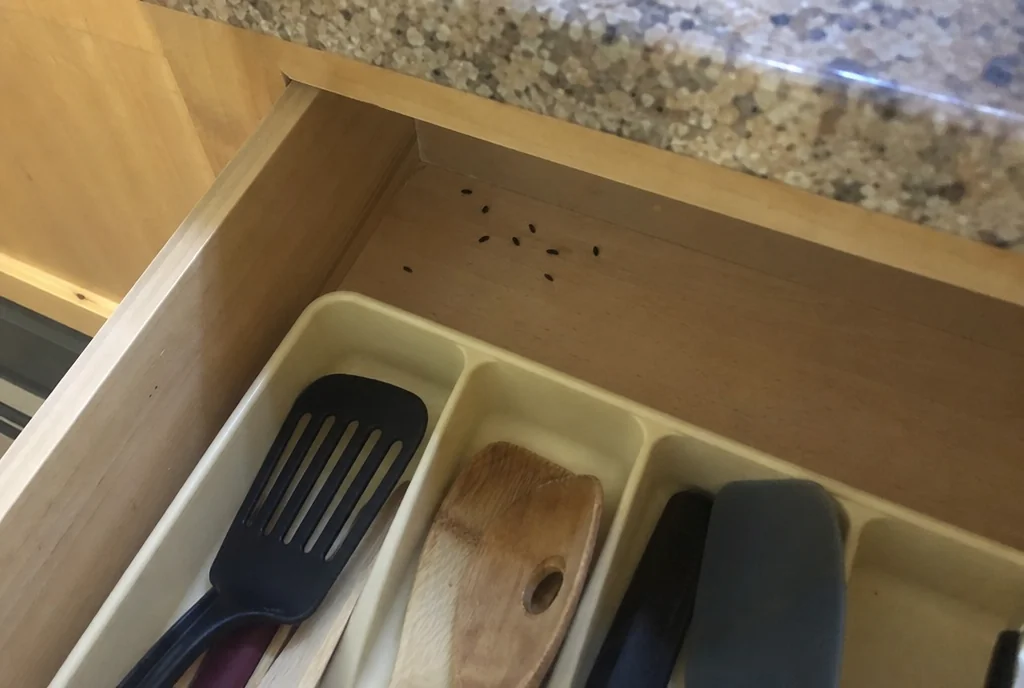
Small, dark and shaped like grains of rice. A few in the back of a drawer means a mouse is running along the cabinets at night.
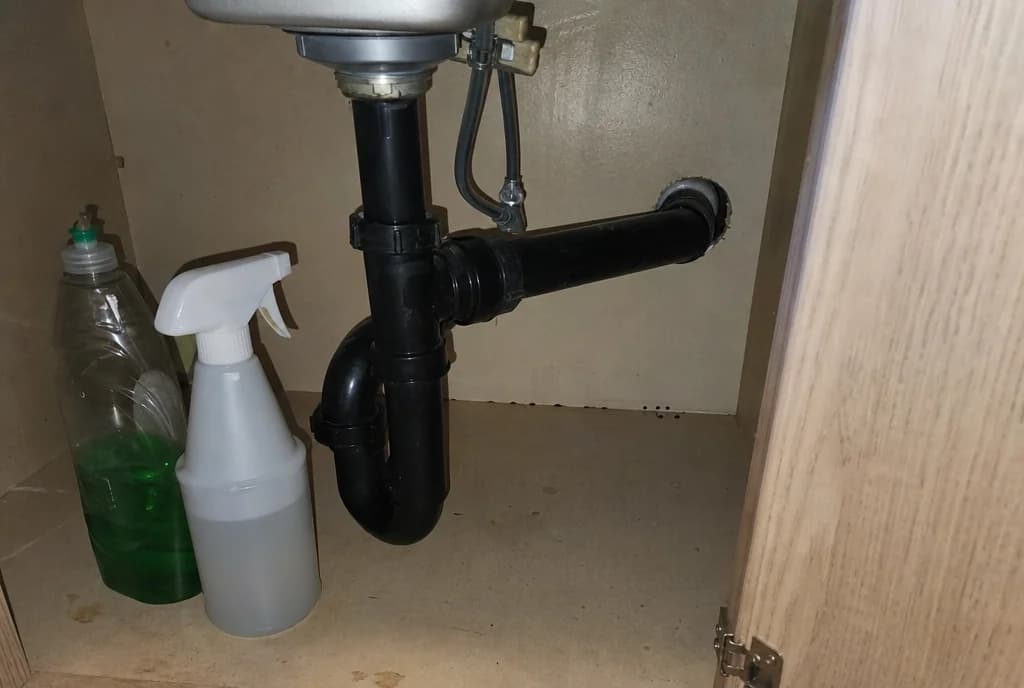
The gap around the sink pipes is one of the most common ways in. Droppings near it tell us where to look first.
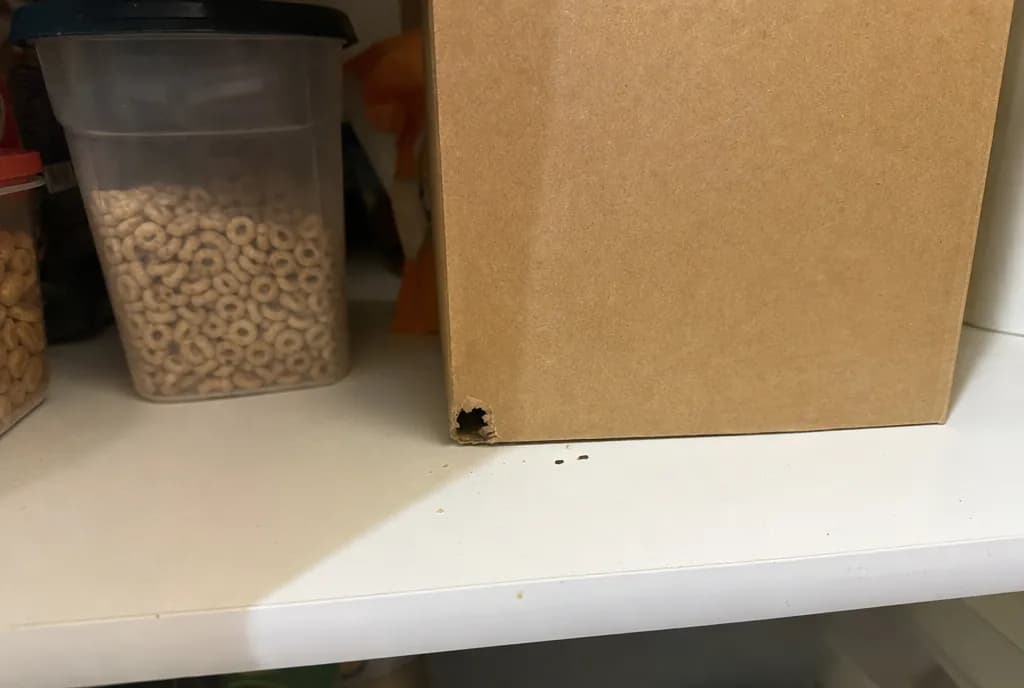
A small ragged hole in a box corner. Move dry food into sealed containers so the bait is the easiest meal around.
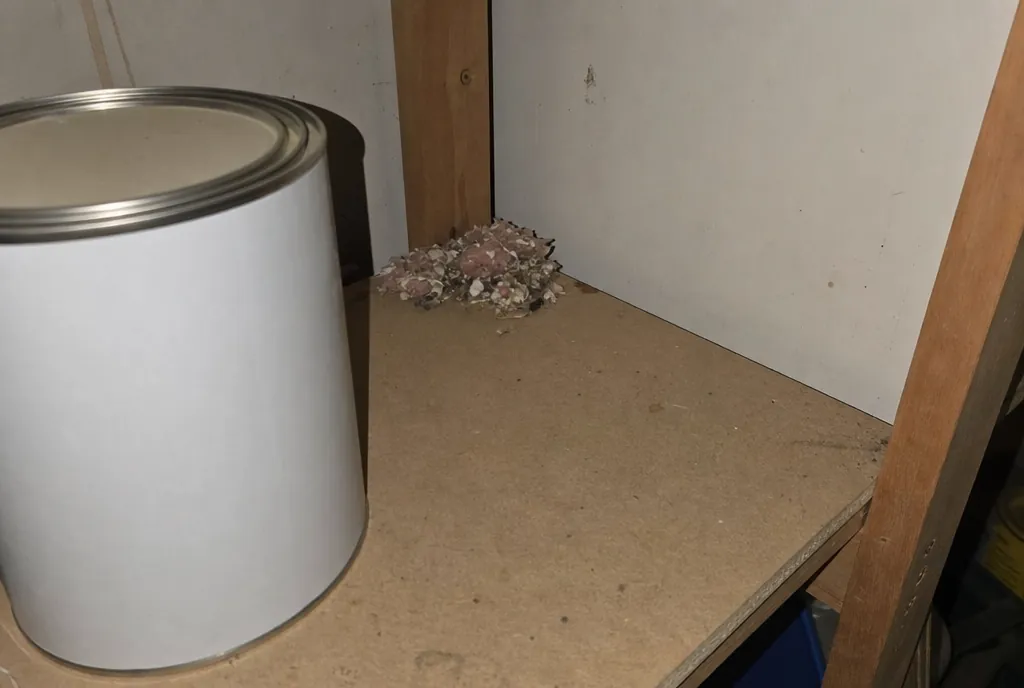
Shredded paper, fluff and insulation in a quiet corner. A nest means they are living there, not just passing through.
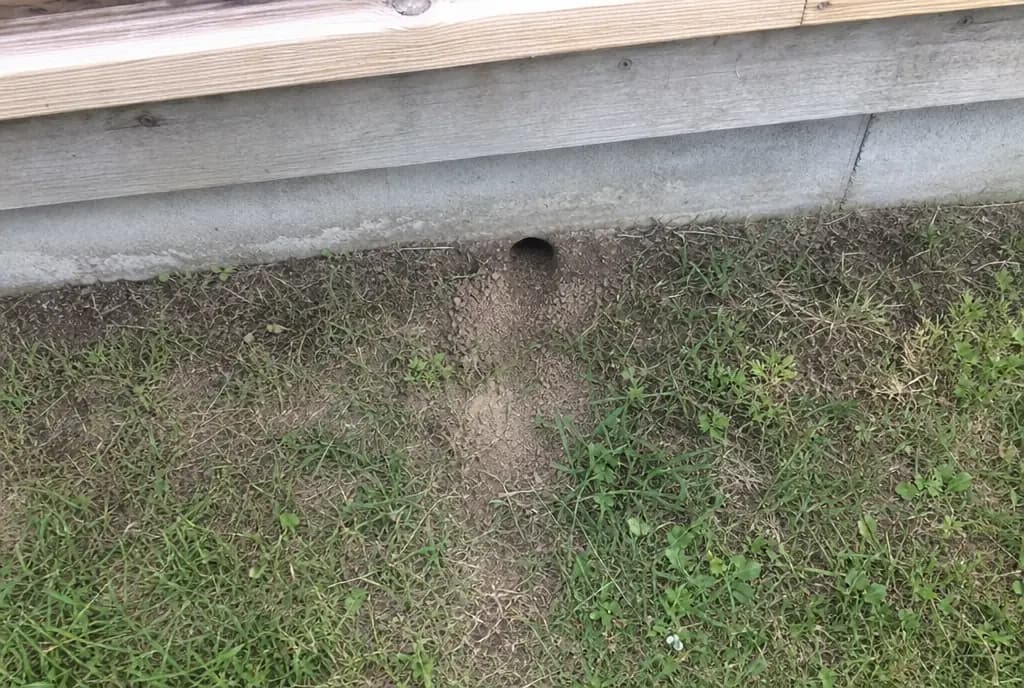
A round hole a few inches across with loose soil in front. Norway rats dig in under decks and sheds, then come up to feed.
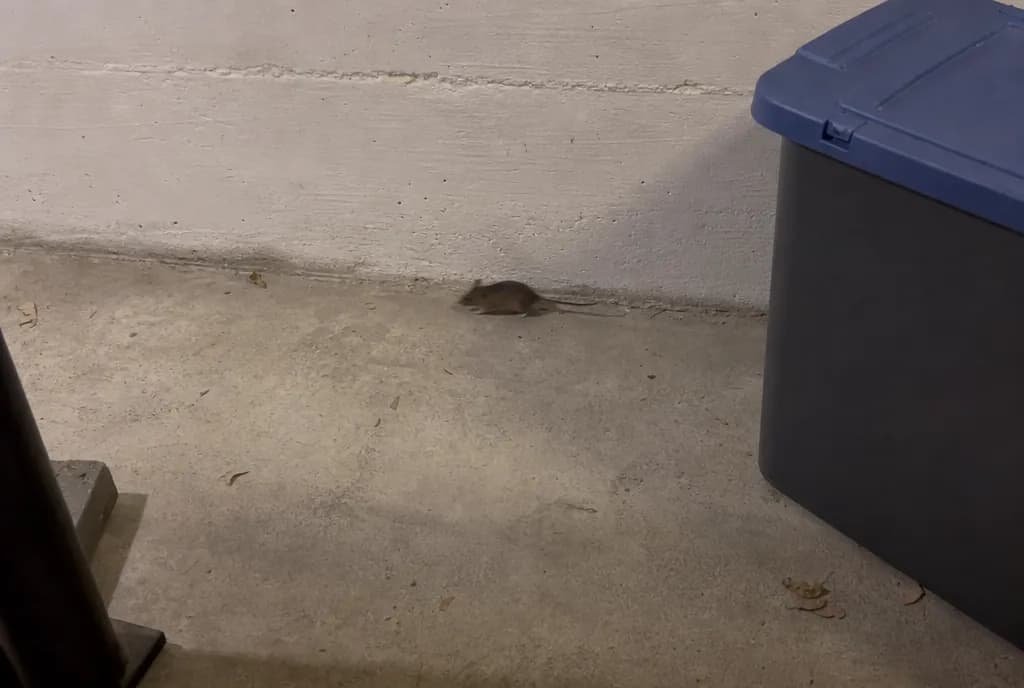
Mice run along walls rather than across open floor. Seeing one in the daytime usually means there are more you have not seen.
How our exterminators get rid of mice and rats.
Mice breed faster than traps alone can keep up with. So we confirm which rodent it is, bait and trap where it runs, show you how it gets in, and keep checking until the signs stop.
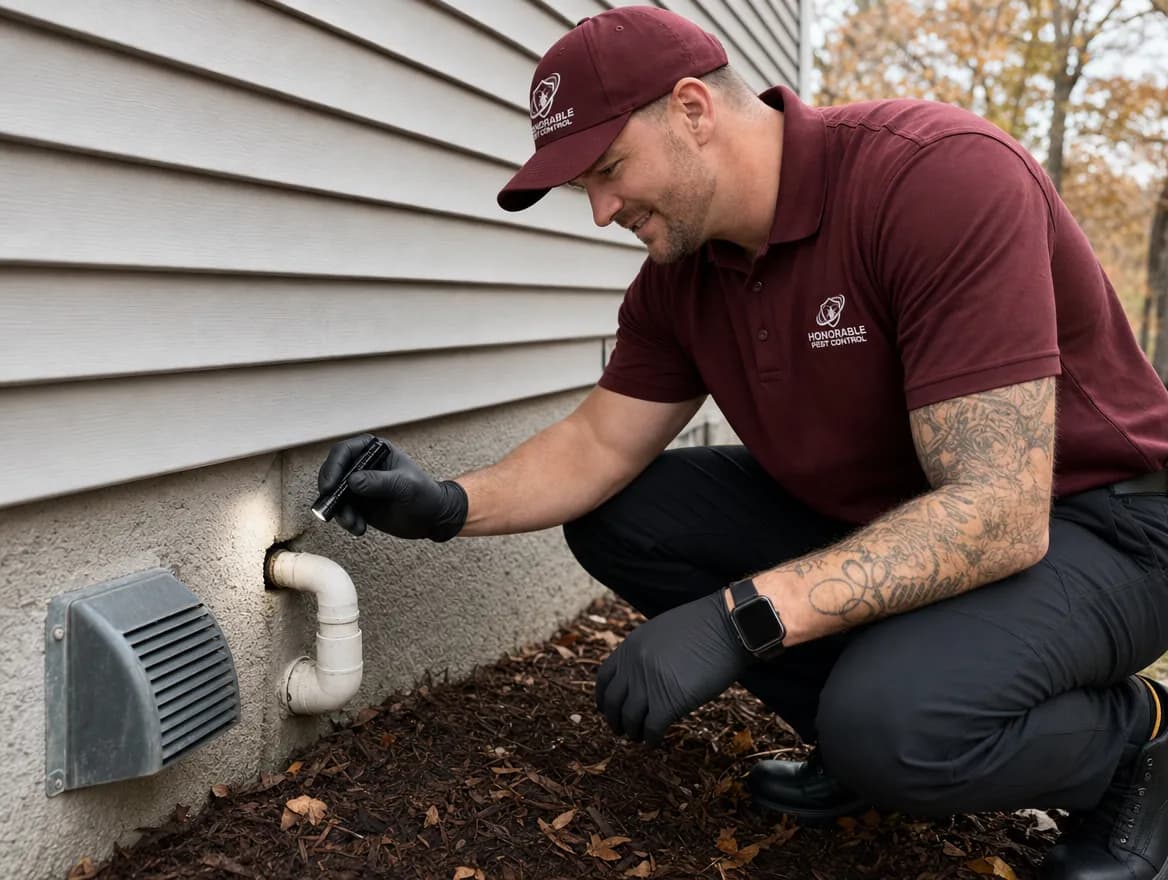
Find the signs and the way in
We check outside and in: the foundation, the deck, the garage door, vents, the sill plate and where pipes and wires come in. Fresh droppings, gnawing, rub marks, burrows and nests tell us which rodent it is, where it runs and where it gets in. Rats leave burrows and runways outside, so for rats we start there and work in.
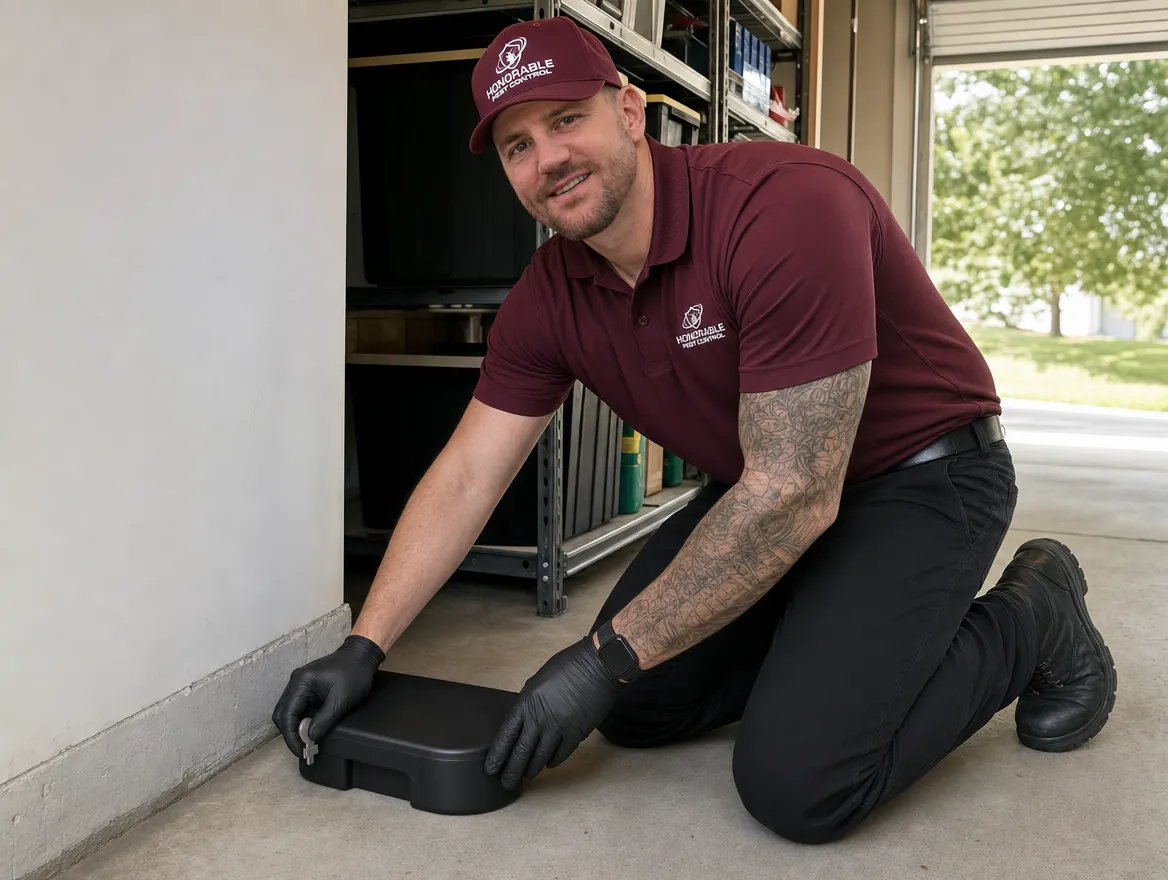
Bait and trap where they run
Locked, tamper-resistant bait stations go along the edges they travel, inside and out, out of reach of children and pets. Honorable Shield includes eight small and two large, and you can say no to them without the price changing. Traps go where bait should not. We show you where every device is before we leave.
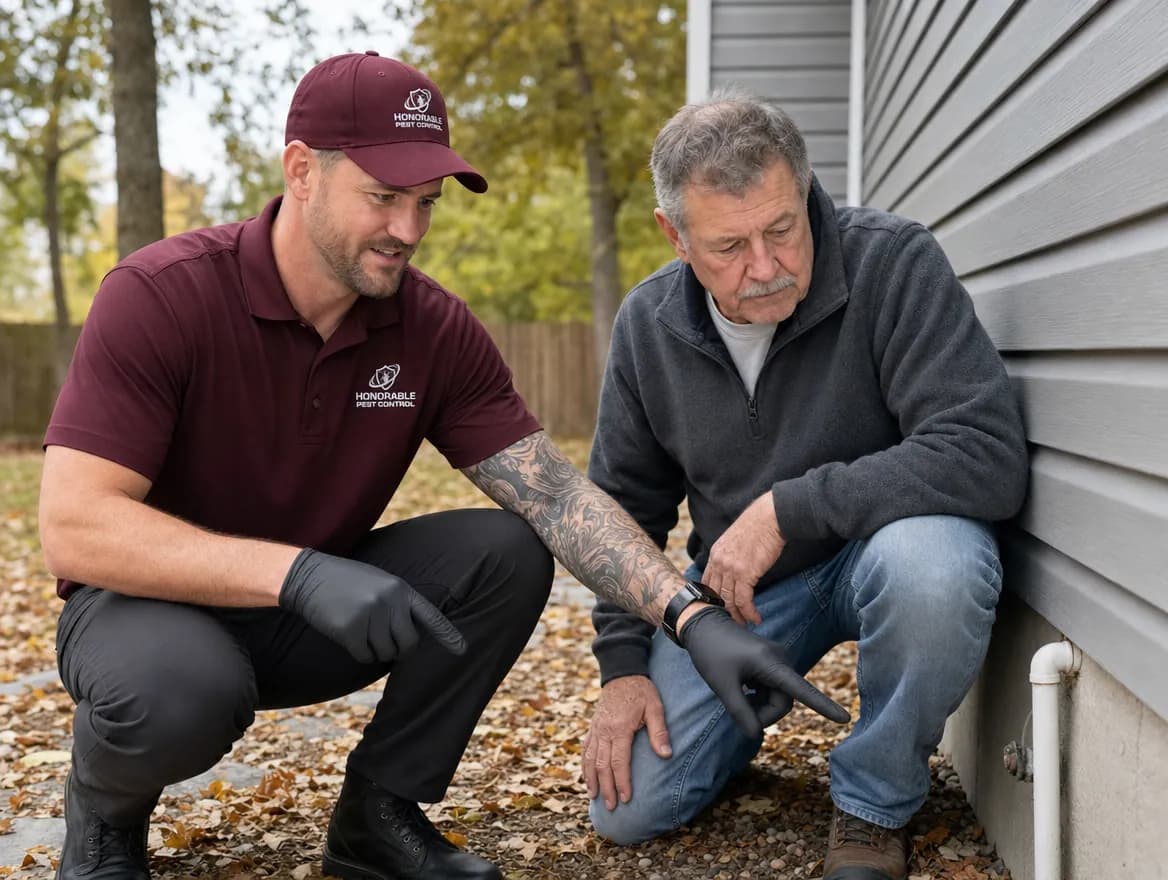
Show you the gaps, then check it
We show you each gap and what closes it: steel wool packed in and sealed with caulk for small holes, metal, cement or hardware cloth for bigger ones. Foam on its own does not stop a rodent. Every visit we check the stations, refresh the glue traps and take away what they caught, until the signs stop.
Before service, we explain the traps, bait stations, where they go, how often they are checked, child and pet precautions, how dead rodents are handled and what the product label requires. Ask for the product names and label information before treatment and you will get them. See EPA bait station guidance.
Every rodent control visit
The full Honorable TriShield™, every time.
Three layers. The house, the lawn, then the property line. Not a rushed spray along your baseboards. A cheap quote usually skips two of the three.
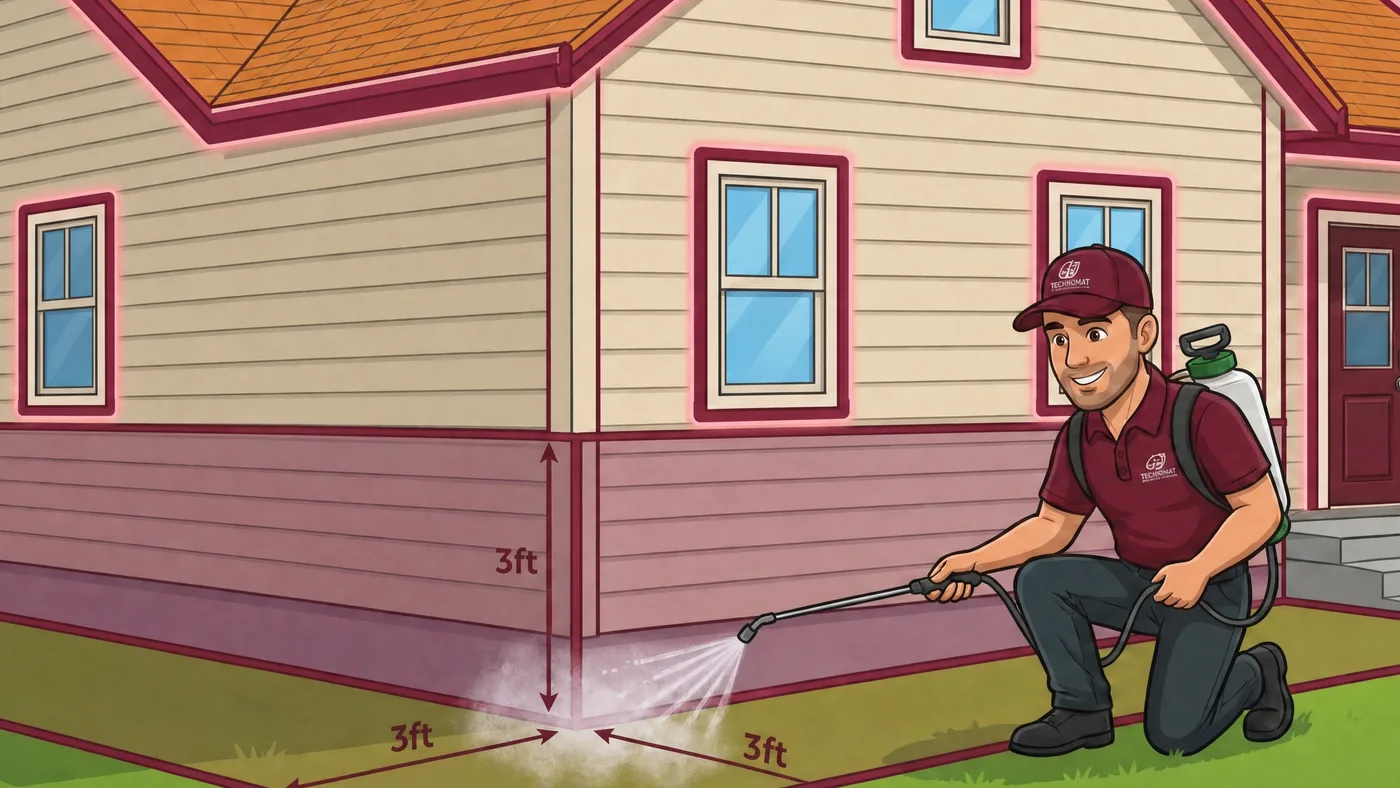
Foundation barrier
Three feet up the wall. Three feet out from it. All the way round the house, plus windows, doors, the garage and the roofline. That strip is the road bugs use to get in.
Measured with a tape, not eyeballed
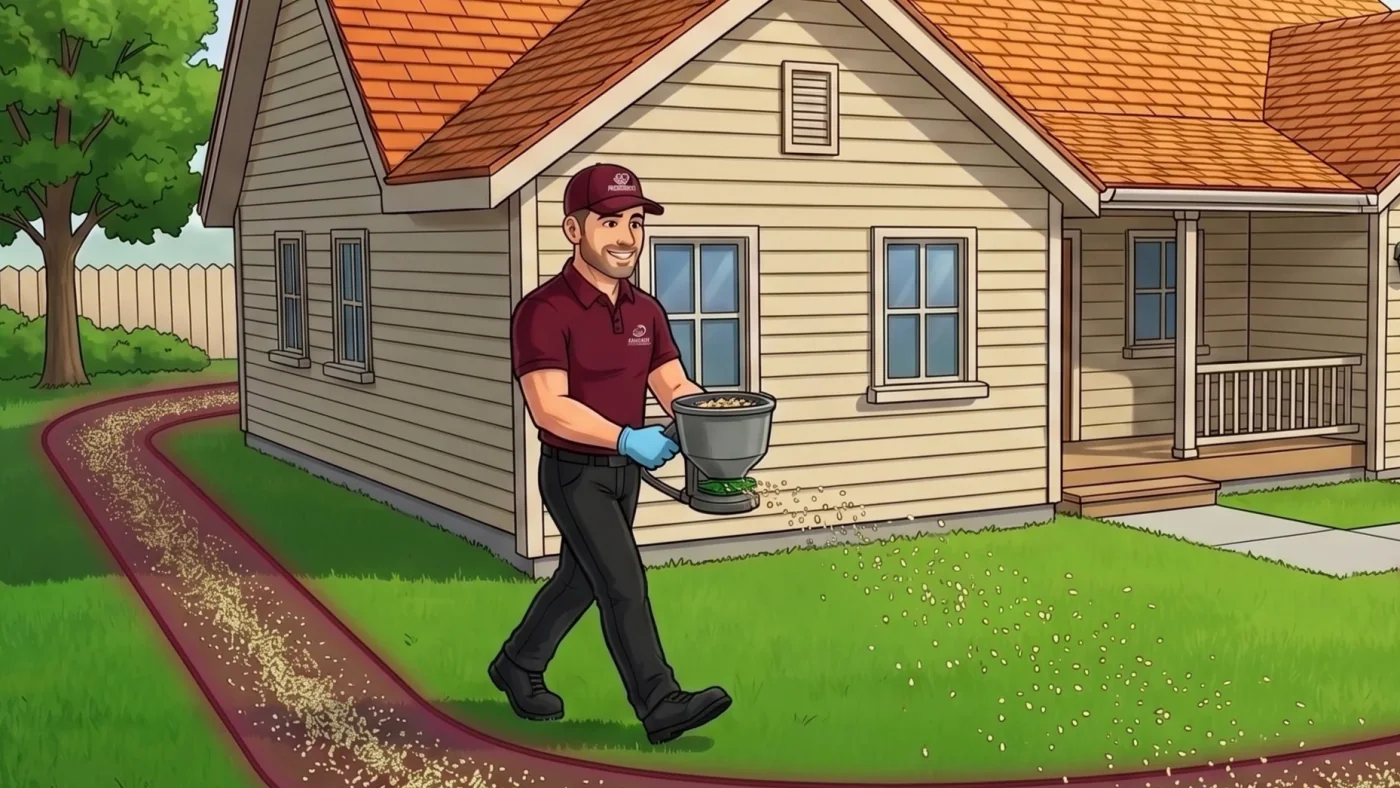
Granular yard moat
A ring of granules across the lawn. Rain wakes it back up. So does your sprinkler. In a Michigan summer that is most weeks.
Skipped by most companies. Granular costs money.
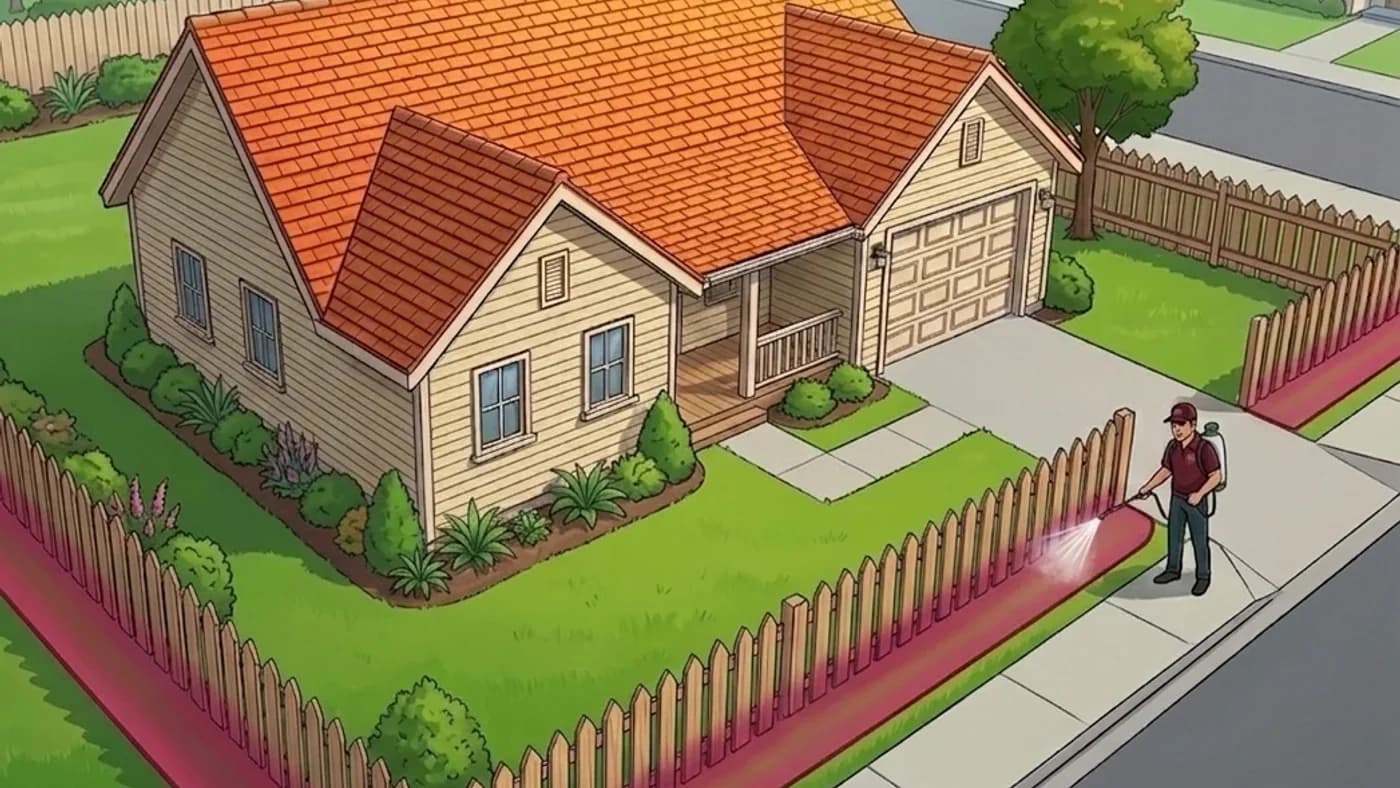
Property line
We spray the whole property line. Bugs get stopped at the edge of your yard, not at your back door.
The layer a cheaper quote quietly leaves out
How to identify the rodents in your house.
These are the rodents we treat that have confirmed sightings in Washtenaw, Oakland, Wayne and Livingston counties, most-recorded first. Each one is identified by independent naturalists, so the animal in the photo is the animal named.
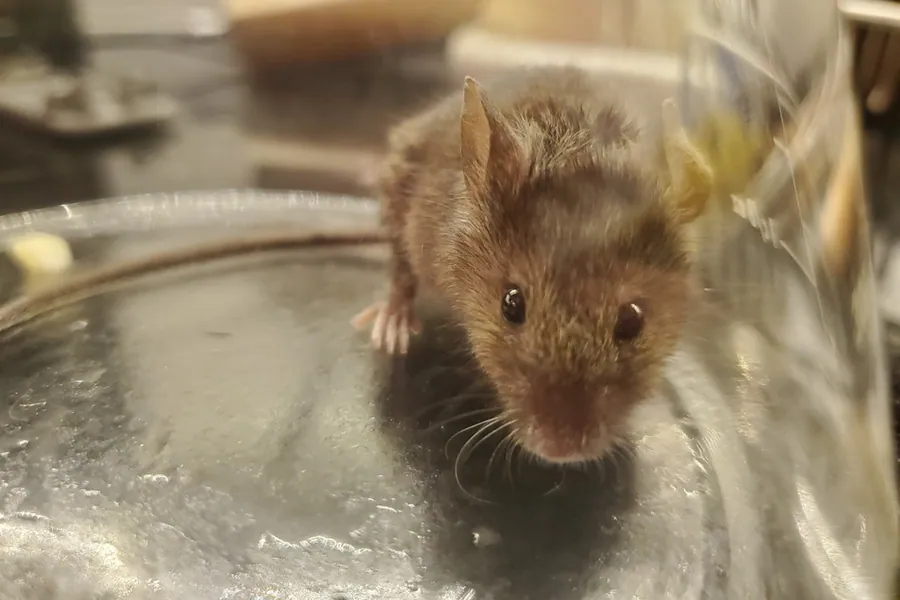
Lives indoors year-round rather than migrating in. Breeds fast in wall voids.
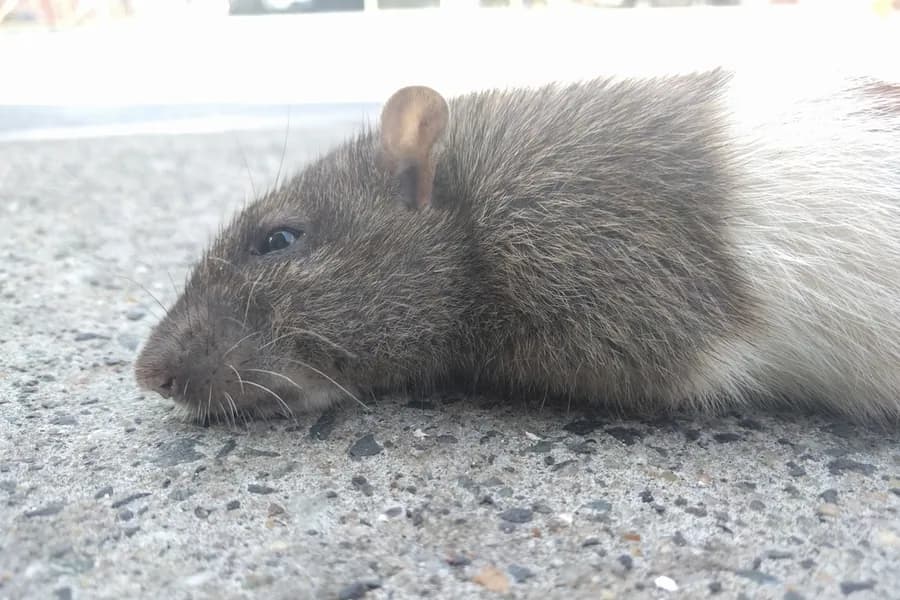
Burrows outside and comes in low: crawl spaces, drains, gaps under doors.
All of these have confirmed sightings in Washtenaw, Oakland, Wayne and Livingston counties. Records from iNaturalist research-grade observations, pulled 2026-09-25. Photos: House mouse by carbenoid (CC BY); Norway rat by Mirko Schoenitz (CC0).
What it costs
Rodent control is included in the Honorable Shield plan.
There is no special tier to buy. Mice and rats are covered by the normal plan. If they come back between visits, so do we, free, within 48 hours. Your price depends on the size of your house, not on which bug you have.
| Honorable ShieldRecurring | One-time treatmentSingle visit | |
|---|---|---|
| Best for | Keeping them out all year | Killing off one problem now |
| You get | All three barrier layers, every visit, on a schedule | All three barrier layers, one time |
| If they come back | We treat again, free | A follow-up is $247 |
| Other pests | Over 20 pests, rodents included | This one only |
| Price | From $61 a month | From $497 |
Prices are the starting figures: a home up to 1,000 square feet, or half an acre for yard work. What is covered is set out in the plan terms.
Rodent control, answered straight.
Do I have mice or rats?
Look at the droppings and the yard. Mouse droppings are like dark grains of rice. Rat droppings are clearly bigger, and rats dig burrows outside, which mice rarely do. Holes along the foundation or under a deck mean rats.
How small a gap can a mouse or rat use?
A mouse needs about a quarter of an inch, roughly a pencil's width, per CDC guidance. A young rat can squeeze under a door with a half-inch gap. Check around pipes, cables, doors, vents, the foundation, the attic and any attached garage.
Can I get rid of mice or rats myself?
Sometimes. The CDC recommends snap traps sized for the animal. Set them along walls near fresh signs, out of reach of children and pets, and check them daily. You can catch a mouse or two that way. If you keep catching them, there is a gap you have not found. With rats, the burrow and the gap are still there after you catch one. That is when to call.
Is rodent bait safe around kids and pets?
Bait only goes in locked, tamper-resistant stations, out of reach of children and pets, used exactly as the label says. Traps go where bait should not. Ask the technician to walk you through where every device goes before we start.
Do you seal the holes and clean up?
We find the gaps and tell you what to close them with. Repairs, full exclusion work and cleanup are separate unless your written plan lists them. Any repair has to keep drainage, ventilation and fire safety intact, so a big opening may need a contractor.
Are mice and rats covered by Honorable Shield?
Yes, at no extra cost. Most people assume rodents are extra. They are not. Eight small and two large bait stations come with the plan, checked every visit, and you can say no to them without the price changing. More stations than that are $5 a month for a small one and $8.33 for a large. If mice or rats come back between visits, we come back free, within 48 hours.
What if mice or rats are my only problem?
Rodent Shield covers mice, rats, squirrels, chipmunks and voles, and nothing else. It is one price whatever size your house is: $230 to start, then $130 a quarter, or $620 for the year. Monthly, it is $144 to start, then $44 a month. The same bait stations are included. If you already have Honorable Shield, you do not need it, because rodents are already covered.
How do I clean up after mice and rats safely?
Wet everything first. Rodent urine, droppings, saliva, nests, carcasses and anything they have fouled should be handled so the dust never gets into the air.
Never clean up dry. Do not sweep or vacuum dry droppings, urine or nesting material. Disturbing dry waste puts contaminated dust in the air.
Wet it, then wipe it. Wear rubber or plastic gloves. Soak droppings, urine, nests or dead rodents with disinfectant, leave it for the contact time on the label, then wipe it up and bag it. Double bag nests and carcasses. Wash your hands after the gloves come off.
Clean where food goes. Throw out food or packaging rodents have touched. Clean and disinfect counters, cabinets, drawers and anywhere food is made, following the product instructions.
Heavy or hard to reach. If there is a lot of it, it is in the ductwork, or you cannot reach it safely, professional cleanup or extra protective gear may be needed.
Follow CDC cleanup guidance and CDC hantavirus prevention for nests, dead rodents and heavier contamination.
Squirrels or chipmunks instead? See squirrel and chipmunk control.
Pest-Free Guarantee
They come back? So do we, free.
On Honorable Shield, see a covered pest between visits? We come back within 48 hours and treat it again. You pay nothing.
Rodent control where you live.
Old streets with big trees get different bugs than new build on cleared ground. Pick your town to see what we actually find there.
That is not all of them. See all 38 towns, or ask us if we reach your street.
Other pests we treat
One plan covers every one of these. No extra charge when something different shows up.
From our blog
- Mouse droppings or rat droppings? How to tell what you found
- Deer mouse or house mouse? And what Michigan says about hantavirus
- Rats in Michigan: the Norway rat, and why roof rats are rare here
- Scratching in the walls or attic at night: mice, rats or squirrels?
- Why mice move in for the winter: how they get in, what they eat
Every visit includes all three barrier layers. See what we treat, or ask an exterminator.
Rodent control · Licensed and insured
Mice in the walls, or rats under the deck?
Call (734) 519-6671 or send a request. Tell us what you are finding and where. You get the price over the phone, and we explain the stations, the traps and the follow-up before anyone comes out.
500+ Customer Reviews·Michigan pesticide business license #820457