
Wasp and hornet control · Southeast Michigan
Wasp Control in Ann Arbor and Southeast Michigan
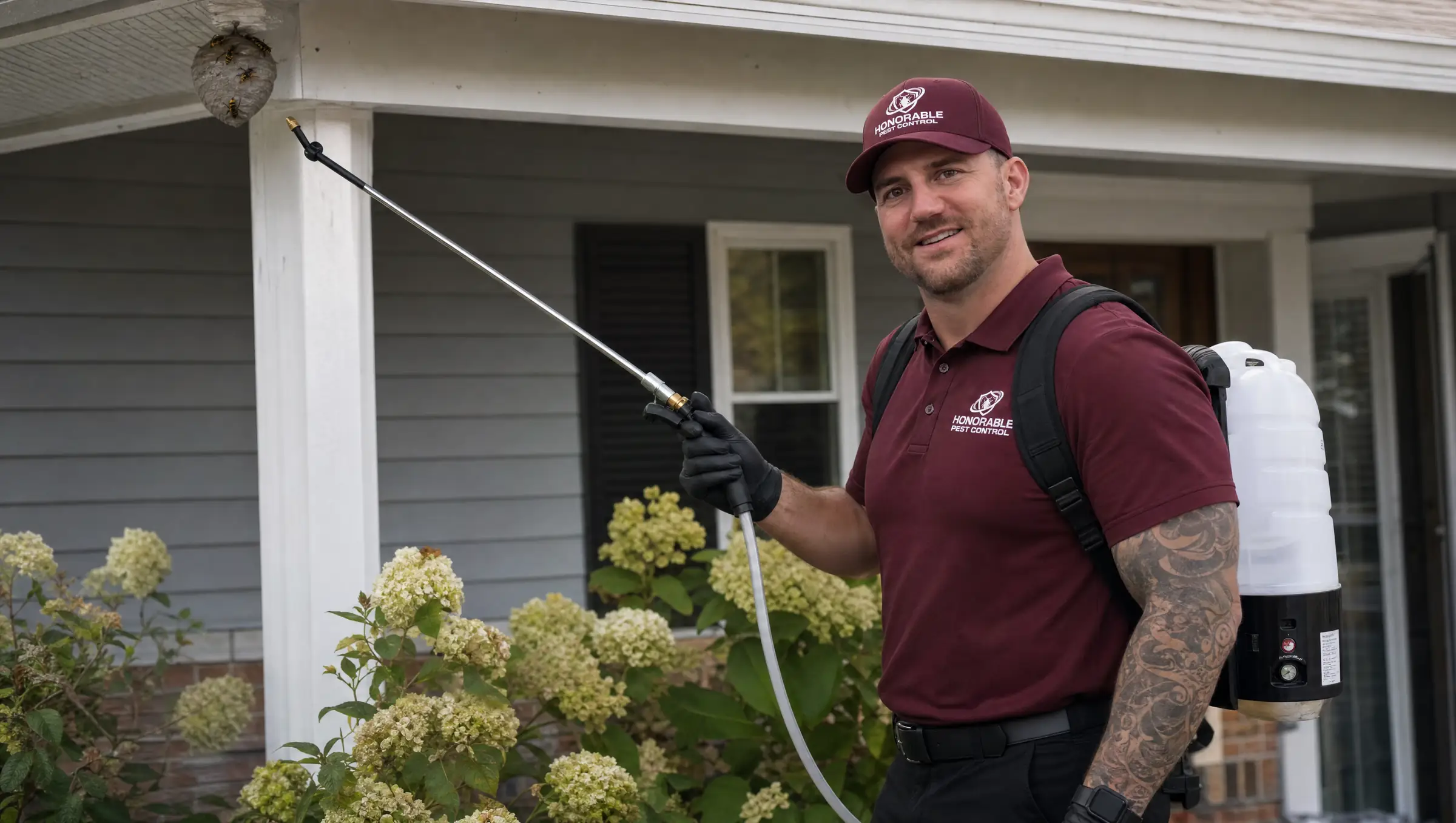
The nest decides the job. Paper wasps hang an open gray comb under the eaves. Yellow jackets hide in the ground or inside a wall. Bald-faced hornets build a gray paper football in a tree. Our exterminators treat all of them, and wasps are included in Honorable Shield.
Quick answers
Wasp control in Ann Arbor: the quick facts
Four wasps make most of the calls here. Paper wasps build open combs under the eaves. Yellow jackets nest in the ground or inside walls, so you see the traffic, not the nest. Bald-faced hornets build a gray paper football in a tree and defend it hard. Cicada killers dig single burrows in thin, sunny lawns and almost never sting. Nests are biggest and most defensive in August and September.
- Most common here
- Paper wasps
- Open gray comb nests under eaves, rails, grills and porch ceilings. Yellow jackets are the ones that sting most in late summer.
- Worst months
- Jul to Sep
- The months with the most sightings in Michigan, from public records anyone can check.
- How it gets in
- Eaves, holes in the ground, wall gaps
- Paper wasps want shelter up high. Yellow jackets use old rodent holes, railroad ties and gaps in the siding. Hornets build out in the open. Cicada killers dig bare, well-drained soil.
- Included in
- The Honorable Shield plan
- Covered by the plan, with free re-treatment between visits. Or book one visit.
Wasps and hornets in Michigan.
Most wasps around a house here are paper wasps. The nest looks like an open gray honeycomb hanging upside down under something: an eave, a deck rail, a porch ceiling, a grill lid or a play set. The northern paper wasp and the European paper wasp do most of the building, and between them they are recorded more often than any other wasp in the four counties we serve.
Many wasps are useful and can be left alone when the nest is out of the way. Treat it when people cannot avoid it, when it is hidden inside the house, or when someone nearby has a severe sting allergy. You do not need to know which wasp it is before you call.
- A nest by a door, walkway, deck, patio, pool, mailbox or play area
- Yellow jackets flying in and out of a hole in the lawn
- Wasps going into a wall, a soffit, the attic, a gap in the siding or around the gas meter
- A big paper nest in a tree or on the house where people walk or mow
- Anyone in the house with a severe sting allergy
- Bees, or insects you are not sure are wasps
Wasps, yellow jackets, hornets and cicada killers are included in Honorable Shield. Round holes in bare wood are carpenter bees, and honey bees we never kill. Both are on bee control.
Michigan State University Extension has a good page on yellow jackets.

Paper wasps
Calmer than yellow jackets
Paper wasps sting to defend the nest, but they are far less aggressive than yellow jackets. The real risk is a nest by a door, a grill or where kids play.
Spring nests are small
In spring a nest is a queen and a few cells. By August it is full. A nest treated early is a smaller job.
Old nests are not reused
The colony dies out in the fall and the nest is not used again. New queens build fresh in spring, often in the same corner.
Yellow jackets
In the ground or in a wall
Michigan State University Extension calls them the most troublesome wasps in Michigan, because they nest in and around homes: an old rodent hole in the lawn, a railroad tie, a wood pile, a gap in the siding. You see a line of wasps into one hole, not the nest.
Do not seal the hole
Block a live entrance and they chew another way out, sometimes into the house. Do not pour gasoline or anything like it down a nest either. Treat first, seal after.
Late summer is the worst
The colony is biggest in August and September and the workers go looking for sugar. If you know where the nest is, mark it and keep kids, pets and the mower away until it is treated.
Bald-faced hornets and cicada killers
Bald-faced hornets
Large black wasps with ivory white marks on the face and abdomen. They are not true hornets but a kind of yellow jacket that builds in the open: a gray, football-shaped paper nest in a tree, a shrub or under an eave. They defend it hard, and from further away than most wasps. It is not a ladder job.
Cicada killers
The biggest wasp you will see here, dark with yellow markings and amber wings, and the least likely to sting. Each female digs her own burrow in sunny, well-drained soil in July and August and drags cicadas into it. There is one generation a year. Males dive at you but cannot sting.
Mud daubers and other loners
Mud daubers and most other solitary wasps are useful and do not defend a shared colony. They can be left alone unless they nest right where you walk.
Seasonal pattern
When are wasps worst in Michigan?
Real Michigan sightings of paper wasps, month by month. They climb from April and peak in August and September. Yellow jackets and bald-faced hornets peak in the same two months. Cicada killers are a July and August wasp and are nearly gone by September.
Warning signs
How wasps and hornets announce themselves.
An open, gray honeycomb nest hanging under an eave or a rail
Wasps landing on the same spot of the house again and again
A steady line of wasps in and out of one hole in the lawn
Wasps disappearing into a gap in the siding or around a window
Chewing or rustling inside a wall in late summer
A gray, football-shaped paper nest in a tree, and being buzzed well before you reach it
Wasps chewing bare wood on a fence, deck or shed for nest material
Very large wasps flying low over thin turf, with small holes and soil fans below
What to look for
What a wasp problem looks like at home.
Six common ways wasps and hornets show up around a Michigan home, and what each one tells us. The nest decides the job, so a photo from a safe distance helps.
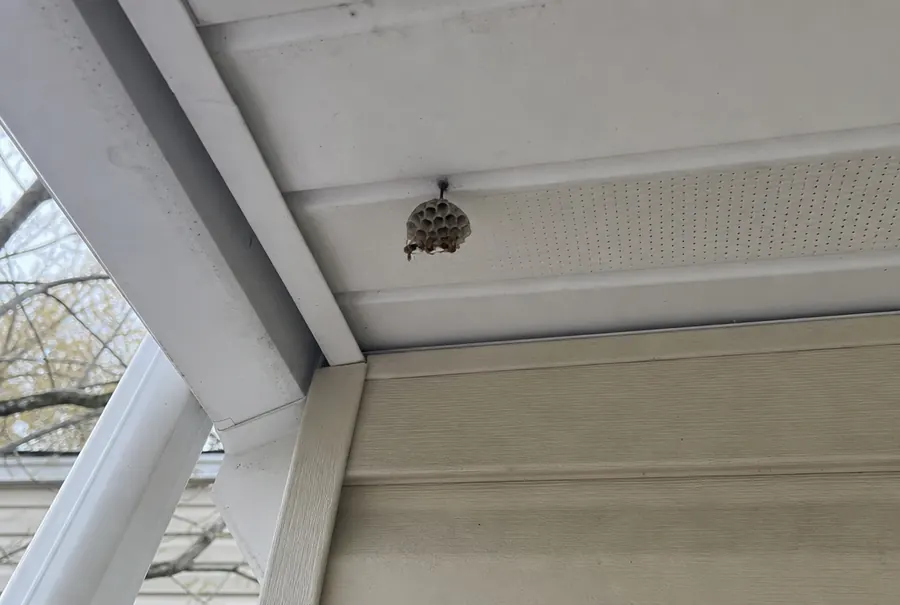
An open grey comb on a short stalk. Small ones like this are common under eaves, rails and grills by early summer.
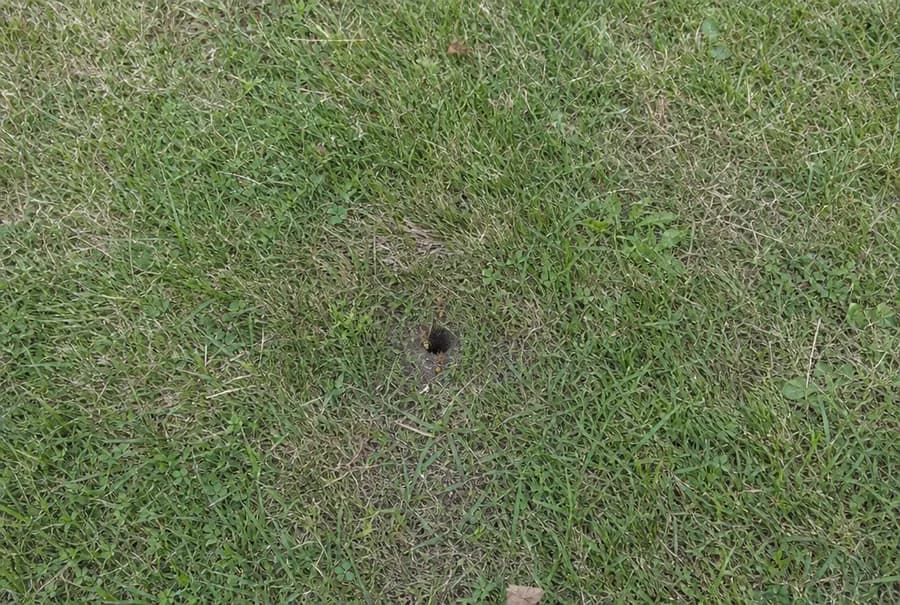
One small hole with a steady line of wasps. Mark it and stay back; mowing over it is how most people get stung.
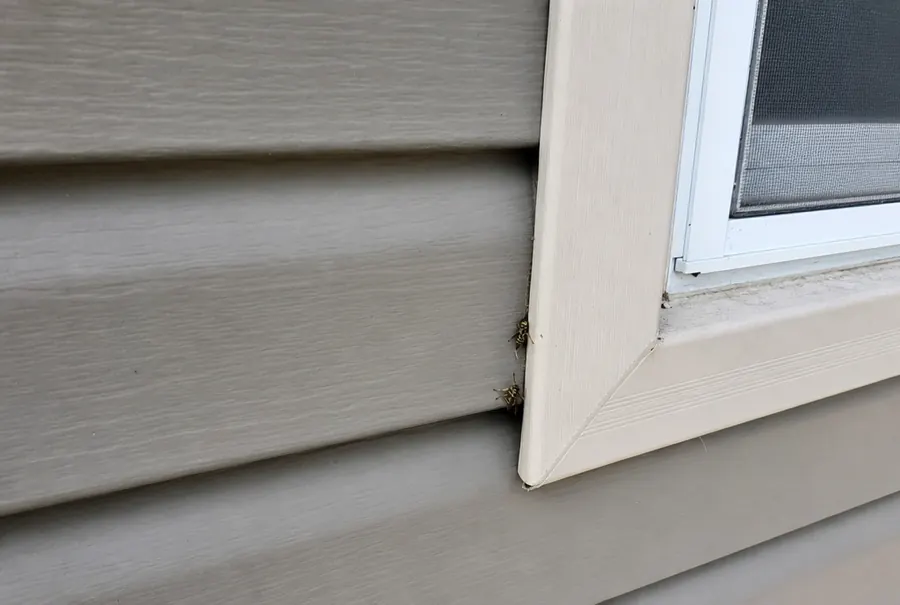
Wasps going in and out of one gap means a nest behind the siding. Do not seal the hole while it is live.
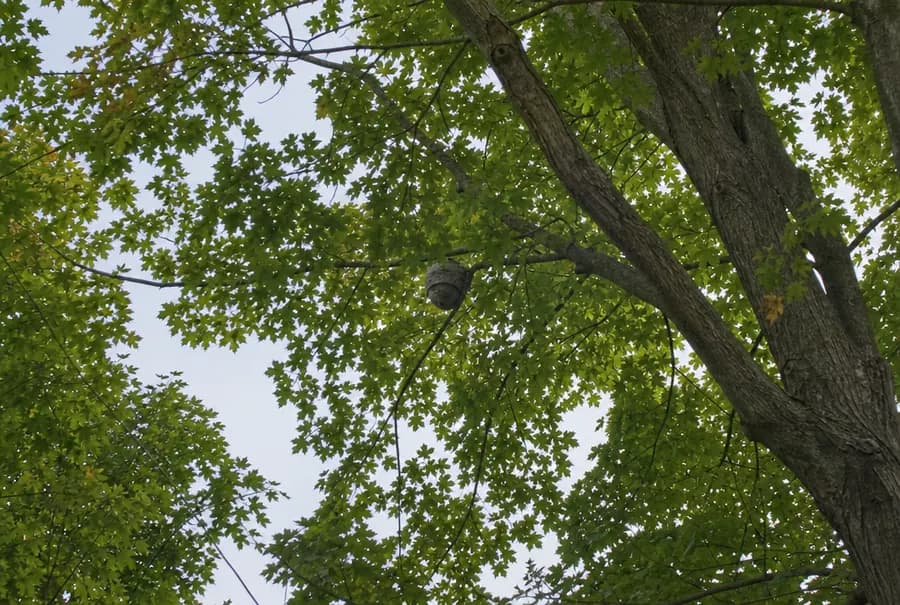
A grey paper football up in a tree. The hornets defend it from well back, so keep your distance.
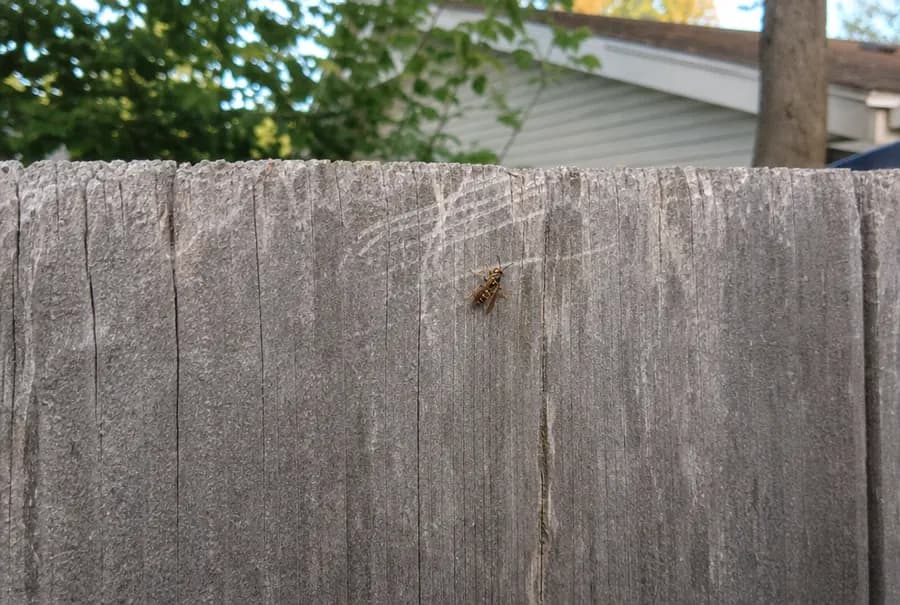
Pale scrape lines on old wood. Wasps chew it into paper for the nest, so one is building nearby.
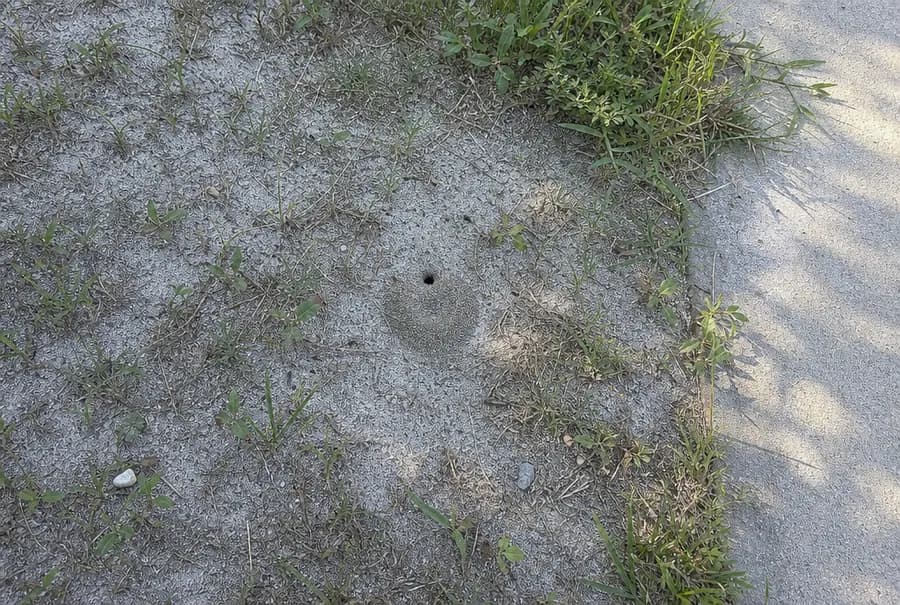
A half-inch hole with a fan of sandy soil, in July or August. Cicada killers look scary, but males cannot sting.
How our exterminators get rid of wasps.
Three steps. Removal and sealing come last, never first.
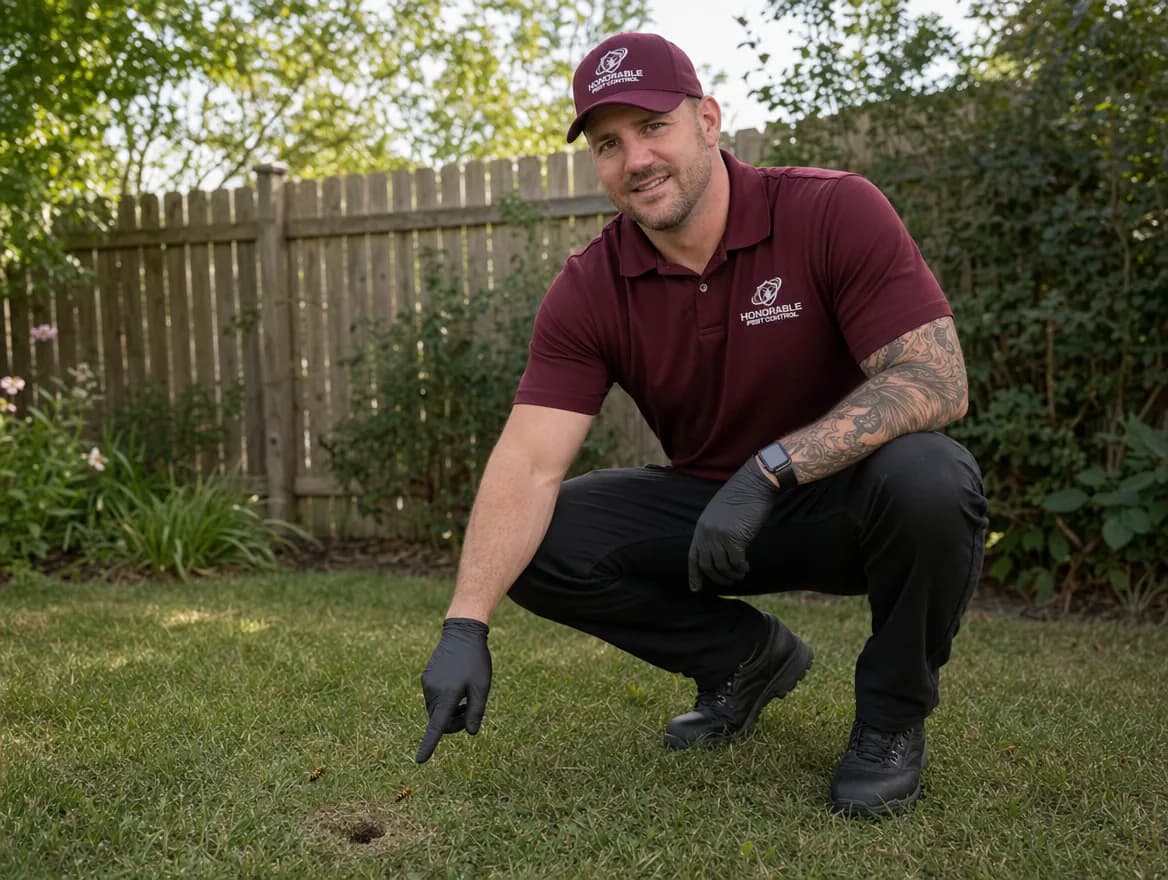
Find every nest and name the wasp
We walk the whole house, not just the nest you noticed: eaves, rails, shutters, grills, play sets, the siding and the lawn. We watch where they fly, because a ground or wall nest has one busy entrance. Which wasp it is, how high the nest is, what is near it, power lines included, and how you use the space decide the plan. If it turns out to be bees, we call a specialist instead.
Treat the nest
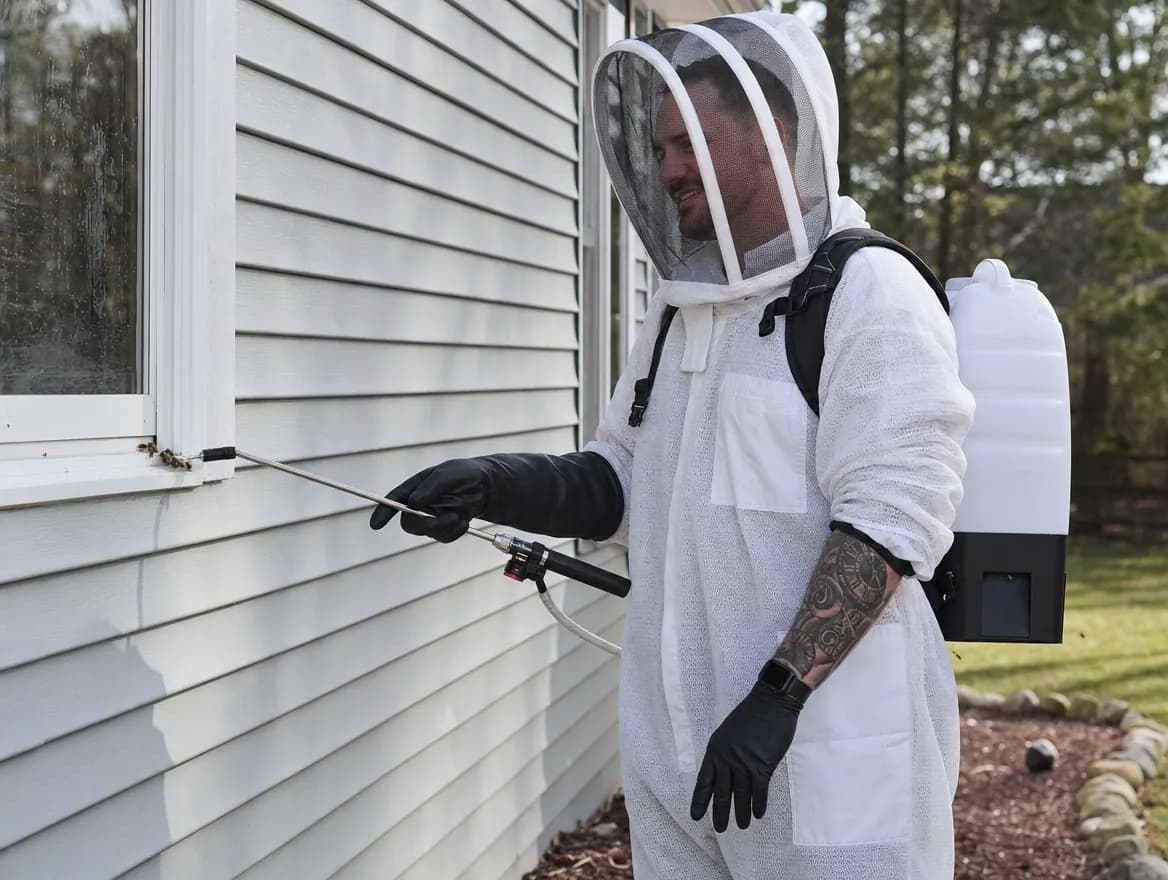
We treat it with a product labeled for that wasp and that spot, at a time of day when the wasps are home. Yellow jacket and wall nests are treated through the entrance so it reaches the nest behind. Cicada killers are treated at the live burrows, and only where there are a lot of them or they are in the way.

Check it, then take it down or seal it
We check that nothing is still flying before anything else. A dead nest we can reach safely comes down. The entrance to a ground or wall nest gets sealed only once it is dead. Then we tell you what to change so they do not rebuild in the same corner, or dig the same thin patch of lawn.
Treatment does not kill every wasp in a nest at once, so some coming and going afterward is normal, and we judge the result by what is still flying. Before treatment begins, we explain which areas will be treated, whether people or pets need to leave, what preparation is required, and when treated areas may be used again. See EPA pesticide label guidance.
Every wasp control visit
The full Honorable TriShield™, every time.
Three layers. The house, the lawn, then the property line. Not a rushed spray along your baseboards. A cheap quote usually skips two of the three.
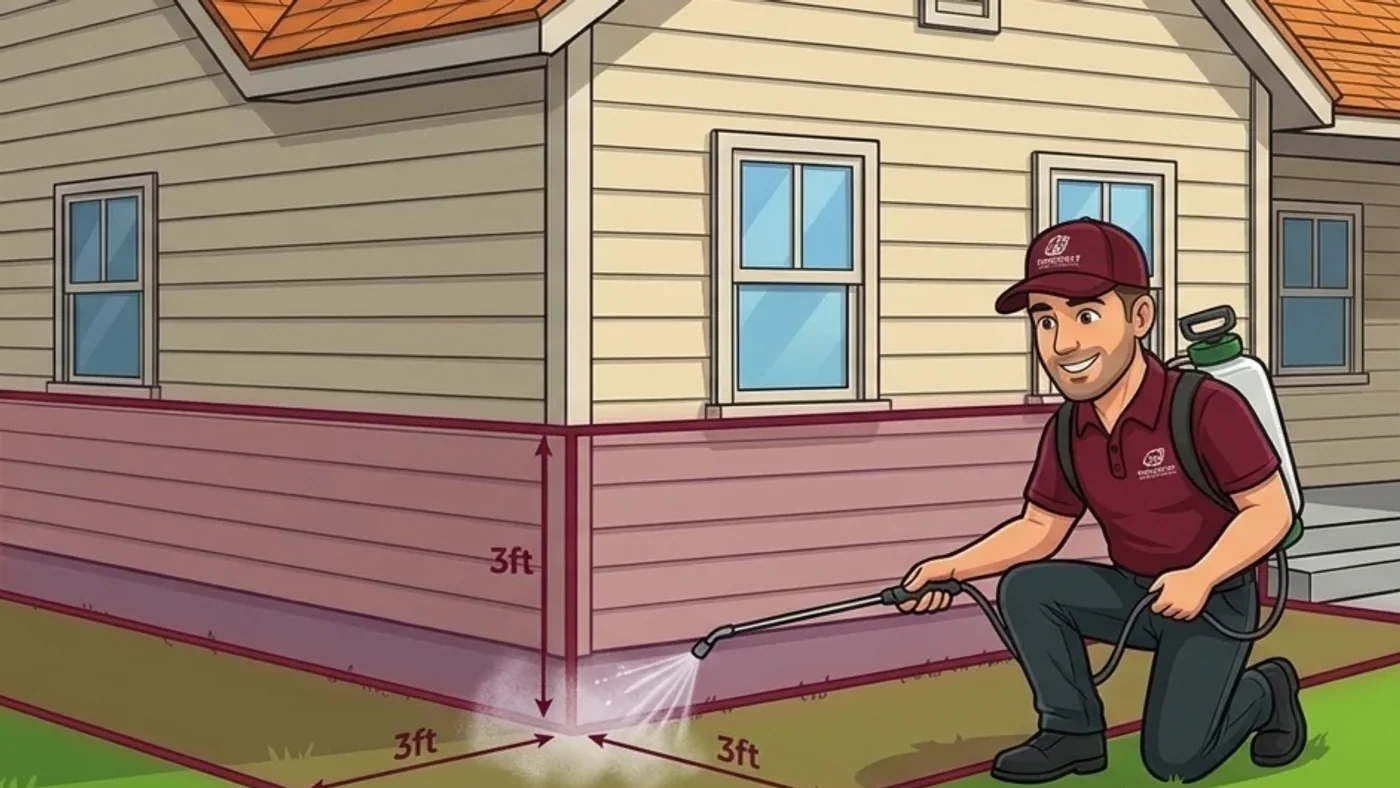
Foundation barrier
Three feet up the wall. Three feet out from it. All the way round the house, plus windows, doors, the garage and the roofline. That strip is the road bugs use to get in.
Measured with a tape, not eyeballed
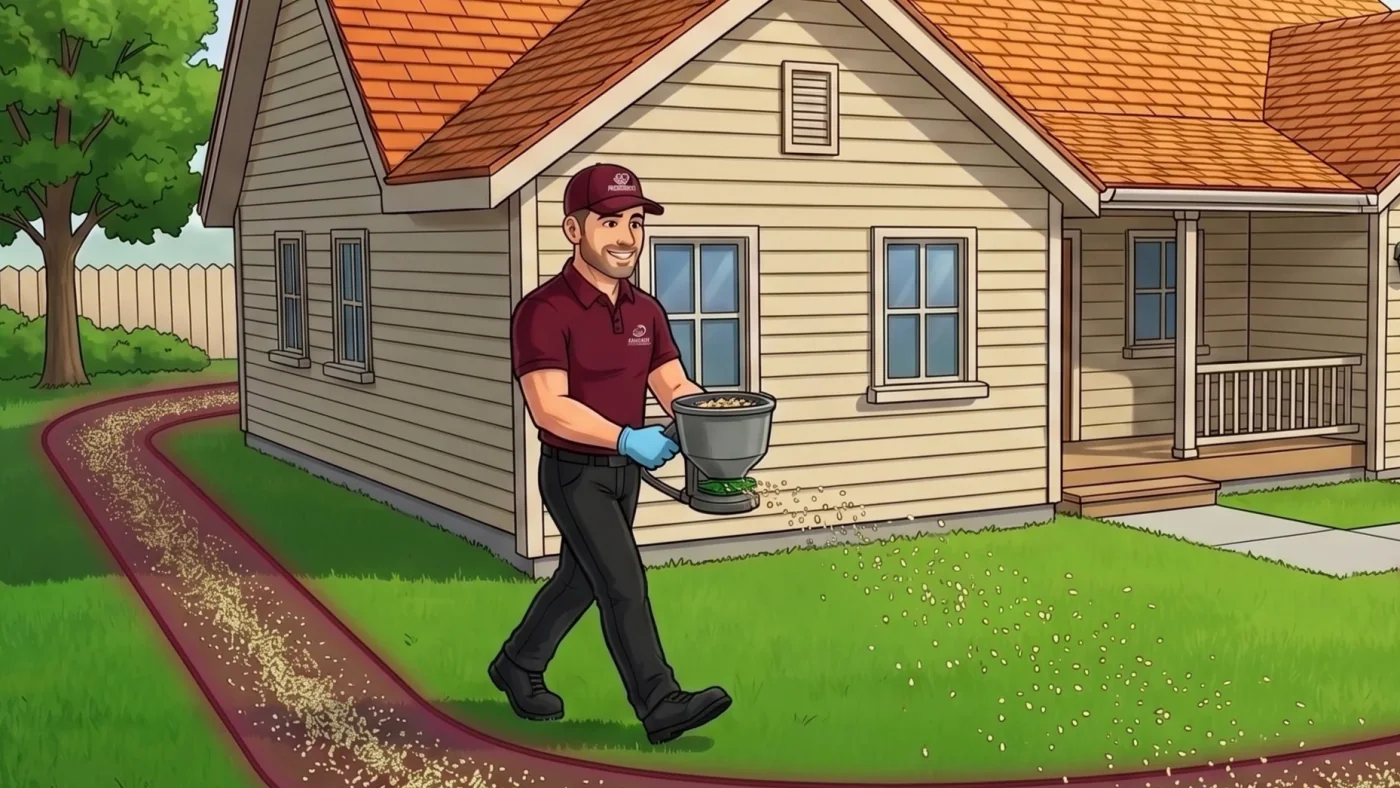
Granular yard moat
A ring of granules across the lawn. Rain wakes it back up. So does your sprinkler. In a Michigan summer that is most weeks.
Skipped by most companies. Granular costs money.
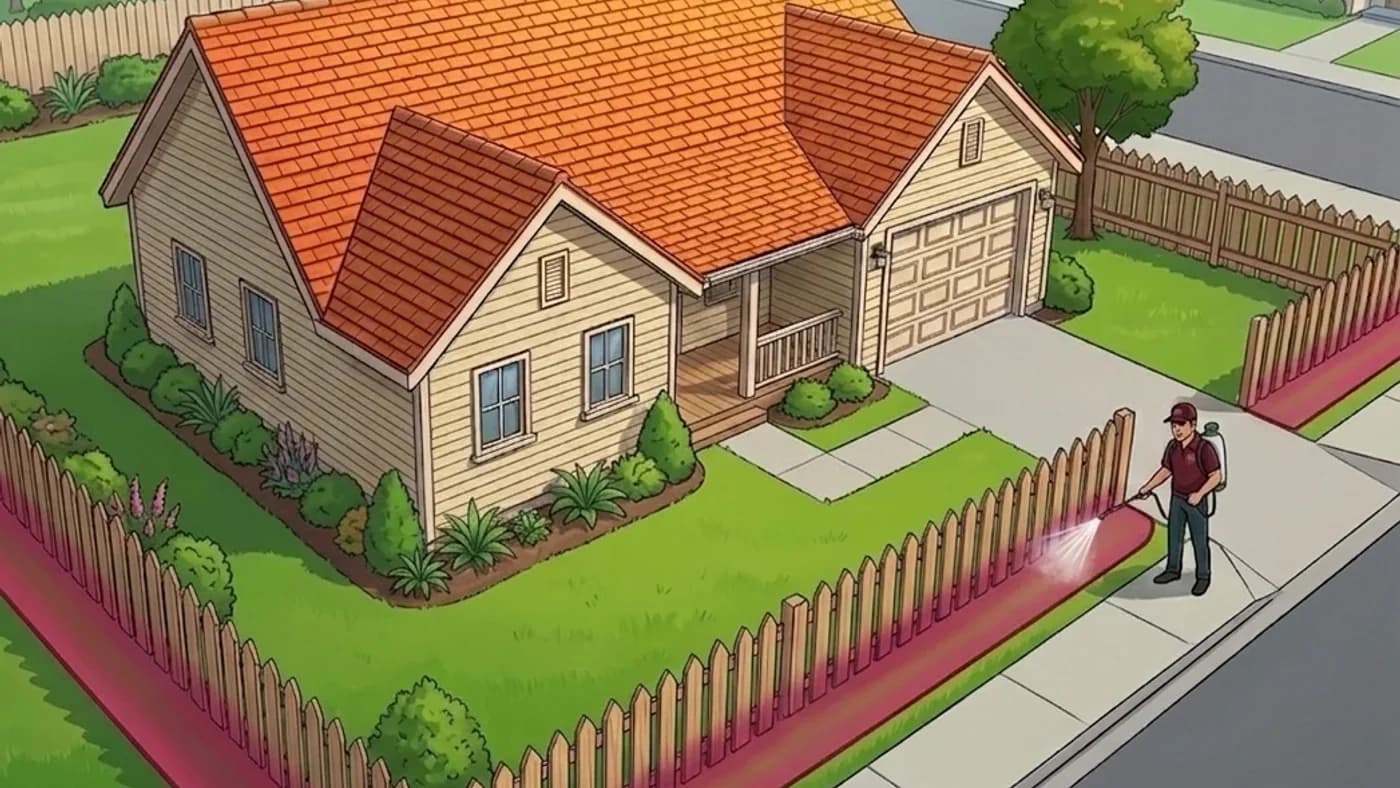
Property line
We spray the whole property line. Bugs get stopped at the edge of your yard, not at your back door.
The layer a cheaper quote quietly leaves out
How to identify the wasps around your house.
These are the wasps and hornets we treat that have confirmed sightings in Washtenaw, Oakland, Wayne and Livingston counties. Each one is identified by independent naturalists, so the animal in the photo is the animal named.
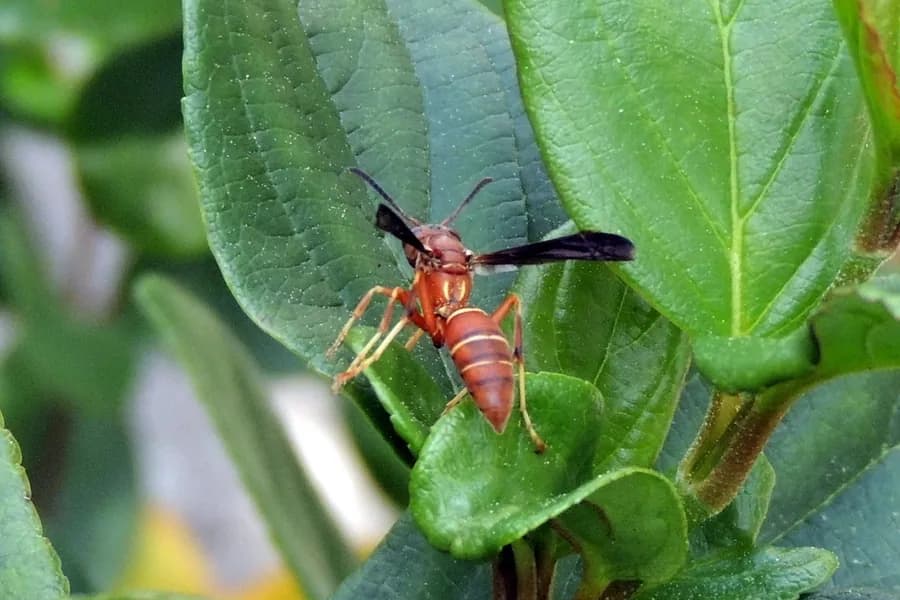
Open umbrella nests under eaves, in soffits and inside grills.
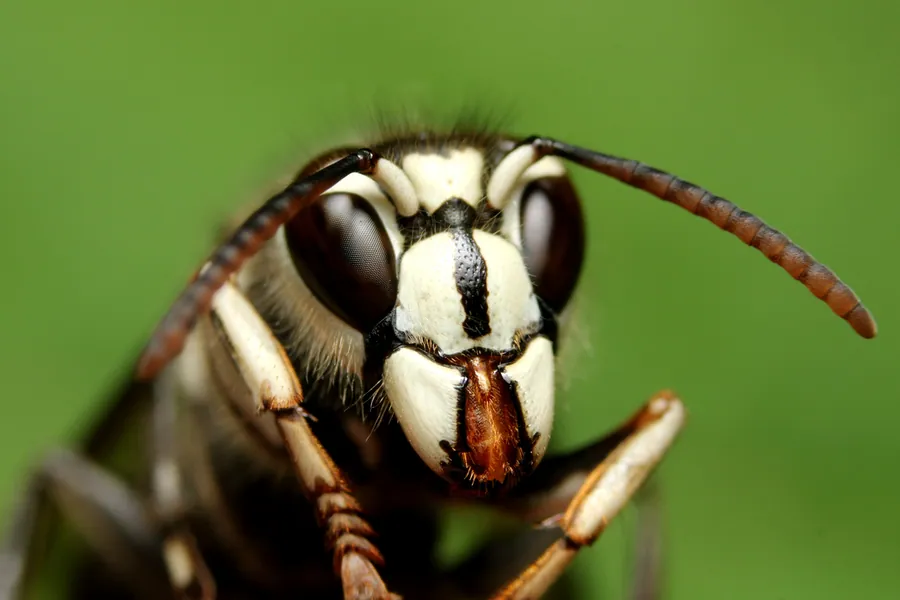
The grey football nest in a tree or on a wall. Defends it hard.
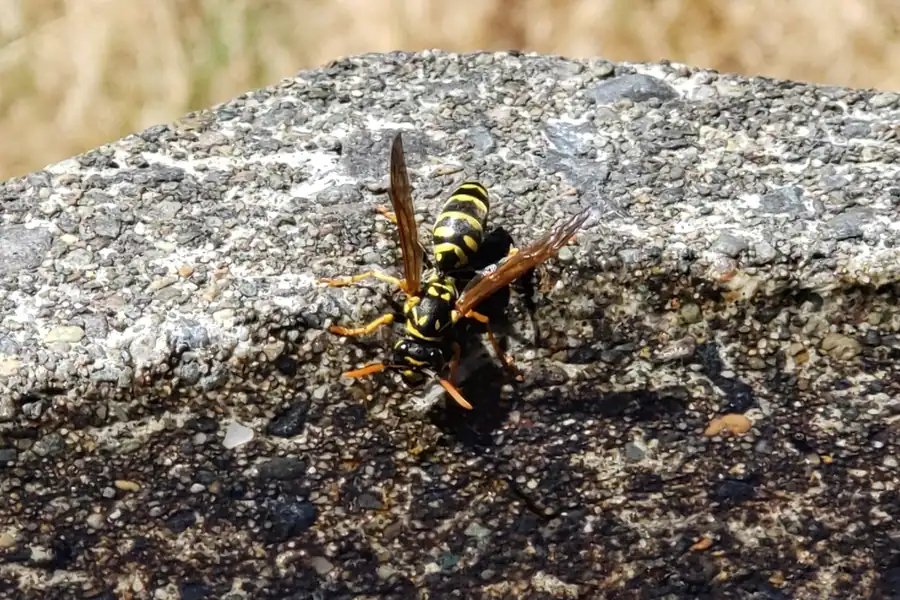
Introduced, and nests in cavities: gas meters, pipes, letterboxes.
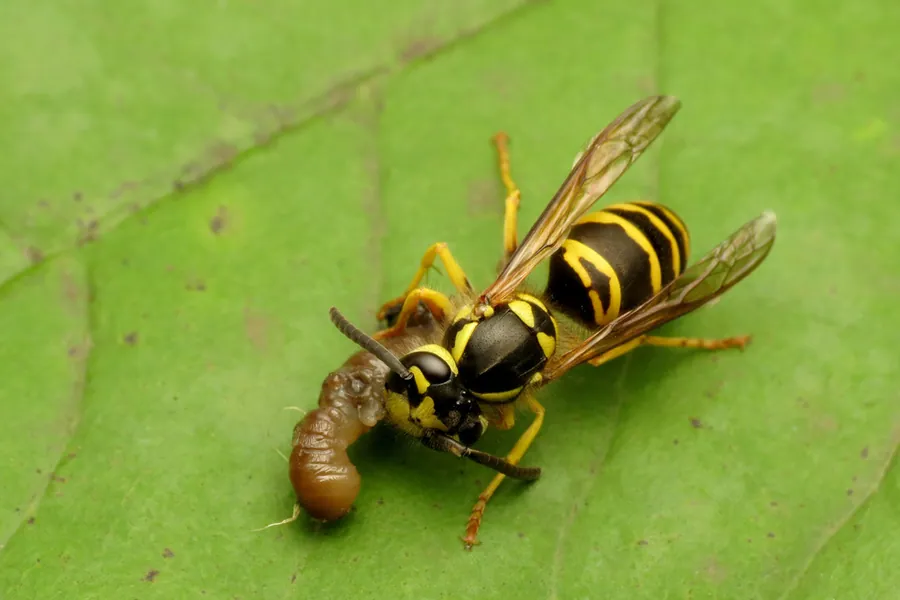
Nests in the ground. The one that finds you at a barbecue in August.
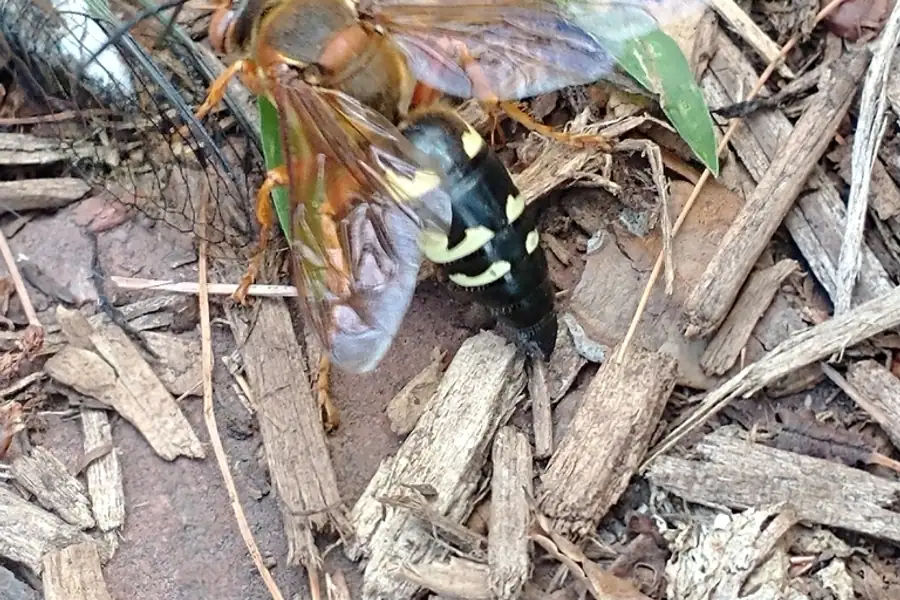
Large and alarming, but digs single burrows in thin turf and rarely stings.
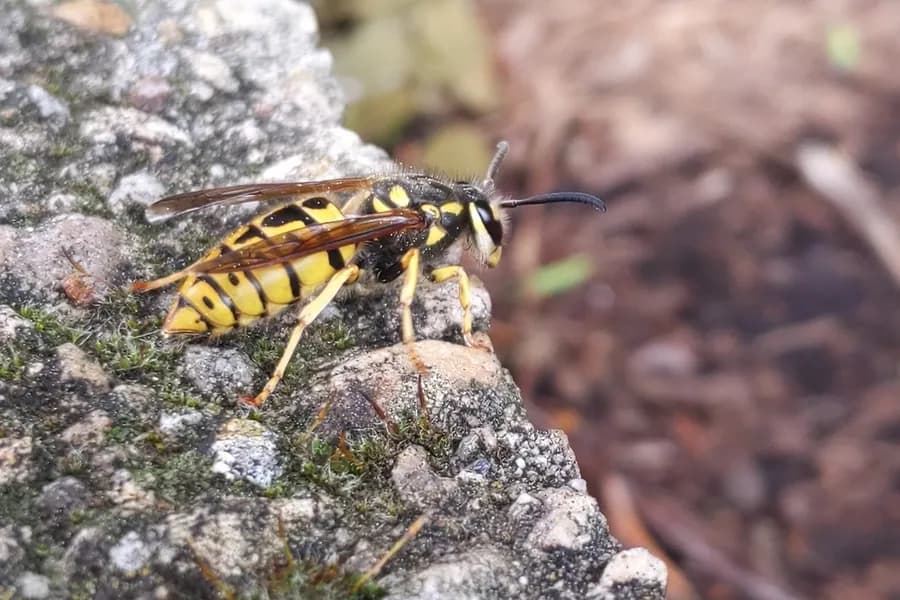
Nests in wall voids and attics, so the nest is inside the structure.
All of these have confirmed sightings in Washtenaw, Oakland, Wayne and Livingston counties. Records from iNaturalist research-grade observations, pulled 2026-09-25. Photos: Northern paper wasp by Vijay Barve (CC0); Bald-faced hornet by Zachary Dankowicz (CC BY); European paper wasp by Gavin Slater (CC BY); Eastern yellowjacket by Katja Schulz (CC BY); Eastern cicada killer by Tom Norton (CC BY); German yellowjacket by Cecil Smith (CC BY).
What it costs
Wasp control is included in the Honorable Shield plan.
There is no special tier to buy. Wasps are covered by the normal plan. If they come back between visits, so do we, free, within 48 hours. Your price depends on the size of your house, not on which bug you have.
| Honorable ShieldRecurring | One-time treatmentSingle visit | |
|---|---|---|
| Best for | Keeping them out all year | Killing off one problem now |
| You get | All three barrier layers, every visit, on a schedule | All three barrier layers, one time |
| If they come back | We treat again, free | A follow-up is $247 |
| Other pests | Over 20 pests, rodents included | This one only |
| Price | From $61 a month | From $497 |
Prices are the starting figures: a home up to 1,000 square feet, or half an acre for yard work. What is covered is set out in the plan terms.
Wasp control, answered straight.
Which wasp do I have?
Look at the nest. An open gray comb under something is paper wasps. A line of wasps into a hole in the ground or a wall is yellow jackets. A closed gray paper football in a tree is bald-faced hornets. Very large wasps flying low over bare soil with single holes in it are cicada killers. Each one is reached a different way, which is why we identify it first.
Does every wasp nest need to be treated?
No. A nest at the back of the yard can stay, and many wasps are useful. Treat it when it is somewhere you keep walking past, is hidden inside the house, is near someone with a severe sting allergy, or simply cannot be avoided.
Are paper wasps dangerous?
They sting if you get close to the nest. They are much calmer than yellow jackets. The risk is a nest by a door, a grill or where kids play, or anyone in the house who is allergic.
Should I knock the nest down myself?
Not while it is live. You will be stung. Do not use fire, gasoline or boiling water, do not throw things at it, and stay off a ladder near a nest that is defending itself. A treated nest can come down once nothing is flying in or out.
Where do yellow jackets nest?
Mostly underground, often in old rodent holes, or inside walls and other hidden spaces. Railroad ties, wood piles and old stumps too. That is why you see the wasps before you ever see the nest. We treat through the entrance, and it gets sealed after.
Why are yellow jackets so aggressive in August?
The colony is at its biggest in late summer and the workers go looking for sugar. That is why they find your drink. Mowing over a ground nest is how most people find one, so if you know where it is, mark it and keep kids and pets away.
What should I do if wasps are going into a wall?
Do not seal it. Block the hole while they are alive and they will chew their way out somewhere else, sometimes into the house. Get the colony treated first, then close the gap once nothing is flying.
Can I pour something down a yellow jacket hole?
Do not pour gasoline or anything like it down a nest. It is a fire and poisoning risk. Use a product labeled for yellow jackets and follow the label, or call us.
Are bald-faced hornets aggressive?
Near an active nest, yes. They defend it hard against people, pets, mowers and anyone pruning nearby, and from further away than most wasps. Until it is treated, keep people and pets back, do not mow, trim or pressure wash near it, and tell us if anyone in the house has a severe sting allergy. A photo from a safe distance helps us plan.
How big does a bald-faced hornet nest get?
A mature nest can hold hundreds of workers. Size does not decide the treatment, though. Where it sits, how active it is and whether we can reach it safely matter more.
Does an empty hornet nest in winter need treating?
No. The colony dies out each fall and the old nest is not used again. New queens spend the winter alone and build somewhere fresh in spring. You can knock an old nest down for the look of it, or to get at whatever is behind it, as long as you can reach it safely.
Will you always take the nest down?
Not always. It depends on the wasp, how high the nest is, what is around it and whether we can reach it. A nest inside a wall usually cannot be reached at all. Sometimes leaving a dead hornet nest in place is simply the safer call.
Are cicada killers dangerous?
They look terrifying and they are not. Cicada killers are solitary wasps with a low sting risk. Males cannot sting, and females only do if you grab or step on one. Give the burrows room and nothing happens.
Why are there so many cicada killers in one part of my yard?
Because that patch has what they want: sun and loose, well-drained soil. Every female digs her own burrow, so twenty holes means twenty separate wasps, not one big colony. Treatment makes sense when there are a lot of them, the soil mess is too much, or they are right by a path, a door or where children play.
Do cicada killers ruin the lawn, and will they come back?
Usually not for good. You get soil mounds and rough turf while they dig. Treating the live burrows deals with this year. A patch left alone does not grow into a bigger infestation, but the same soil can draw them back. Whether they pick your lawn again comes down to thin grass, bare soil and drainage, so the lasting fix is thicker turf, overseeding in season, and mulch or groundcover over bare soil in beds. Do not pour gasoline, bleach or boiling water into the holes.
Will wasps come back next year?
Not the same colony. Paper wasp, yellow jacket and hornet colonies die out in the fall, and new queens start over in spring, often in the same corner. Treating that corner early in spring helps, and an old burrow or wall gap should be sealed once the nest is dead. Nobody can promise you will never get another one.
Are wasps covered by Honorable Shield?
Yes. Wasps are on the covered list, yellow jackets and bald-faced hornets included, and cicada killers are on it too. A new nest between visits gets treated free, within 48 hours. Check the written plan terms before you rely on it for a live nest.
Do you remove honey bees?
We do not kill honey bees. If it turns out to be honey bees, we call in a specialist who can move them. Bumble bees and carpenter bees are on our bee control page.
Round holes in bare wood, or bees going in and out of a wall? See bee control. Not sure what it is? Tell us where it is.
Pest-Free Guarantee
They come back? So do we, free.
On Honorable Shield, see a covered pest between visits? We come back within 48 hours and treat it again. You pay nothing.
Wasp control where you live.
Old streets with big trees get different bugs than new build on cleared ground. Pick your town to see what we actually find there.
That is not all of them. See all 38 towns, or ask us if we reach your street.
Other pests we treat
One plan covers every one of these. No extra charge when something different shows up.
Every visit includes all three barrier layers. See what we treat, or ask an exterminator.

Wasp control · Licensed and insured
Wasp nest by the door?
Call (734) 519-6671 or send a request. Tell us where it is and whether you can see the nest. If it is near a door we try to get out the same day, and you hear the price before anyone starts.
500+ Customer Reviews·Michigan pesticide business license #820457