
Mice, rats and squirrels
Scratching in the walls or attic at night: mice, rats or squirrels?
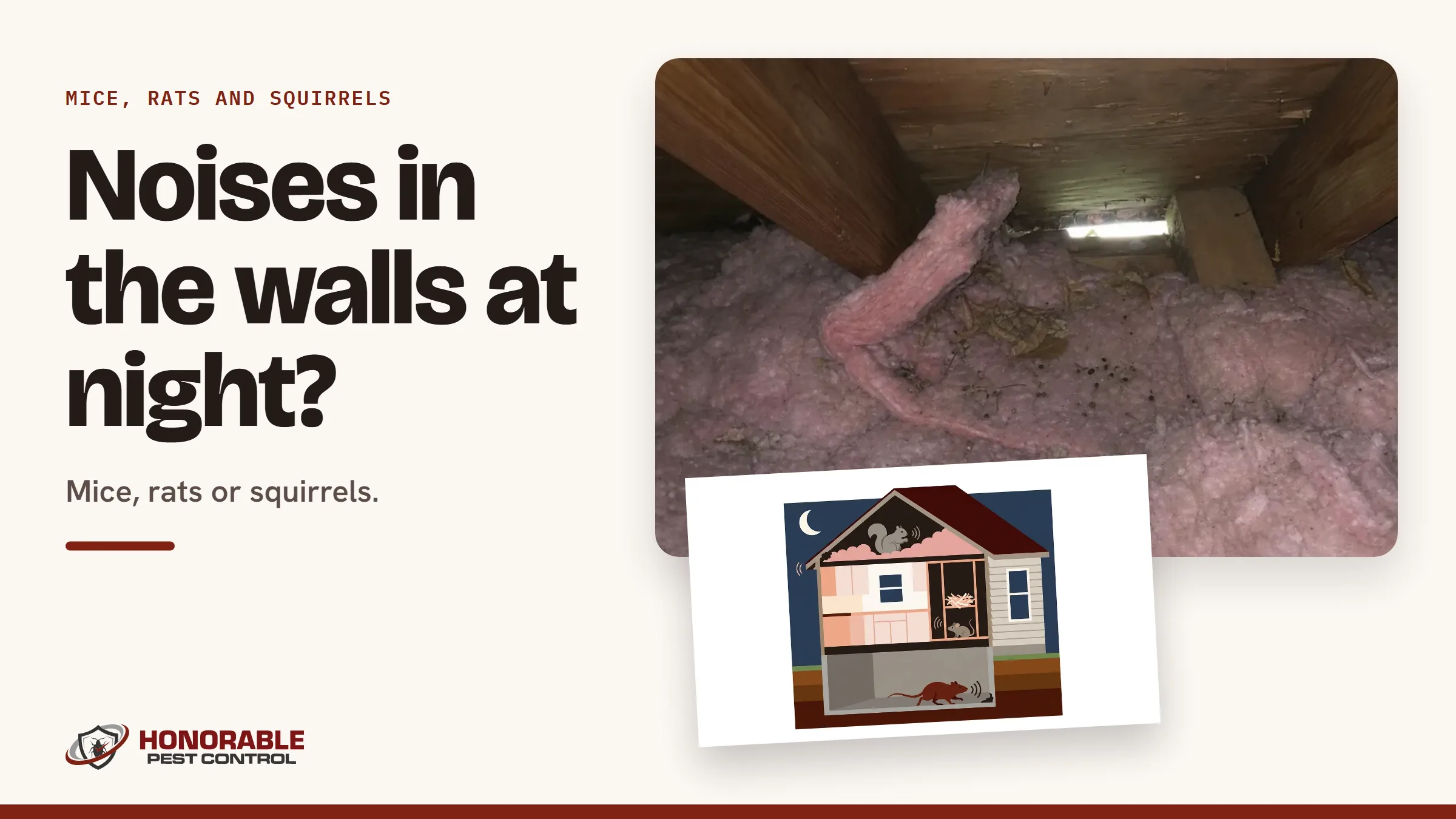
The time you hear it and where you hear it narrow it down fast. Light scratching in the walls and ceilings at night is usually mice. Heavier gnawing and scurrying low in the house, in the basement or the ground floor, points to rats. Running across the attic in daylight is a tree squirrel, and the same noise after dark is often a flying squirrel.
 By Nick Russler, ownerLicensed and insured in MichiganPublished
The short answer
- At night, in walls
- Usually mice
- At night, low in the house
- Often Norway rats
- Daytime, in the attic
- Tree squirrels
- Night, in the attic
- Flying squirrels or mice
- Mice travel
- Under 30 ft from the nest
- Rats use
- The same path each time
House mice are active mostly at night and seldom go more than 30 feet from their nest, per University of California IPM, so scratching in the same wall night after night is usually a mouse nest nearby. Norway rats live low in a building, in the basement and on the ground floor. The Michigan DNR says fox and gray squirrels are active in the daytime and flying squirrels are entirely nocturnal. So noise in the attic in the morning and afternoon is usually a tree squirrel, and noise there after dark is more often a flying squirrel or mice.
Prefer to listen? One minute 6.
The short version, read aloud. Read by a synthetic voice, not one of our technicians.
Many people first notice it at night, lying in bed: a scratch, a scurry, a gnawing sound, and then silence.
You do not have to see the animal to know which one it is. The time, the place and the kind of sound are three good clues.
Who is making the noise
| What you hear | When | Where | Most likely |
|---|---|---|---|
| Light scratching, soft scurrying | Night | Walls and ceilings, near food | House mice |
| Heavier gnawing and scurrying | Night | Basement, ground floor, low walls | Norway rats |
| Running and scampering | Morning and daytime | Attic, eaves | Fox, gray or red squirrels |
| Scratching and scampering | After dark | Attic | Flying squirrels, or mice |
| Heavy thumps, walking weight | Night | Attic, chimney | Something bigger; see below |
Treat this as a rough guide: the timing and places are from UC IPM and the Michigan DNR, and the sounds are general descriptions. MSU Extension says the calls it gets are about scrabbling, squeaking and chewing sounds in attics.
Mice in the walls
UC IPM says house mice are active mostly at night, though you may see one by day, and they seldom travel more than 30 feet from the nest and food. They nest in sheltered spots, from finely shredded paper or other fibers. That short range is why the noise tends to come from the same wall, close to wherever they are eating.
Mice also chew. UC IPM says they can damage wires and gas lines, which is one reason not to wait out a mouse in the wall. See why mice move in for the winter for how they get in.
Rats in the walls
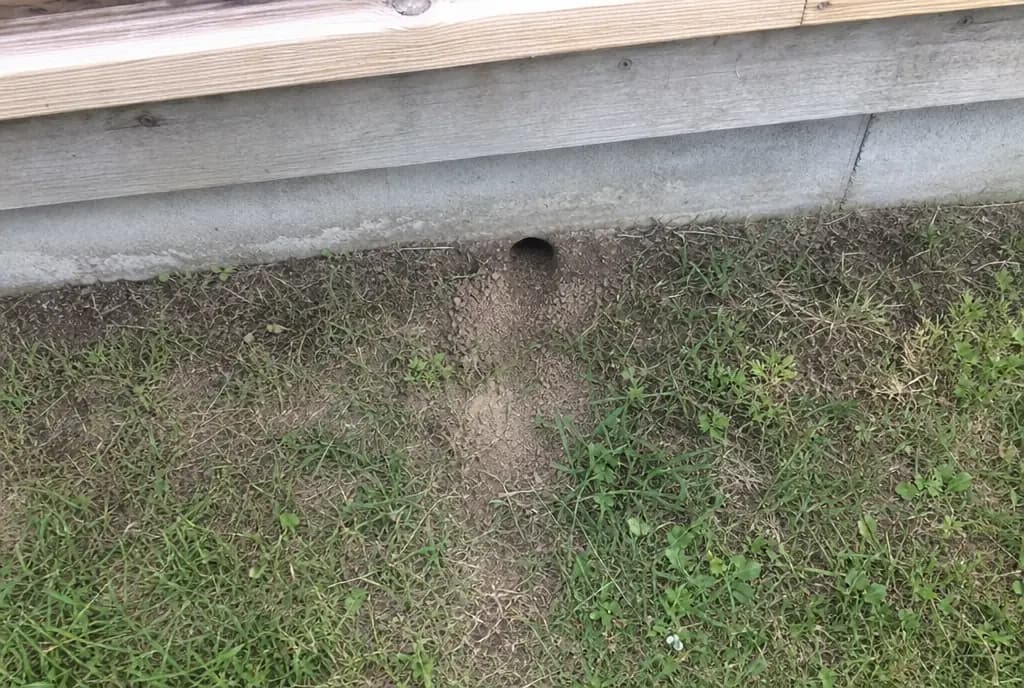
UC IPM says Norway rats, the rat of Southeast Michigan, usually stay in the basement and on the ground floor when they get into a building, and they burrow along the foundation outside. MSU Extension says rats are creatures of habit that stay close to walls and use the same path to food and water, and that squeaking is one of the most distinctive signs of rodents.
More in our guide to rats in Michigan.
Squirrels in the attic
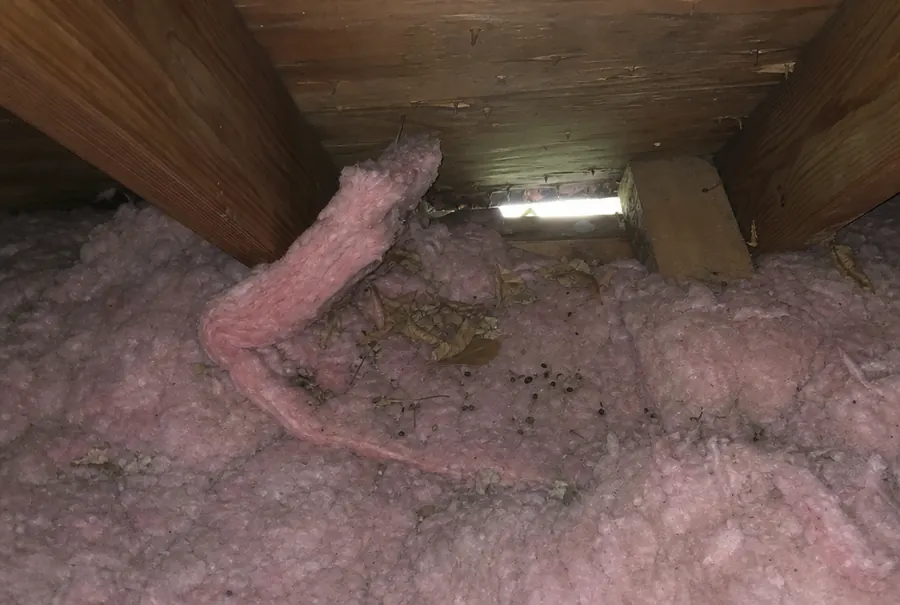
The Michigan DNR says fox and gray squirrels are active in the daytime, and that flying squirrels are entirely nocturnal and den in tree cavities. MSU Extension says squirrels reach the roof from branches over the house or within 6 feet of it, and get in through torn vent screens, loose fascia and damaged soffits.
Which squirrel it is matters for what Michigan law allows. See which squirrel is in your attic.
Bigger noises: when it is not a rodent
Heavy thumping, the sound of real weight walking, or noise in the chimney can be something bigger. MSU Extension says raccoons climb trees to reach roofs just as squirrels do, and that bats can squeeze into a crack not much bigger than the tip of your little finger. We do not handle raccoons or bats. If that is what it sounds like, we will tell you who to call.
Do not seal the hole while something is still inside
Closing an opening with an animal inside traps it. A trapped squirrel or mouse can die in the wall, and a mother squirrel can chew a new hole to get back to her young. Find out what it is and get it out first.
What to do about noises in the walls
- Note the time and the place. Write down when you hear it and which wall or ceiling. That narrows it down quickly.
- Look outside. Check the foundation for burrows, and the roofline for chewed soffits, loose fascia and torn vent screens.
- Skip the home remedies. MSU says mothballs and soaked rags can send fumes into the house, and radios or lights left running in the attic can be a fire risk.
Something in the walls at night?
Our exterminators work out which animal it is from where and when you hear it, and find how it gets in. For squirrels, what we can do depends on the species and Michigan DNR rules. Mice, rats and squirrels are covered by Honorable Shield and Rodent Shield. Quotes are free.
Mice and rats are handled by our rodent control, and squirrels in the attic by our squirrel and chipmunk control.
Common questions
What is scratching in my walls at night?
Most often house mice. UC IPM says they are active mostly at night and seldom travel more than 30 feet from the nest, so the noise comes from the same wall.
Is it mice or rats in the walls?
Location helps. Norway rats usually stay in the basement and ground floor, per UC IPM. Mice can be anywhere, including upper walls and ceilings, and rats are much bigger animals.
What is running in my attic in the morning?
Usually a fox, gray or red squirrel. The Michigan DNR says fox and gray squirrels are active in the daytime.
What is in my attic at night?
Often a flying squirrel, which the DNR says is entirely nocturnal, or mice. Heavy thumping can mean something bigger, such as a raccoon.
Can I just wait for the noise to stop?
It is risky. UC IPM says mice gnaw electrical wires and gas lines and breed several times a year. The DNR says squirrels mate in late winter.
Do mothballs or a radio get animals out of the attic?
Not reliably. MSU says there are no quick, permanent fixes, mothball fumes can reach the living space, and radios or lights left on can be a fire risk.
Do you handle raccoons or bats?
No. If the noise sounds like a raccoon or bats, we will tell you who to call.

About this page
Written by Nick Russler, owner of Honorable Pest Control in Ann Arbor, Michigan. The facts here come from the University of California, the Michigan Department of Natural Resources and Michigan State University Extension, all read on September 26, 2026. If something here is out of date or wrong, tell us and we will fix it.
Sources

Ann Arbor, MI · Licensed and insured
Noises in the walls?
Tell us what you hear, when you hear it, and where you live. We check we cover your street and give you the price first.
500+ Customer Reviews·Michigan pesticide business license #820457