
Mice
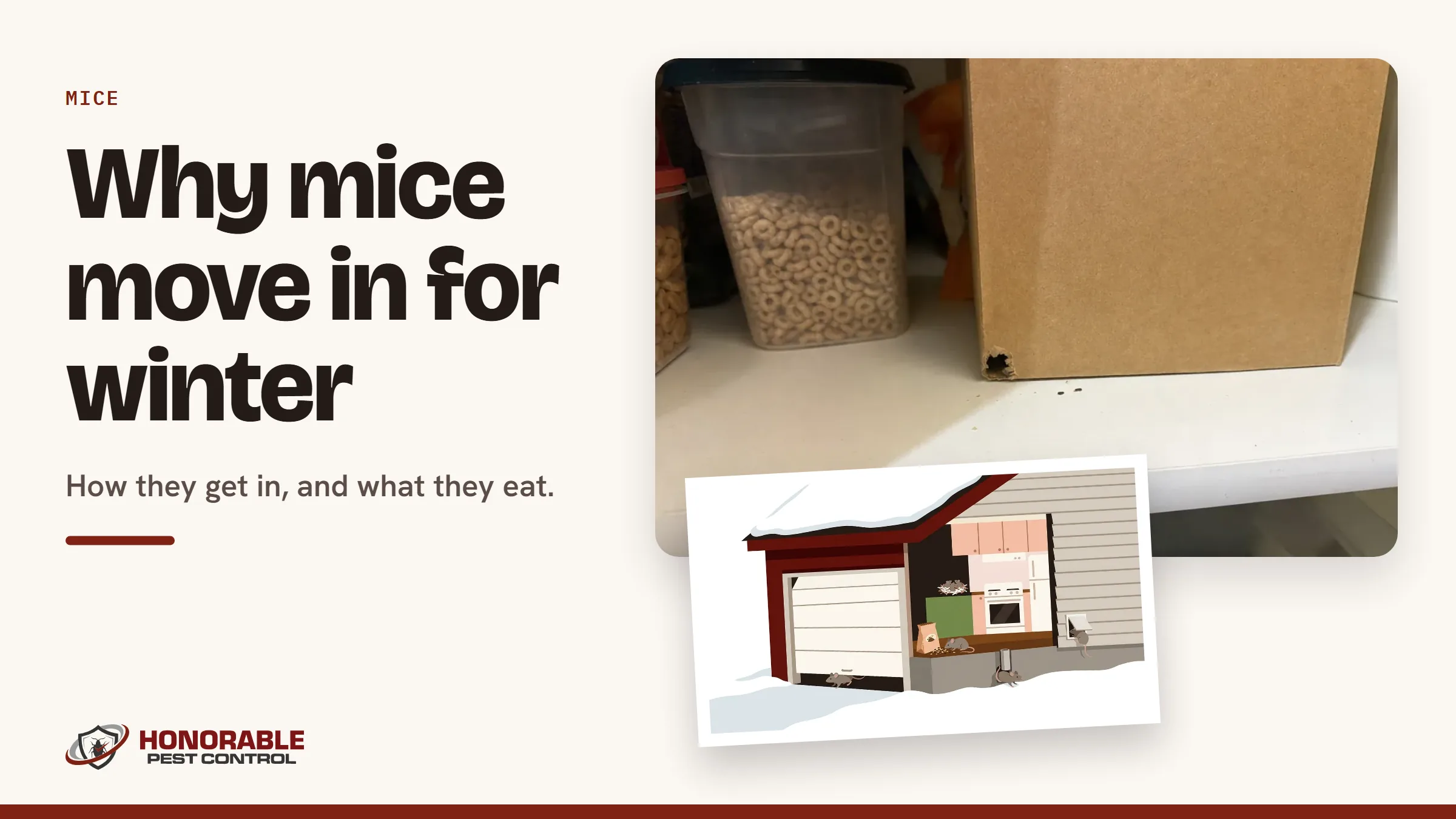
Why mice move in for the winter: how they get in, what they eat
Mice do not hibernate, so when the nights turn cold they look for warmth, shelter and food, and a house has all three. A mouse can squeeze under a gap a quarter inch tall. Here is how they get in, what they eat, how long they live, and why one mouse in November rarely stays one mouse.
 By Nick Russler, ownerLicensed and insured in MichiganPublished
The short answer
- Hibernate
- No
- Move in
- Autumn, as nights get cold
- Gap under a door
- 1/4 in tall
- Opening
- 3/8 in wide
- Eats per day
- Up to 20% of its weight
- Lifespan
- Usually 9 to 12 months
House mice that live outdoors often move into homes in autumn, when nighttime temperatures get colder, per University of California IPM. They can squeeze under a gap a quarter inch tall and through an opening 3/8 of an inch wide. They eat up to 20 percent of their body weight a day, from cereals and seeds to insect larvae, and do not need to drink if their food has enough moisture. A house mouse usually lives 9 to 12 months, and a female can have 5 to 10 litters a year.
Prefer to listen? One minute 12.
The short version, read aloud. Read by a synthetic voice, not one of our technicians.
The mouse in the pantry in the fall was often living outdoors all summer, UC IPM says.
What changed is the cold. Your house became the warmest place around.
Why mice come inside in winter
Mice do not hibernate. UC IPM says deer mice may go torpid in severe weather but do not hibernate. They need a warm, sheltered place to nest and food nearby.
UC IPM says house mice that live outdoors frequently enter homes in autumn when nighttime temperatures become colder. Cornell University says deer mice and white-footed mice come in from fall through spring, and that finding one indoors means there is an opening they use.
How mice get in the house
How small a gap a mouse or rat needs
In inches. From UC IPM and Penn State Extension.
Penn State says to look at walls, ceilings and floors, and around pipes and wires, both inside and out. Openings mice use often have a dirty or oily mark around them. Many mice, Penn State adds, come in the same way you do: through the door, which is why it recommends door sweeps.
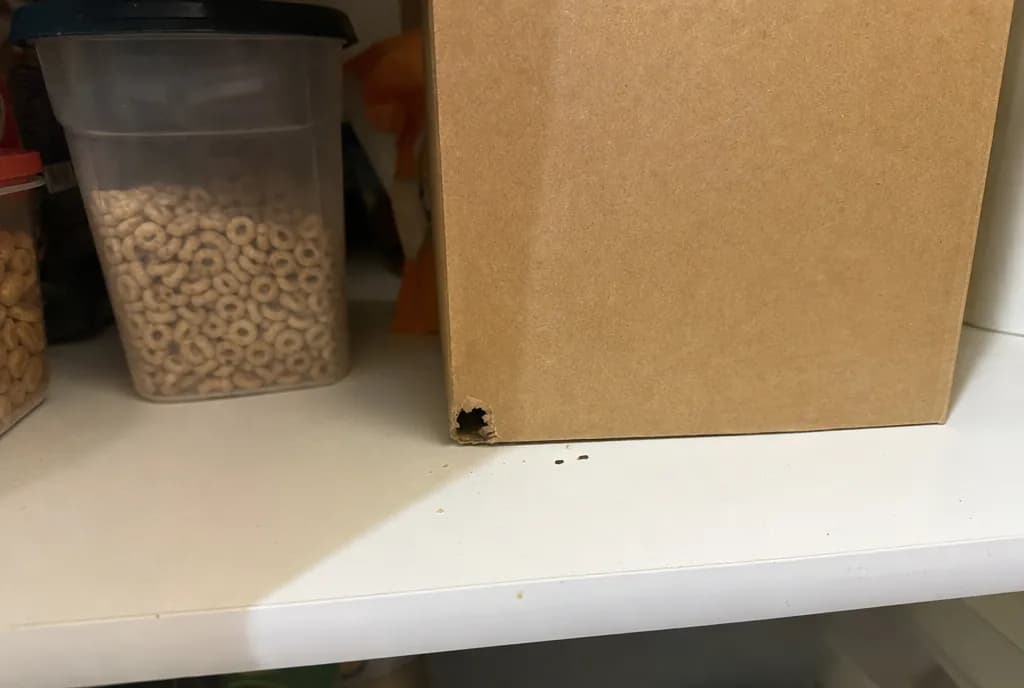
Food is the draw
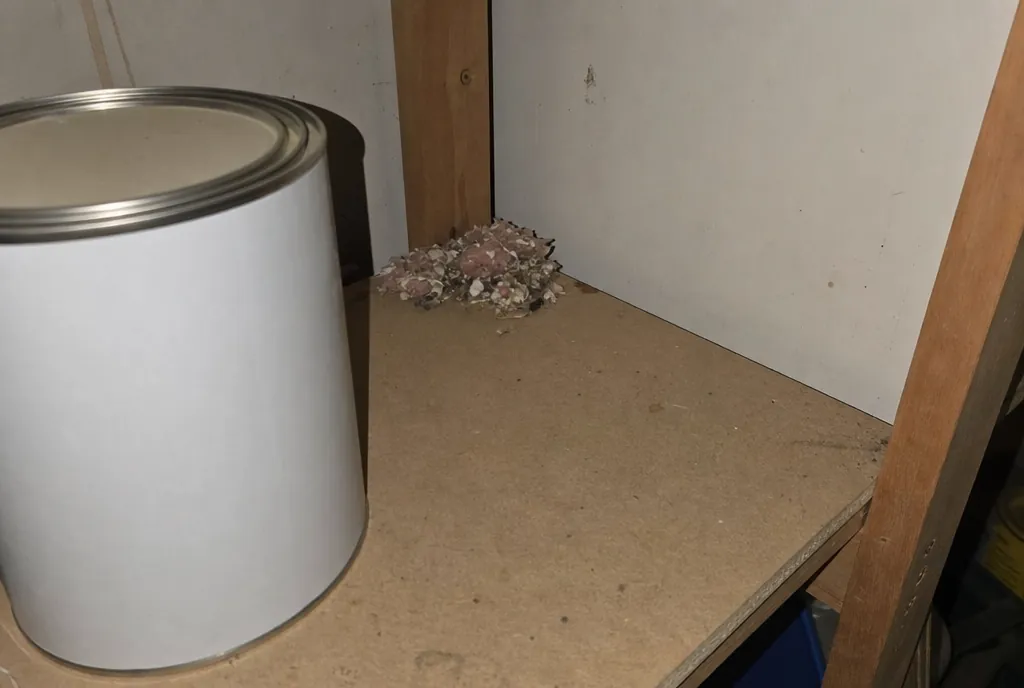
A nest of shredded paper
What do mice eat?
UC IPM says house mice eat cereals, grasses, roots, seeds and even insect larvae, and up to 20 percent of their body weight every day. In a house that means cereal and crackers in the pantry, pet food, bird seed and grass seed in the garage.
They barely need water. UC IPM says house mice do not need to drink to survive if their food has enough moisture, and Norway rats are the opposite: they need standing water every day.
House mice seldom venture more than 30 feet from their nest sites and food supply.
University of California IPM
That short range means one open bag of bird seed in the garage can be all the food a nest of mice needs.
How long do mice live?
UC IPM says a house mouse usually lives 9 to 12 months, though some have lived up to three years. In the wild, UC IPM says deer mice rarely survive more than two years.
If you see one mouse, how many are there?
Usually more than one. UC IPM says a female house mouse can have 5 to 10 litters a year, of about 5 or 6 pups each. A single pregnant mouse that moves in over the fall can mean a family by spring.
Mice are mostly active at night, per UC IPM, so the mice you see are rarely all the mice there are. See how to read mouse droppings.
What to do about mice this winter
- Close the low gaps. Door sweeps, the corners of the garage door, and the gaps where pipes and wires come in.
- Store food in hard containers. Penn State says to keep food, including pet food, up off the floor in sealed containers with tight lids.
- Trap along the walls. Penn State recommends snap traps set with the trigger side toward the wall, where mice run, out of reach of children and pets.
Mice moving in for the winter?
Our exterminators find how they get in, set locked, tamper-resistant bait stations where they run, and show you every gap. Mice are covered by Honorable Shield and Rodent Shield. Quotes are free.
A mouse in the garage in October is normal for Michigan. Droppings in the kitchen, chewed food boxes or noises in the walls at night are when our mouse control is worth a visit.
Common questions
Why do mice come inside in winter?
For warmth, shelter and food. UC IPM says house mice that live outdoors frequently enter homes in autumn when nighttime temperatures get colder.
Do mice hibernate?
No. UC IPM says deer mice may go torpid in severe weather but do not hibernate.
How small a hole can a mouse fit through?
UC IPM says house mice can squeeze under gaps 1/4 inch tall and through openings 3/8 inch wide.
What do mice eat?
Cereals, grasses, roots, seeds and even insect larvae, per UC IPM, and up to 20 percent of their body weight a day. In a house, that means pantry food, pet food and bird seed.
How long do mice live?
A house mouse usually lives 9 to 12 months, per UC IPM, though some have lived up to three years.
If I see one mouse, are there more?
Usually. UC IPM says a female can have 5 to 10 litters a year of about 5 or 6 pups each, and mice seldom travel more than 30 feet from their nest.
Do mice need water?
Not much. UC IPM says house mice do not need to drink if their food has enough moisture, though they will seek liquids if it does not.

About this page
Written by Nick Russler, owner of Honorable Pest Control in Ann Arbor, Michigan. The facts here come from the University of California, Cornell University and Penn State, all read on September 26, 2026. If something here is out of date or wrong, tell us and we will fix it.

Ann Arbor, MI · Licensed and insured
Mice in the house this winter?
Tell us where you see them and where you live. We check we cover your street and give you the price first.
500+ Customer Reviews·Michigan pesticide business license #820457