
Squirrels
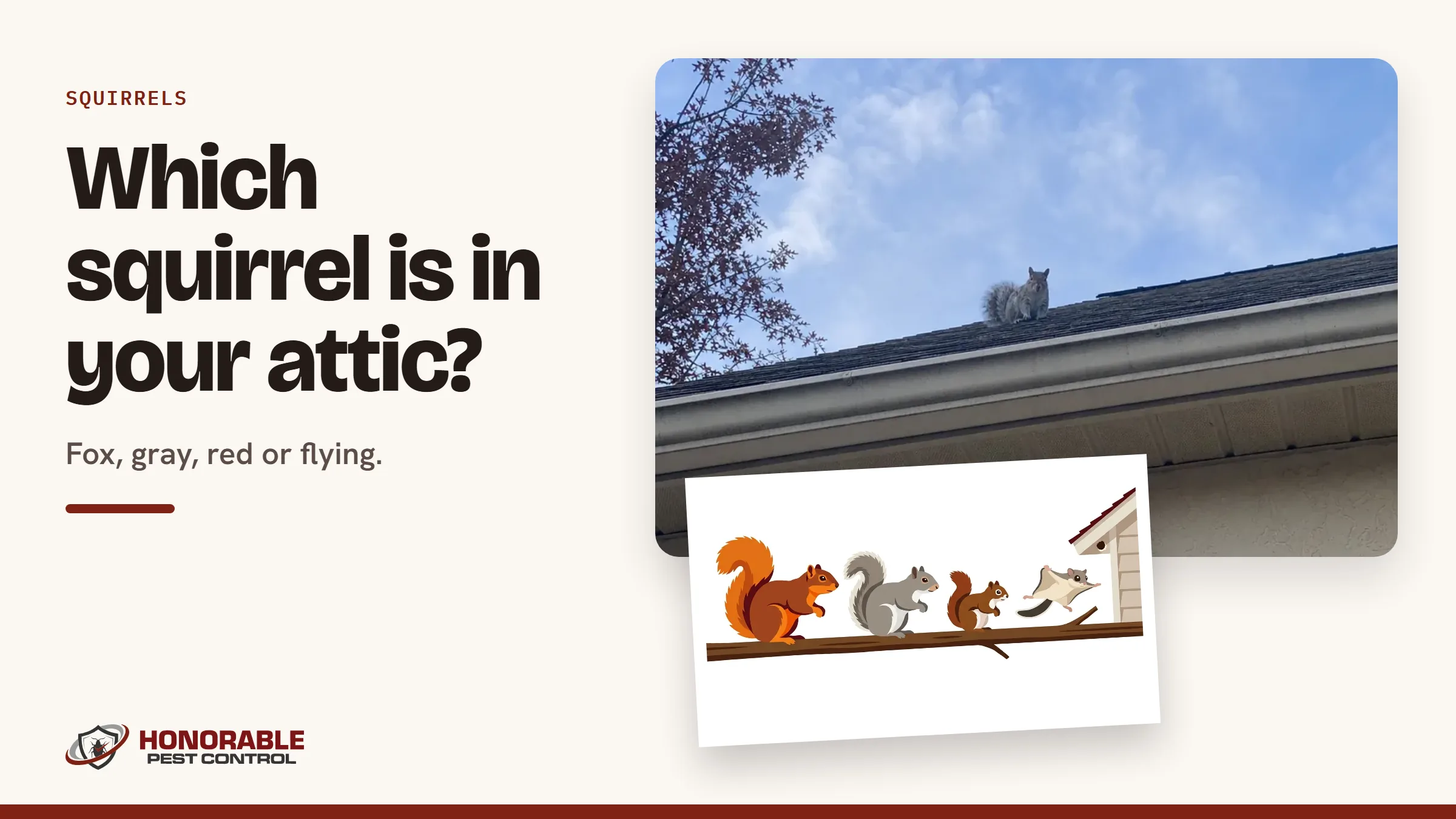
Red, fox, gray or flying: which squirrel is in your attic?
Four tree squirrels live in Southeast Michigan: the big rusty fox squirrel, the eastern gray squirrel, the small red squirrel, and the southern flying squirrel, which only comes out at night. Any of them can move into an attic for the winter. Here is how to tell them apart, what the noise and the timing tell you, and what Michigan's rules say you can do.
 By Nick Russler, ownerLicensed and insured in MichiganPublished
The short answer
- Biggest
- Fox squirrel, rusty orange
- Gray all over
- Eastern gray squirrel
- Small and noisy
- Red squirrel
- Out only at night
- Southern flying squirrel
- Species in Michigan
- Nine, per the DNR
- Live capture and release
- Not authorized by the DNR
Michigan has nine kinds of squirrels, and the tree squirrels are the fox, gray, red and flying squirrels, per the Michigan DNR. The fox squirrel is the big rusty one, the gray squirrel is gray with a white belly, and the red squirrel is small, reddish and loud. The southern flying squirrel, the one in Southeast Michigan, is entirely nocturnal, so scratching in the attic after dark points to a flying squirrel or mice, and scratching in daylight to one of the other three. The DNR does not allow live capture and release of squirrels, except for permitted research.
Prefer to listen? 52 seconds.
The short version, read aloud. Read by a synthetic voice, not one of our technicians.
In fall, squirrels start looking for a warm, dry place to stash food and spend the winter. MSU Extension says attics, garages, sheds and even car engines are on the list.
Which squirrel it is changes how loud it is, when you hear it, and what Michigan law lets anyone do about it.
The four tree squirrels of Southeast Michigan
| Look | When it is active | Hunting season | |
|---|---|---|---|
| Fox squirrel | Largest; rusty orange-brown, orange belly | Daytime | Yes, a regulated season |
| Eastern gray squirrel | Gray, white belly; some are black | Daytime | Yes, a regulated season |
| Red squirrel | Small; rusty red, white belly, short tail | Daytime | Year-round |
| Southern flying squirrel | Small; gray-brown, huge dark eyes, skin flap | Only at night | None; protected |
Seasons and the flying squirrel facts are from the DNR, and the red and gray squirrel descriptions from MSU Extension. MSU notes that the gray squirrel has a black form found in several places across southern Michigan, so a black squirrel in Ann Arbor is usually a gray squirrel.

Fox squirrel
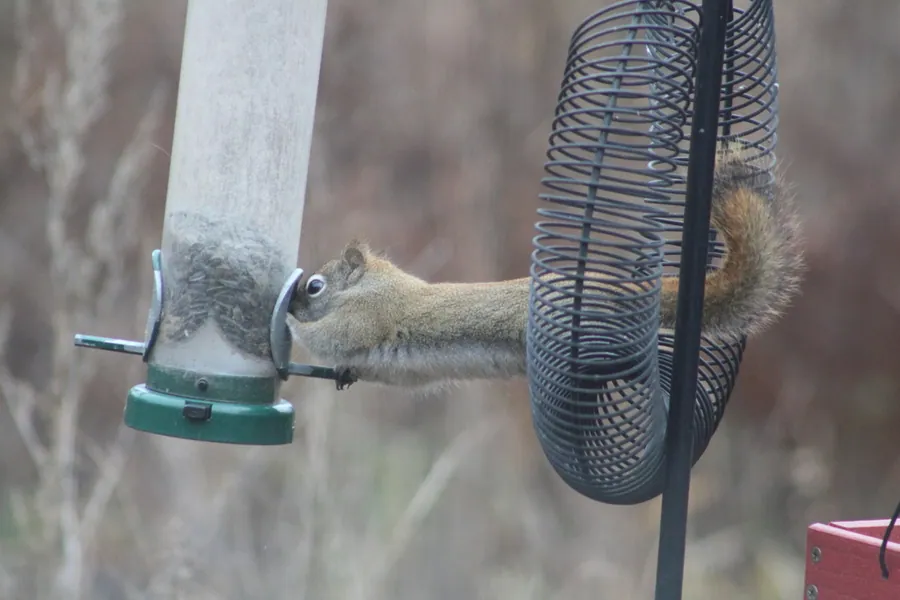
Red squirrel
Which squirrels are most common here
Squirrel sightings in four Southeast Michigan counties
Research-grade observations in Washtenaw, Oakland, Wayne and Livingston counties on iNaturalist, pulled September 21, 2026.
Sightings are not a census. People report what they see, and nobody sees a flying squirrel by day. The DNR says flying squirrels live in mature forests, parks and woodlands and den in tree cavities, so a house near mature trees can have them even if the neighbors have never seen one.
Squirrels in the attic: what gets them in
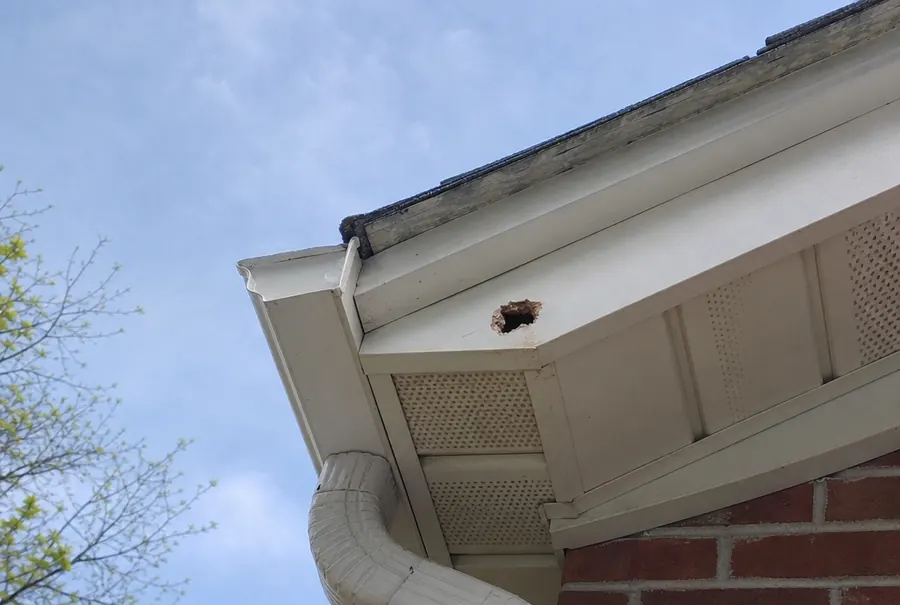
MSU Extension calls trees with branches over the roof, or within 6 feet of the house, "vertical expressways." Squirrels climb the tree, run out a branch and jump. From the roof they look for a way in: a torn gable vent screen, a loose fascia board at a corner, or a damaged soffit.
The red squirrel is the hoarder. MSU says red squirrels build big caches, called middens, of pine cones and seeds in hidden places, and can fill an attic, a shed, a tool chest or even the space under a car hood. Gray squirrels bury small amounts in many spots instead.
Sadly, there are no quick, permanent fixes.
Michigan State University Extension
MSU warns against the usual home remedies. Mothballs and soaked rags can send fumes into the house, and a radio or bright lights left running in the attic can be a fire risk.
Flying squirrels: the one you hear at night
Flying squirrels do not fly. The DNR says they glide from tree to tree on a loose flap of furred skin between their front and back legs. The southern flying squirrel lives in the southern Lower Peninsula, which includes all of Southeast Michigan, and it is entirely nocturnal.
That makes the timing of the noise a good clue. Scratching and running overhead after dark points to a flying squirrel. The same noise in the early morning and daytime is usually a fox, gray or red squirrel. Our guide to noises in the walls and attic covers mice and rats too.
What Michigan's rules say
Squirrels are wildlife, and the Michigan DNR sets the rules:
- No live capture and release. The DNR says it does not authorize or conduct live capture and release of squirrels, except for permitted research. MSU adds that a relocated squirrel may not survive long in unfamiliar ground.
- Flying squirrels are protected and have no hunting season, per the DNR.
- Get them out first, then close the hole. The DNR says to seal the opening once the squirrel leaves. Closing it with a squirrel or its young still inside traps them, and a mother can chew a new hole to get back to them.
- Take away the draw. Trim limbs near the roof and use squirrel-resistant bird feeders, per the DNR, and keep pet food and bird seed where squirrels cannot reach it.
The DNR says squirrels mate in late winter and again in midsummer, with 2 to 4 young in a litter. A squirrel that moved in over the winter may have young in the attic by spring, which is one more reason not to close a hole until you know it is empty.
Something running across the attic?
Our exterminators confirm which squirrel it is, tell you what Michigan rules allow for that species, and show you every opening we find so you or a contractor can close it once it is empty. Squirrels are covered by Honorable Shield and Rodent Shield. Quotes are free.
A squirrel on the bird feeder is just a squirrel. Scratching overhead, chewed soffits or a gable vent screen pushed in are when our squirrel and chipmunk control is worth a visit.
Common questions
What kinds of squirrels live in Michigan?
Nine, per the DNR. Four live in trees: the fox, gray, red and flying squirrels. The others, including chipmunks, woodchucks and ground squirrels, den underground.
How do I tell a fox squirrel from a gray squirrel?
Color. A fox squirrel is larger and rusty orange-brown with an orange belly. A gray squirrel is gray with a white belly, though MSU notes some gray squirrels in southern Michigan are black.
Are there flying squirrels in Southeast Michigan?
Yes. The DNR says the southern flying squirrel lives in the southern Lower Peninsula. It is entirely nocturnal, so most people never see one.
Why do I hear squirrels in my attic at night?
Fox and gray squirrels are active by day, per the DNR, so noise after dark points to a flying squirrel, or to mice or rats. Noise in the morning and daytime is usually a fox, gray or red squirrel.
Can I trap a squirrel and release it somewhere else?
No. The Michigan DNR says it does not authorize live capture and release of squirrels except for permitted research.
Are flying squirrels protected in Michigan?
Yes. The DNR says flying squirrels are protected and have no hunting season.
Do mothballs or a radio get squirrels out of the attic?
Not for long. MSU says there are no quick, permanent fixes, mothball fumes can reach the living space, and lights or radios left running can be a fire risk.
Do you seal the holes?
No. We do not seal holes, make repairs or put in one-way doors. We show you every opening we find so you or a contractor can close it once the squirrels are out.

About this page
Written by Nick Russler, owner of Honorable Pest Control in Ann Arbor, Michigan. The facts here come from the Michigan Department of Natural Resources and Michigan State University Extension, and the sighting counts from iNaturalist, all read on September 26, 2026. If something here is out of date or wrong, tell us and we will fix it.
Sources
- Michigan Department of Natural Resources, Squirrels
- Michigan Department of Natural Resources, Nuisance wildlife: Squirrels
- Michigan State University Extension, When animals invade your attic
- Michigan State University Extension, Look out for unwanted squirrel hoarding
- iNaturalist, research-grade squirrel observations in Washtenaw, Oakland, Wayne and Livingston counties (pulled September 21, 2026)

Ann Arbor, MI · Licensed and insured
Squirrels in the attic?
Tell us what you hear, when you hear it, and where you live. We check we cover your street and give you the price first.
500+ Customer Reviews·Michigan pesticide business license #820457