
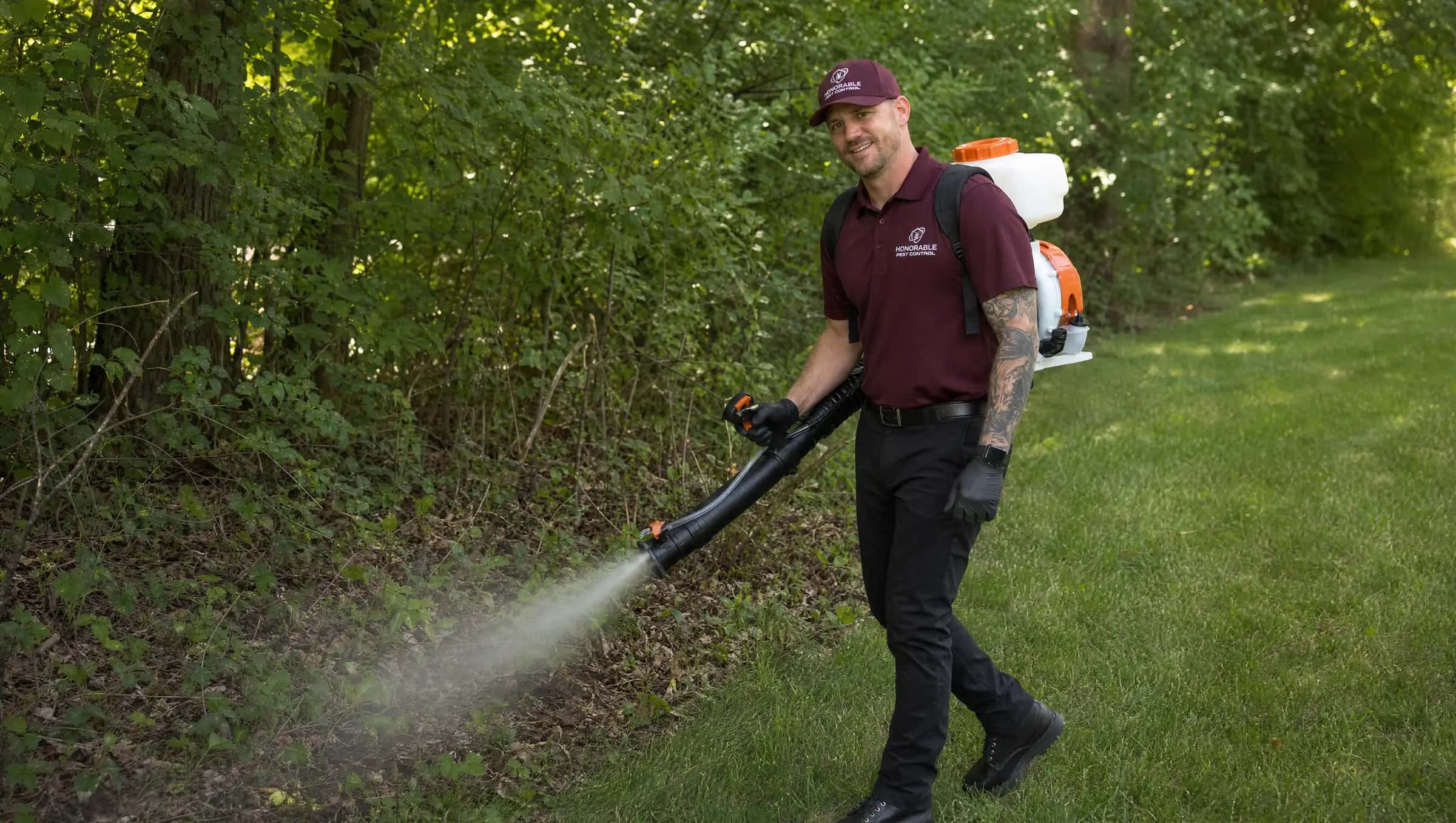
Ticks
Ticks in Michigan: which ones bite, and when the season starts
Three ticks bite people here: the American dog tick, the blacklegged or deer tick, and now and then the lone star tick. Only the deer tick carries Lyme disease, and Michigan recorded 1,215 Lyme cases in 2024, up from 452 in 2020. Here is how to tell them apart, when each one is out, and what to do after a bite.
 By Nick Russler, ownerLicensed and insured in MichiganPublished
The short answer
- Most common biter
- American dog tick
- Carries Lyme disease
- Deer tick
- Deer tick markings
- None; black shield
- Dog and lone star ticks
- White markings
- Lyme cases, 2024
- 1,215
- Remove with
- Fine-tipped tweezers
The American dog tick is the tick that bites people most often in Michigan, and the blacklegged, or deer, tick is second, per Michigan State University. The deer tick is the one that carries Lyme disease. It is small, with a red abdomen, black shield and black legs, and no white markings. Lyme cases in Michigan rose 168 percent in five years, to 1,215 in 2024, per the state health department. If one bites you, pull it straight out with fine-tipped tweezers, and see a doctor for any rash or fever in the weeks after.
Prefer to listen? One minute 12.
The short version, read aloud. Read by a synthetic voice, not one of our technicians.
Deer ticks were once rare in Michigan. MSU says their numbers and range have grown over the past 30 years, and the risk of Lyme disease has risen with them.
The good news is that the three ticks you are likely to meet are easy to tell apart, and the habits that prevent a bite are simple.
The three ticks that bite people in Michigan
| American dog tick | Deer tick | Lone star tick | |
|---|---|---|---|
| Look | Brown, white pattern on the shield | Red abdomen, black shield and legs | Reddish brown; female has one white spot |
| How common | The most common human biter | Second most common; spreading | Occasional; populations in southwest Michigan |
| Diseases | Rocky Mountain spotted fever, tularemia (rare in Michigan) | Lyme, anaplasmosis, babesiosis, Powassan virus | Ehrlichiosis and others (rare in Michigan); linked to red meat allergy |
| Most active | Spring through mid-summer | Early spring to late fall, above freezing | April through late August |
All from MSU's 2025 tick guide. Ticks are not insects. They are arachnids, like spiders, and nymphs and adults have eight legs.
Deer tick vs dog tick
Look for white. MSU's diagnostic lab says the deer tick and its relatives have no white markings on their backs, and the American dog tick and lone star tick both do. On a dog tick, the males have white lines like suspenders, and the females have a short white "necklace."
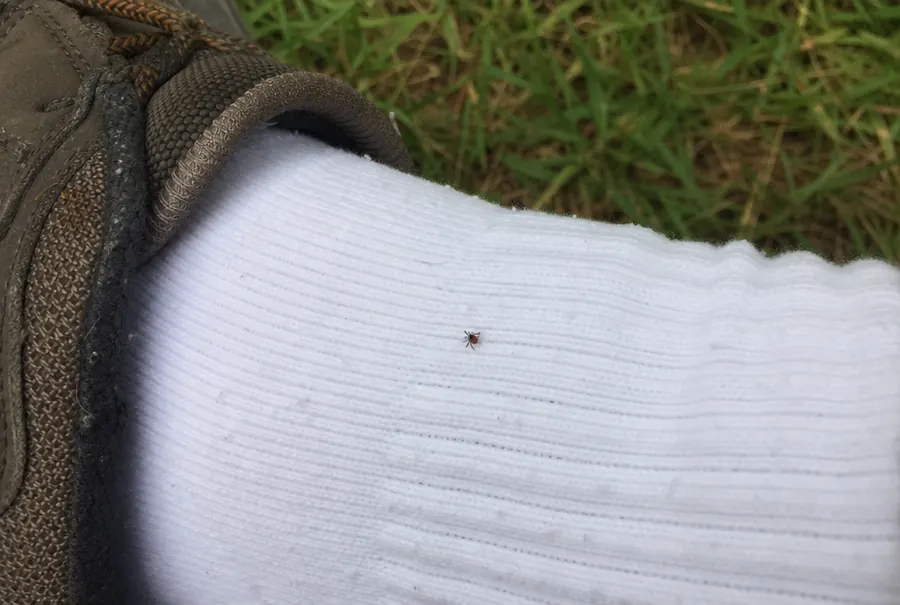
Deer tick: small, dark, no white
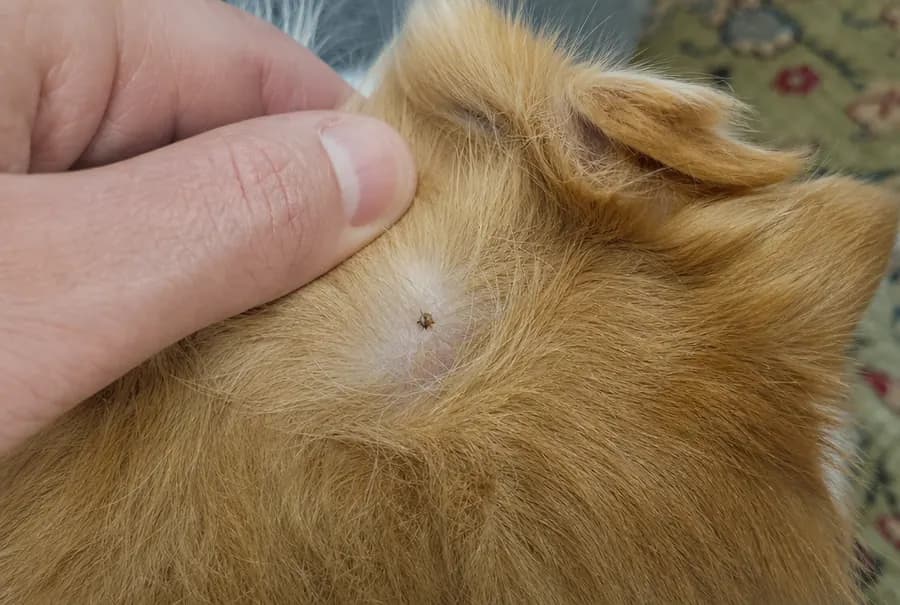
Dog tick: larger, white markings
Size helps too. Some ticks are about the size of a sesame seed, MSU says, which is why a deer tick is so easy to miss. A dog tick is noticeably larger.
When tick season runs in Michigan
MDHHS says the deer tick is active from March to November. The stage that matters most is the nymph. MSU's life cycle shows deer tick nymphs in May through July causing the greatest number of Lyme disease cases.
- Spring and fall: adult deer ticks. On a winter day above freezing, adults can be out too.
- Late spring and summer: deer tick nymphs, the peak Lyme risk.
- Spring to mid-summer: American dog ticks.
Lyme disease in Michigan
Tick-borne disease cases reported in Michigan
From the Michigan Department of Health and Human Services (May 2025).
Lyme disease is the most common tick-borne disease in Michigan, and anaplasmosis, carried by the same tick, is second. MDHHS says symptoms usually begin one to two weeks after a bite, and early ones are vague: fever or chills, rash, headache, fatigue and muscle aches. The bull's-eye rash is the one most people know, but MSU notes the rash can vary widely in shape, size and color. MDHHS adds that early treatment with antibiotics can lower the risk of serious problems.
What to do after a tick bite
Remove the tick now, then watch for a rash or fever
Do not wait for a doctor to take it off. The CDC says to grasp the tick as close to the skin as you can with fine-tipped tweezers and pull it straight away with steady, even pressure. Do not twist or jerk it, and do not use heat, nail polish or petroleum jelly. Clean the bite and your hands afterward.
See a doctor if you get a rash or fever in the weeks after, and tell them about the bite. MDHHS adds: also call if you think the tick was attached for more than 24 hours.
MSU suggests keeping the tick in alcohol or the freezer so it can be identified. Michigan residents can email a photo to MDHHS for free identification, at MDHHS-Bugs@michigan.gov.
Ticks in the yard
Ticks live in grassy, brushy and wooded places, and MDHHS says to watch the overgrown grass, brush and leaf litter at the edges. In a yard, that is the strip where the mown lawn stops and something wilder starts. MDHHS also says to check yourself and your pets after being outdoors, including in your own yard.
- Keep the grass mown where people and pets spend time.
- Rake the leaf litter out of the places you use most.
- Keep pets on the tick prevention your vet recommends.
- Check everyone, and shower soon after coming in.
A yard treatment cuts the number of ticks where it is applied. It cannot promise that nobody is bitten, so the tick checks and your vet's prevention still matter.
Ticks along the edge of your yard?
Our exterminators treat the brush, leaf litter and shaded edges where ticks wait, as part of Mosquito Shield. The same visit covers mosquitoes and outdoor fleas. Quotes are free.
If your yard backs onto woods or long grass, or deer walk through it, our tick control treats the edges on a schedule you choose, every 30 to 90 days.
Common questions
What ticks are in Michigan?
The three that bite people are the American dog tick (the most common), the blacklegged or deer tick, and the lone star tick, which turns up occasionally, per MSU.
How do I tell a deer tick from a dog tick?
Look for white. MSU says deer ticks have no white markings and a black shield, while dog ticks have a white pattern on the shield. Dog ticks are also larger.
Do all ticks carry Lyme disease?
No. In Michigan, Lyme disease is carried by the blacklegged or deer tick. The American dog tick does not carry it, though it can carry other diseases.
When is tick season in Michigan?
MDHHS says deer ticks are active from March to November. MSU says deer tick nymphs in May through July cause the most Lyme disease cases.
How many Lyme disease cases are there in Michigan?
MDHHS recorded 1,215 cases in 2024, up from 452 in 2020, an increase of 168 percent in five years.
How do I remove a tick?
Grasp it close to the skin with fine-tipped tweezers and pull straight out with steady pressure, per the CDC. Do not twist it or use heat or nail polish. Clean the bite afterward.
When should I see a doctor after a tick bite?
If you get a rash or fever in the weeks after, per the CDC, or if you think the tick was attached for more than 24 hours, per MDHHS. Tell the doctor about the bite.
Can you treat my yard for ticks?
Yes, outdoors. Ticks are covered by Mosquito Shield, which treats the brush, leaf litter and yard edges. It cuts ticks where we treat, but tick checks and pet prevention still matter.

About this page
Written by Nick Russler, owner of Honorable Pest Control in Ann Arbor, Michigan. The facts here come from the Michigan Department of Health and Human Services, Michigan State University Extension and the CDC, all read on September 26, 2026. We do not diagnose or treat illness; see a doctor about any symptoms. If something here is out of date or wrong, tell us and we will fix it.
Sources
- Michigan Department of Health and Human Services, Residents urged to take action to prevent tick bites this season (May 2025)
- Michigan State University Extension, What You Need to Know About Michigan's Ticks (2025)
- Michigan State University Extension, Ticks, ticks and more ticks
- Centers for Disease Control and Prevention, What to Do After a Tick Bite

Ann Arbor, MI · Licensed and insured
Ticks at the edge of the yard?
Tell us about your yard and where you live. We check we cover your street and give you the price first.
500+ Customer Reviews·Michigan pesticide business license #820457